Why is salad titan Sweetgreen wilting?
Published in Business News
Sweetgreen's salad business isn't as fresh as it used to be.
Not long ago, the Los-Angeles-based company's fresh bowls of fancy salads were all the rage, and its shares soared on hopes that salad-slinging robots could make it more profitable.
Last year was tough, though, as enthusiasm for the brand waned and cash-strapped diners abandoned fast-casual options for cheaper fast food and homemade meals.
Sweetgreen's same-store sales slid 9.5% last quarter, even as it increased portion sizes and tried new menu items — including French fries, which flopped. It laid off 10% of its support center workforce in Los Angeles, and one of its founders stepped down.
Over the last 12 months, Sweetgreen shares have tumbled more than 75%. The stock closed Thursday at $8.
"Sweetgreen is more of a premium health product, and it's going to cost more than a Big Mac," said retail expert Dominick Miserandino, who runs the company Retail Tech Media Nexus.
"The average consumer, when they're hit with survival-type questions about basic necessities, wellness is not going to be No. 1 for them," he said.
Younger consumers are showing less interest in Sweetgreen salads at the same time as tariffs and other factors are driving inflation. The company fell short of Wall Street's expectations last quarter with a net loss of $36.1 million on revenue of $172.4 million.
"Performance was impacted by softer sales," Sweetgreen co-founder and Chief Executive Jonathon Neman said in November. "This was coupled with lighter spending among younger guests."
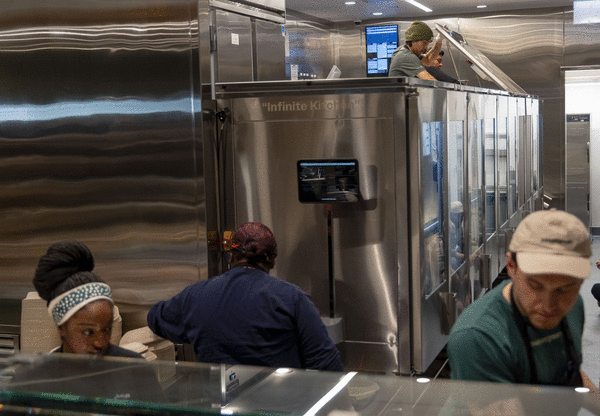
As it braces for the future, Sweetgreen decided to sell the food automation company it bought only a few years ago. Sweetgreen closed the sale of its automated kitchen technology, dubbed Infinite Kitchen, to the takeout and food delivery company Wonder Group last month.
Spyce, the business unit behind Infinite Kitchen, was sold for close to $200 milion in cash and shares of Wonder's Series C preferred stock. Sweetgreen bought Spyce in 2021 for about $70 million. Sweetgreen will continue to use the technology in some restaurants. The tech uses automatic conveyor belts to assemble salads and other meals.
"The sale marks a strategic milestone for Sweetgreen, enabling the company to reinvest in key priorities and focus on growth and operational efficiency," the company said in a news release.
Sweetgreen did not respond to a request for comment.
Sweetgreen was founded in 2007 in Washington by Georgetown students looking to make healthy food as convenient as fast food. It moved its headquarters to Los Angeles in 2016.
The chain has grown to more than 280 stores in the U.S.
California — with 56 Sweetgreens — is the state with the most locations.
The company made its initial public offering in 2021, and a day later was valued at nearly $6 billion. Sweetgreen is now worth around $900 million.
Fast-casual eateries — considered a step above fast food but more affordable than a full-service restaurant — once boomed in popularity. But value-seeking consumers are now turning to other options, said Evert Gruyaert, head of U.S. restaurants and food service at Deloitte.
"There is extremely strong competition and pressure coming from quick-service brands, and casual dining now has very compelling value offers too," he said. "Fast casual is really squeezed in the middle."
Fast-casual chains such as Cava and Newport Beach-based Chipotle popularized the customizable lunch bowl, usually including a protein, grain, and veggies.
The idea took off after Chipotle founder Steve Ells noticed that customers were opening up their burritos and asking for a fork. The Mexican chain launched bowls in 2003, paving the way for the Mediterranean bowl destination Cava to open in 2006.
Sweetgreen's menu includes a range of salads as well as warm bowls featuring rice, salmon and chicken. A caramelized garlic steak bowl sells for $17.95, and a garden cobb salad is $15.75.
With tax, tip and a drink, customers could easily spend more than $20 on lunch.
The trend of lunching on big bowls of healthy ingredients has lost some momentum in recent years.
On social media, some diners are complaining about "slop bowls," saying that lunch shouldn't be just a collection of ingredients thrown in a bowl.
Chipotle shares have slid about 30% over the last year and Cava shares have fallen close to 40% over the same time frame. Ells, who left Chipotle in 2020, returned to sandwiches and handheld foods in his new venture Counter Service.
On an earnings call in November, Sweetgreen's Neman said the chain's new handheld product will begin market testing early this year.
Whether in a bowl or on bread, much of Sweetgreen's appeal comes from the perception that it's a healthy choice. But even in Southern California, where wellness is often top of mind, its offerings are failing to attract as many customers as they once did.
"If you're financially pushed to the limit, you need fast food to get you through the day at the cheapest possible price," Miserandino said.
Millennials and Gen. Z, who according to Neman make up about a third of Sweetgreen's customer base, are facing a difficult job market and cutting back on spending more than their older peers.
Sweetgreen is trying to find a way back into the sweet spot of salad consumers. It debuted a new nutrient-dense menu, created in collaboration with the wellness company Function.
The menu, which follows a recent surge in demand for protein and other macronutrients, includes options with extra iron, omega-3 fatty acids and antioxidants.
"Amid a challenging macro backdrop, our priorities remain clear," Neman said in November. "I am extremely confident that our leadership team and focused strategy will lead Sweetgreen back to sustained, profitable growth."
©2026 Los Angeles Times. Visit at latimes.com. Distributed by Tribune Content Agency, LLC.










Comments