US lowers tariffs on farm, industrial equipment as costs soar
Published in Business News
The White House announced it will reduce tariffs on imported farm and construction equipment such as harvesters and forklifts, an effort to boost the industrial economy and provide relief for American farmers.
Under a proclamation issued late Monday, those duties would drop to 15% from 25%. Foreign companies could qualify for a lower 10% levy rate if capital equipment contains at least 85% U.S. steel or aluminum, according to a White House fact sheet. President Donald Trump cited rising costs as a justification for the move.
The changes take effect June 8 and would run through the end of 2027. The temporary relief will “spur near-term investments that will rebuild the Nation’s industrial base,” the fact sheet said.
The directive comes as Trump has been courting U.S. farmers, who have been wrestling with soaring fuel and fertilizer prices, and comparatively smaller gains in crop prices. The low-margin environment has intensified with the war in Iran, further delaying purchases of larger farming equipment.
A monthly report from Purdue University and CME Group on Tuesday showed grower sentiment dropped in May, with an index of farm capital investment falling to the lowest level since September 2024.
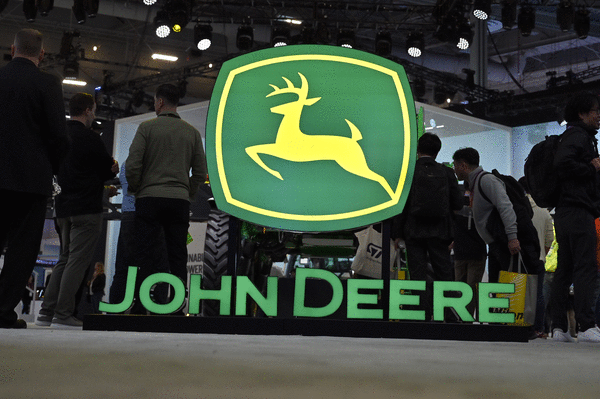
Shares of industry leader Deere & Co. were up as much as 5.7% in New York on Tuesday, while tractor maker CNH Industrial NV jumped as much as 10%, the most in more than a year. Rival AGCO Corp. rose as much as 6.6%. Construction equipment giant Caterpillar Inc. added 4.7%. Shares of Kubota Corp., the Japanese industrial machinery manufacturer, rose as much as 7.9% in Tokyo.
“At a time when our nation’s farmers are under increasing pressure, this action represents an important step towards lowering input costs, strengthening supply chains, and supporting American farmers and manufacturers,” Kip Eideberg, senior vice president of government and industry relations for the Association of Equipment Manufacturers, said in a statement.
The directive is also the president’s latest effort to adjust steel and aluminum duties dating back to his first administration — using so-called Section 232 trade authority that has broadly produced mixed results on growth, hiring and investment.
The White House claims domestic steel production is surging, but many users of the metal are grappling with high costs and spending more in order to comply with the evolving tariff regime.
In April, the administration lowered tariffs to 25% on some imported derivative goods deemed to be “substantially made” of steel, aluminum or copper while maintaining a higher 50% rate on many other imports containing the metals.
Globally, aluminum buyers have been shaken by the closing of the Strait of Hormuz, which accounts for nearly 10% of global supply. The crucial waterway was effectively shut after the U.S. and Israel went to war with Iran in late February.
“Among other things, the Secretary has informed me that recent circumstances have affected and are affecting domestic industries that use agricultural equipment, industrial equipment and machinery, and other related products,” the president’s proclamation reads.
Democrats have frequently cited rising costs to farmers as a result of Trump’s trade policies as an issue that could help flip key House and Senate seats in the Midwest in November’s midterm elections.
AGCO and CNH appear best positioned to benefit from the administration’s decision, “given their relatively higher import exposure of finished goods,” Bloomberg Intelligence analyst Christopher Ciolino wrote in a report. Deere, meanwhile, could qualify for a reduced 10% duty on some products since about 90% of its raw materials are sourced in the country, he said.
“Today’s announcement is a positive for the U.S. ag industry overall, particularly as farmers navigate a challenging environment,” AGCO said in an emailed statement. The company said it is reviewing the details to understand implications for its business and farmers.
Deere and CNH didn’t immediately reply to requests for comment.
Deere last month faulted soaring fuel and fertilizer costs for sluggish tractor sales. Earnings for the maker of iconic green farm machinery for the most recent quarter included $272 million in tariff refund claims.
(With assistance from Alicia Diaz, Megan Durisin, Andrew Atkinson and Erin Ailworth.)
©2026 Bloomberg L.P. Visit bloomberg.com. Distributed by Tribune Content Agency, LLC.









Comments