Google rolls out Android 17; major AI features to follow this summer
Published in Business News




Alphabet Inc.’s Google has begun rolling out Android 17, the latest major update to its popular mobile operating system, though some of its marquee artificial intelligence features will not arrive for another few months.
The initial wave of enhancements will roll out first to Google’s Pixel devices, with other hardware brands to follow over the coming months, the search giant said Tuesday. Android 17 includes an assortment of upgrades related to multitasking, social media video and gaming. It also lays the groundwork for sophisticated agentic AI capabilities that will arrive later this year as fellow big-tech rivals continue to play catch-up. Last week, Apple Inc. unveiled a long list of AI and Siri improvements coming this fall.
But many of Android’s flashy new features — including Gemini Intelligence, redesigned emoji, much smarter voice dictation, and vibe-coded widgets — will arrive throughout the year, beginning this summer. Those will come first to Google’s Pixel 11 series and upcoming devices from Samsung Electronics Co.
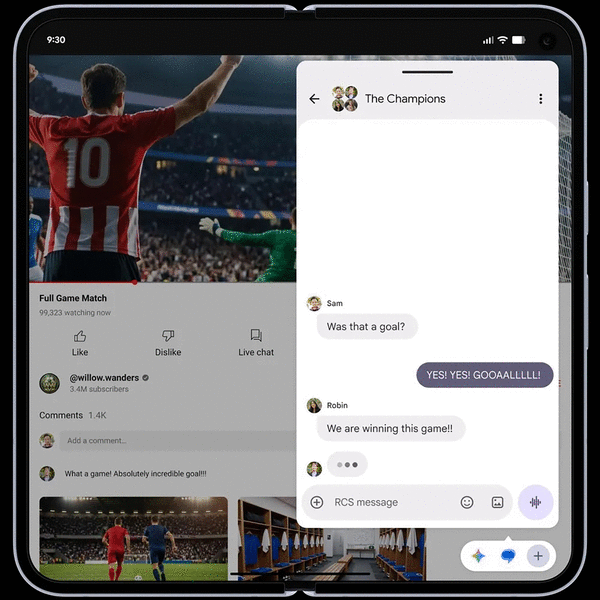
One of the main Android tricks available now is Bubbles, which lets users collapse any currently running app into a pinned floating bubble that remains onscreen, making it easy to quickly jump back in. You could, for instance, put Google Keep in a bubble to call up a shopping list or jot down notes during a call. Or the user might opt to have their texts visible at all times, without having to pull up the regular multitasking app switcher.
Bubbles can be stacked on top of each other and dragged around the screen to whatever spot is most convenient. On foldable devices, where users have an even higher expectation for multitasking, Google has added a dedicated Bubbles section to the taskbar.
A new feature for creators, Screen Reactions, lets people record a video that overlays on top of whatever is currently displayed on the phone screen. This format has become so popular across social media platforms that Google is now building it directly into Android so that users are less tempted to turn to third-party apps like CapCut and Instagram Edits.
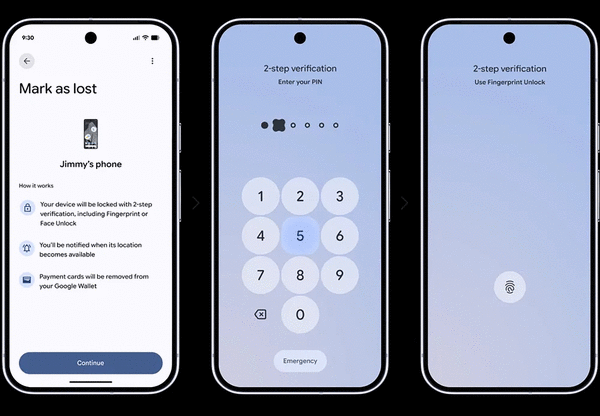
Android 17 also brings some new security and privacy improvements. Users can grant apps one-time location access instead of being forced to make an all-or-nothing decision. Google says that “approximate location” will intelligently expand to a wider area for users in sparsely populated regions to help preserve privacy. Meanwhile, Lost Mode now has tighter restrictions, requiring a biometric method for unlocking a device alongside the PIN code to make it harder for thieves to gain access.
Other changes in Tuesday’s Android 17 release include:
—The option to enable dark mode only for specific apps.
—A new, more intuitive interface for adjusting Android’s split-screen multitasking view.
—More flexible controls for users with hearing aids, allowing them to choose which audio streams go to the hearing aid and which come from the phone’s loudspeaker.
Google is also updating its Wear OS smartwatch operating system with longer battery life, live updates and better interoperability with connected devices such as smartglasses. The company plans to ship its first audio-based glasses this fall, and it’s taking preemptive steps to ensure that they work well with other Android devices.
Like Android phones, Wear OS 7 will also be updated later this summer with new Gemini Intelligence features, including Create My Widget, multi-step app automations and a redesigned user experience for Google’s AI assistant.
©2026 Bloomberg L.P. Visit bloomberg.com. Distributed by Tribune Content Agency, LLC.










Comments