Tanker trucks unload chicken factory gunk from NC on South Carolina farms
Published in News & Features
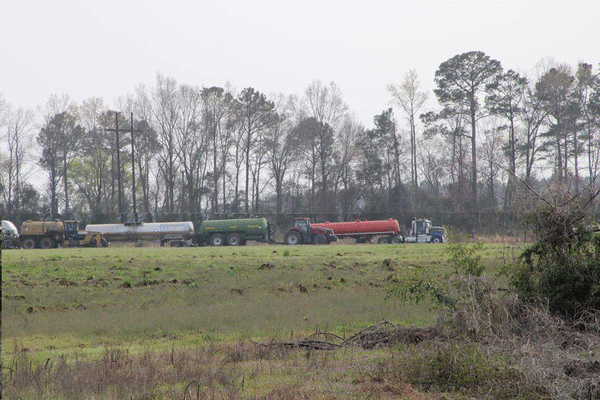
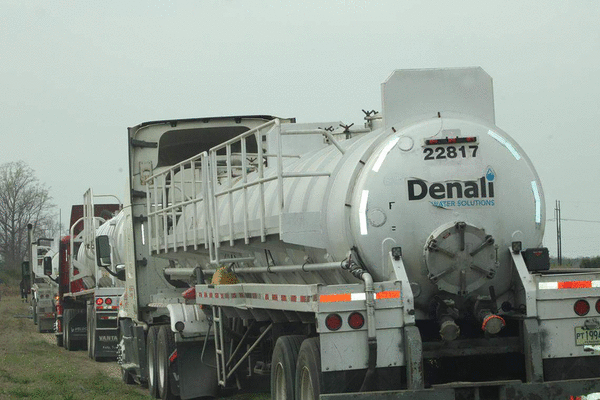

It’s not unusual before the spring planting season to see tanker trucks lurching across eastern South Carolina, on their way to deposit a slurry of industrial and municipal waste on farmland.
The sludge these tankers carry, which often comes from North Carolina chicken processing plants, is supposed to enrich the soil so crops can grow. But it also carries foul odors and the potential to contaminate the land in rural South Carolina, say critics upset about the practice.
These days, a dispute is simmering over a plan to use chicken processing plant sludge on farms in Darlington County, where land already has been polluted by slurry from a textile factory. An Arkansas company is proposing to deposit tons of the material on 27 agricultural fields, much of it from poultry plants in North Carolina. All told, 470 acres would receive sludge.
It’s an expansion to the long-standing practice of using food processing plant sludge on farmland to help crops grow. But the latest plan is drawing extra attention.
Opponents who’ve become increasingly worried about the use of sewer sludge as fertilizer say it’s time to stand up and stop the practice. They’re upset about the potential environmental effects of sludge spreading in a county that has had problems with it before. And they’re irked that an estimated 80 percent of the sludge is being imported to their corner of South Carolina from other states.
While supporters of using sludge say it is a safe and inexpensive way to help crops grow, complaints have been loud enough that the state’s environmental department will hold a public meeting about the latest proposal March 19 in Darlington. Opponents are distributing fliers, with slogans such as “No More Out-of-State Sludge,’’ to get the word out.
Sludge, a watery, sometimes gooey material left over from wastewater treatment processes, often contains contaminants that are not regulated by state or federal agencies. One 2018 U.S. Environmental Protection Agency report said 352 unregulated pollutants have been found in sludge.
That includes toxic forever chemicals like those showing up in farm fields and drinking water near areas where sludge has previously been spread in Darlington County.
Sludge spreading requires approval from the S.C. Department of Environmental Services, but Dave Hargett, a consultant who is working with the owner of a nearby nature preserve, said state regulators haven’t given the proposal by Terra Renewal Services enough scrutiny, nor have they applied state law strictly enough.
People need to know if the material coming to Darlington County contains toxins, like other batches have in the past, he said. Hargett is calling for the Department of Environmental Services to turn down Terra Renewal’s request to dump more sludge on the land.
“This is categorically, by statute and regulation, industrial waste,’’ Hargett said. “The question I have is ’what is in it, and is it being controlled?’ ’’
Even though the state environmental department must approve spreading sludge, the law is weak and needs to be strengthened, critics say. State Rep. Joseph Bustos, R-Charleston, is planning to introduce a bill limiting the use of sludge to fertilize farm fields because of concerns about the potential for forever chemicals and other pollutants to be in the material.
Denali Water Solutions, the parent company of Terra Renewal of Arkansas, says it doesn’t produce forever chemicals, formally known as PFAS, or per and polyfluoroalkyl substances. But it did not directly address food processing plants when asked by The State.
In a carefully worded statement, Denali said the company, its “immediate customers and municipal partners are not producers or manufacturers of PFAS ... and those chemicals do not originate from our operations.’’
Disruptive stench
Ray Howell, a retiree from the Philadelphia community of Darlington County, said living near farm fields that are covered with sludge can be unpleasant.
He remembers last Thanksgiving, when a family gathering was forced indoors because of the nauseating odor from agricultural fields. He lives on the other side of a small forest from several fields that are coated with sludge at times during the year.
“The most immediate concern is the odor, but then, again, there is so much of it being applied close to my residence, I’m concerned about the effects on the groundwater,’’ he said. “I have a well we use for irrigation and as a backup if we were to lose our county water.’’
He said he’s against the Terra Renewal plan to expand in Darlington County. Areas proposed for more sludge spreading are in his community and those nearby, which are roughly between Society Hill and Darlington. It was not known this week what will be grown on the fields, but farmers in Darlington County produce a variety of vegetables, including corn and soybeans, well as hay to feed cattle.
The process for applying sludge to the landscape goes generally like this: The material is trucked to a farm field in a large tanker and pumped into rolling machinery that then moves across the land, spreading it out. Material is often injected six to 12 inches into the soil, records show.
Hargett said his worries about the latest spreading plan are heightened because sludge has previously tainted farmland in Darlington County, about an hour’s drive east of Columbia.
From 1993 to 2013, the Galey and Lord textile plant in Society Hill received state approval to dump sludge on more than 300 farm fields in the area. In approving sludge application permits for the 10,000 acres of farmland, state regulators said it was good for the soil.
But decades later, the sludge was found to contain forever chemicals – and limited testing has verified the chemicals still are present in the soil of the fields that have been studied. Wells near many of these sludge fields are polluted with high levels of forever chemicals like the chemicals found in Galey and Lord’s waste.
The State newspaper reported on the threats of sludge in a 2023 investigative series, Toxic Deals, that also examined how it had affected Darlington County. The series found that sludge is applied across the state near rivers and drinking water systems with elevated PFAS levels.
Exposure to these chemicals over time can cause certain types of cancer, thyroid problems and immune system deficiencies in people. Major ways people are exposed are through drinking contaminated water or eating food tainted by forever chemicals.
The chemicals help repel water from clothing and prevent sticking in frying pans. They also are key ingredients in firefighting foam used on military bases and elsewhere. The textile and carpet industries are among the industries that have used PFAS in their products.
In January, Yale University scientists found forever chemical pollution on all 15 fields they tested near Society Hill. About half of those fields had elevated levels of PFAS. Previous state testing has found a handful of other fields with forever chemicals in the dirt.
“Historical applications of industrial sludge, particularly in Darlington County, have resulted in some properties being seriously contaminated, and rendered permanently impaired, due to the presence of persistent toxins and contaminants of concern,’’ Hargett said in written comments to the state environmental department that also called for more scrutiny of the Terra Renewal plan and the state’s sludge oversight program.
Denali said Terra Renewal is providing a service to farmers and food processing plants.
The material it delivers to farms contains nitrogen, phosphorus, potassium and other nutrients that “support healthy soils,’’ Denali’s Nancy St. Pierre said in an email. The company says it doesn’t consider the material waste, instead calling it “food processing residuals.’’
Terra Renewal has at least 122 land application sites totaling 9,300 acres in four South Carolina counties: Darlington, Chesterfield, Kershaw and Marlboro, according Department of Environmental Services records. Records show the additional sludge material to be applied will come from “facilities engaged in the slaughtering, dressing and packing of meat and poultry products for human consumption and/or animal food and feeds.’’
The sludge contains leftover material from food processing plants, poultry processing lagoons and egg-rinsing water, as well as grease, according to plans. Blood from poultry plants could be included in the waste. St. Pierre said the material is about 90% liquid, on average.
Her company has told media outlets in other states that the material it provides for farmland is good for the soil. The company performs any testing required by the government and obeys government laws. officials say. But it does not check sludge for forever chemicals because that is not required, according to a Feb. 4, 2025, story by the Tennessee Lookout.
Terra Renewal operates land application efforts in 13 states like the ones in eastern South Carolina. St. Pierre said the organic material it delivers in South Carolina comes “at no cost to farmers’’ and is in demand by the agriculture community.
“This organic material supports higher-yielding crops that feed the communities throughout South Carolina,’’ her email said. “This material also provides farmers with a natural alternative to synthetic fertilizers, which continues to significantly rise in cost for farmers. ‘’
Tangles with pollution regulators
Denali and Terra Renewal have, at times, run into problems following environmental laws in some states, including South Carolina. Last year, the S.C. Department of Environmental Services fined Terra Renewal $16,000 for alleged illegal discharges of food processing waste into the ground.
The fine followed a complaint that discharges were occurring on unauthorized sites, state enforcement records show. Denali’s St. Pierre said a subcontractor made a mistake and put the material on an unpermitted field.
The South Carolina environmental agency says it will carefully review the Terra Renewal request to put sludge on the Darlington County agricultural fields, before making a final decision.
Agency officials did not make anyone available for an interview, but said in an email that state rules governing land application of waste material include requirements that the activity to be set back from nearby property and that sludge not be applied during rainy periods. Critics say the rules are too weak to adequately protect the environment.
“If, after our detailed and thorough permit application review process, the permitee demonstrates by way of its application and supporting data and information that it can meet the requirements established by state and federal laws and regulations, then the agency must issue the permit,’’ the agency’s email said.
The email said the department is not aware that any of the 27 farm fields proposed for sludge spreading have been used for that purpose in the past.
Whether forever chemicals exist in the latest proposed loads of sludge from chicken plants — like in the sludge Galey and Lord shipped for farmers decades ago — is a question that Hargett and others say needs more examination.
There are some reports that food processing plants can release forever chemicals. Two years ago, a Perdue Farms facility in Maryland found elevated levels of PFAS in the waste stream of a soybean processing plant it operated. Perdue is a major supplier of chicken for consumption across the United States.
Still, more is known in South Carolina about sludge produced by municipal wastewater plants and industries than poultry plants.. One South Carolina sludge provider has previously told The State he knew of no forever chemicals in chicken plant sludge.
North Carolina sludge imports
A major sore point among those questioning Terra Renewal’s plan is where the sludge comes from.
From 2020 to 2024, more than 80% of the sludge deposited by Terra Renewal in Darlington and a handful of nearby counties originated in other states, according to research by consultants for nature preserve founder Brad Turley.
Using annual land application reports provided to the state, their research said only 16% of the Terra Renewal sludge approved for use in South Carolina came from the Palmetto State. Most of the out-of-state waste is coming from North Carolina, their research found.
“There are big out-of-state companies bringing questionable material into South Carolina and dumping into some of the poorer counties in the state,’’ Turley told The State.
Turley owns Southern8ths Farms in Chesterfield County. It is a private 1,600-acre preserve and research station where the rolling Piedmont meets the flat Pee Dee region. Filled with streams, hills, forests and wetlands, the scenic property has been the subject of multiple environmental studies, including the condition of area creeks. Some are tainted with bacteria.
Hargett said he’s trying to determine if easier state rules in South Carolina are the reason North Carolina chicken plant sludge comes here. Research he’s done shows that sludge is being transported from poultry facilities as far as 112 miles away in North Carolina.
Turley said trucking sludge more than 100 miles into South Carolina and giving it away to farmers costs money. So there must be greater economic incentives for those involved in the sludge trade, he said.
“What’s the economics of this?’’ he asked. “Somebody’s making a ton of money?“
_____






Comments