LAPD's relationship with Flock Safety under scrutiny from oversight body
Published in News & Features
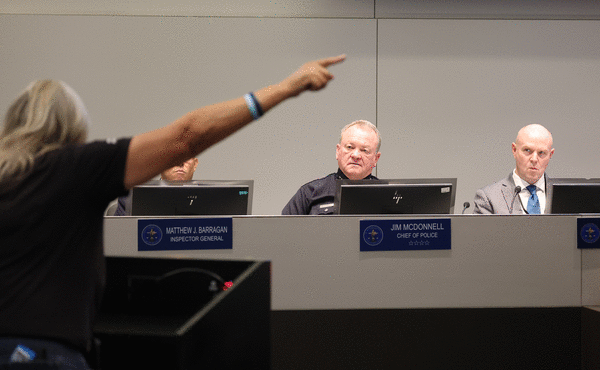
LOS ANGELES — The Los Angeles Police Commission on Tuesday said it wants to know more about how data captured by the controversial license plate reader company Flock Safety is stored and shared.
Commissioner Jeff Skobin requested a report from the department about its relationship with Flock, citing his conversations with city officials and residents, as well as news reporting detailing how federal authorities had repeatedly accessed Flock's surveillance data as part of their nationwide deportation crackdown.
Speaking during the civilian oversight panel's meeting Tuesday, Skobin said that, for the sake of transparency, he wanted the department to explain how it was "so confident" that its data wasn't being accessed by federal authorities as part of their immigration roundups.
"Good. We'll put that together, commissioner," LAPD Chief Jim McDonnell said.
The chief added that the department was aware of news reports suggesting that a "configuration error" by Flock had allowed out-of-state law enforcement agencies, including federal agents, to access license plate data from Ventura County in violation of state law.
McDonnell said he ordered an internal audit to determine whether similar inadvertent sharing had occurred within the Los Angeles Police Department.
In a blog post Tuesday, Flock took "full responsibility" for the data disclosures and said it had adopted additional safeguards, including better tracking of sharing requests.
"Flock sincerely regrets the confusion and mistrust this has created within several communities, and made every effort possible to determine the cause of each reported instance of inadvertent sharing," the post read. "Unfortunately, due to earlier limitations in technical logging, in some cases it is impossible to determine a specific cause."
Although the list of places who have deactivated their Flock cameras or decided not to renew their contracts with the Atlanta-based firm continues to grow, Flock has continued to expand its footprint in the Los Angeles area.
A separate study of the department's overall license plate reader network is already underway, and is expected to be completed this summer.
Plate-reading technology has been around for decades. But as the Trump administration's deportation crackdown has ramped up, residents, privacy advocates and officials in some cities across the country have mounted campaigns urging their local governments to stop using the technology.
Before the commission meeting, several dozen activists gathered outside LAPD headquarters in downtown L.A. to demand that the department cut ties with Flock.
Several speakers said the continued sharing of surveillance data undercuts the city's promise as a haven for immigrants, those seeking gender-affirming care and other vulnerable groups.
"We're seeing the impacts of these data being sold not only to [U.S. Immigration and Customs Enforcement] but to other agencies that continue to criminalize and impact young people," said Mau Trejo, a spokesperson for the group Students Deserve.
©2026 Los Angeles Times. Visit at latimes.com. Distributed by Tribune Content Agency, LLC.






Comments