Mistaken identity blamed as feds drop charges in Minnesota church protest case
Published in News & Features
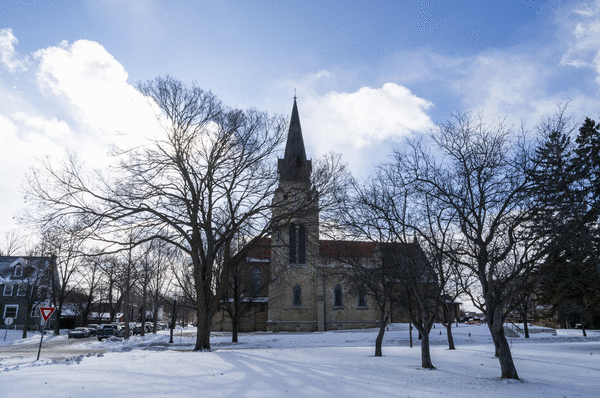
Federal prosecutors have dropped charges against a Minnesota woman accused of taking part in a January protest at a St. Paul church, after her attorney said she was misidentified and never attended the demonstration.
The dismissal, filed late Friday, March 20, in federal court, ends the case against Heather Danae Lewis, 50, one of 39 people charged in connection with a protest at Cities Church. The charges were dismissed with prejudice, meaning they cannot be brought again.
Lewis had been charged with conspiring to interfere with religious worship and with violating federal protections for houses of worship. The case is part of a broader prosecution tied to protests over the Trump administration’s immigration crackdown in Minnesota.
Her attorney, Minneapolis lawyer Brock Hunter, said the government moved to dismiss the case after Lewis was able to show she was not at the Jan. 18 demonstration.
“Ms. Lewis and her family are very relieved to have this ordeal over with,” Hunter said, adding that the mistaken identity caused weeks of stress for Lewis and her family.
The protest targeted Cities Church, where David Easterwood, identified in court filings as the acting director of U.S. Immigration and Customs Enforcement’s St. Paul field office, serves as a pastor. Demonstrators gathered to oppose federal immigration enforcement actions that have reshaped daily life across the Twin Cities in recent months.
Lewis, an engineer with no history of activism, became a suspect after investigators relied on cellphone location data and video footage from the scene, according to her attorney. Hunter said Lewis had been in a nearby parking lot that morning to pick up items from an auction, placing her near the gathering point but not at the protest itself.
Investigators later compared her driver’s license photo to footage from the demonstration and concluded she resembled a participant, Hunter said.
Her arrest came weeks later. On Feb. 27, federal agents stopped Lewis while she was driving and told her they had a warrant. She was taken in handcuffs to a federal building and questioned for hours as she tried to convince investigators they had the wrong person, Hunter said.
Hunter said the situation could have been avoided if prosecutors had first notified Lewis that she was under investigation, a step that often allows people to provide information before charges are filed.
“The evidence of her innocence was pretty clear,” he said. “That’s something the government could have clarified before filing an indictment.”
Federal officials did not respond to requests for comment about why the charges were dismissed.
The dismissal adds to a series of recent setbacks for federal prosecutors in Minnesota as they pursue cases tied to immigration enforcement. In recent weeks, prosecutors have abandoned or lost multiple cases, including charges against two men accused of assaulting an immigration agent after questions emerged about the agent’s account of a shooting. In another case, a judge dismissed gun charges after prosecutors missed key deadlines.
The Cities Church case itself has drawn national attention for both the number of defendants and the aggressive legal approach, which frames organized protest activity as a criminal conspiracy.
On Friday, the judge overseeing the case, U.S. District Judge Douglas L. Micko, criticized prosecutors for delays in turning over evidence to defense attorneys.
“Here we are, months into a case that the government had an intense appetite to initiate, but cannot seem to keep up the pace when it comes to discovery obligations,” Micko wrote. “This is unacceptable.”
For Lewis, the case is over. The broader prosecution, and the scrutiny surrounding it, continues.
_____
©2026 The Minnesota Star Tribune. Visit startribune.com. Distributed by Tribune Content Agency, LLC




Comments