Starmer apologizes for Mandelson appointment amid vetting fury
Published in News & Features
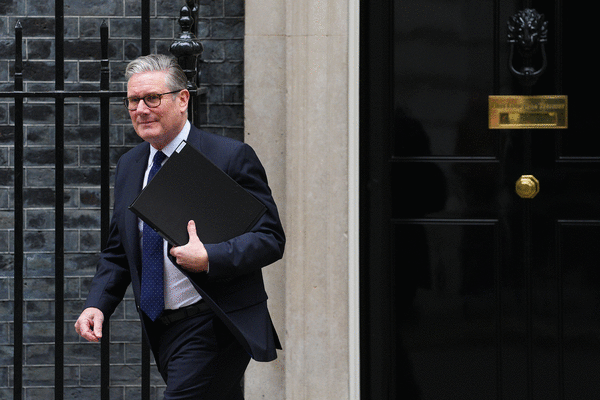
Embattled U.K. Prime Minister Keir Starmer apologized for his appointment of Peter Mandelson as the U.K.’s ambassador to Washington, as he criticized civil servants for failing to inform him that the Labour grandee had failed security vetting.
“I should not have appointed Peter Mandelson,” Starmer told the House of Commons on Tuesday. “I take responsibility for that decision, and I apologize again to the victims of the pedophile Jeffrey Epstein, who were clearly failed by my decision.” Starmer also said he’d followed the standard process in naming Mandelson to the post before he had been vetted.
Starmer is heading for a showdown with the senior official he fired over the saga, former Foreign Office chief Olly Robbins, who approved Mandelson’s security clearances despite the failed vetting. Robbins is due to speak to Parliament’s Foreign Affairs Committee at 9 a.m. on Tuesday, a moment of potential danger for the premier if he reveals damaging new details about the Mandelson appointment.
The renewed questions about the Mandelson appointment have piled fresh pressure on Starmer ahead of a crunch set of local elections on May 7, in which polling suggests the governing Labour Party will suffer heavy losses. If that materializes, Starmer is seen as vulnerable to a leadership challenge, not least because it will be the culmination of a series of crises and policy missteps for the premier.
The prime minister told the chamber that he only found out last Tuesday that the Foreign Office had granted Mandelson clearance against the express advice of U.K. Security Vetting, the agency in charge of the due diligence. He said the country’s top civil servant at the time of the appointment — then Cabinet Secretary Chris Wormald — had also not been told at the time that Mandelson had failed vetting.
“I simply do not accept that Foreign Office officials could not have informed me of UKSV recommendations whilst also maintaining the necessary confidentiality that vetting requires,” Starmer said, “The recommendation in the Peter Mandelson case could and should have been shared with me before he took up his post.”
The Mandelson scandal has repeatedly surfaced to bring political heat onto the premier since last September, when Bloomberg News revealed the depth of the envoy’s relationship with the late, disgraced financier Jeffrey Epstein. Starmer sacked Mandelson, but further details emerged when the U.S. Department of Justice published millions more files relating to Epstein at the end of January.
The following month, Starmer’s chief of staff, Morgan McSweeney, and his communications director, Tim Allan, quit, prompting long-time Starmer ally and Scottish Labour leader Anas Sarwar to call for the premier to go. Starmer survived that when every member of his cabinet publicly declared their support, but ministers have been more reticent since last week, when the Guardian revealed that Mandelson failed vetting by U.K. agencies but was given security clearances anyway and confirmed as U.S. ambassador.
The House of Commons also in February voted to force the government to release thousands of documents relating to Mandelson’s appointment, a process of disclosure that the government has already begun.
In the first set of documents released, it has already emerged that at the time of Mandelson’s appointment, the country’s then top civil servant, Simon Case, had advised Starmer that if he chose to make a political appointment, he should “give us the name of the person you would like to appoint and we will develop a plan for them to acquire the necessary security clearances and do due diligence on any potential conflicts of interest or other issues of which you should be aware before confirming your choice.” Starmer went ahead and said he was appointing Mandelson before the vetting was carried out.
“I want to make clear to the House that for a direct ministerial appointment, it was usual for security vetting to happen after the appointment, but before starting in post,” Starmer told the Commons. “That was the process in place at the time.”
©2026 Bloomberg L.P. Visit bloomberg.com. Distributed by Tribune Content Agency, LLC.





Comments