Walmart flags higher fuel costs eroding retailer's earnings
Published in News & Features
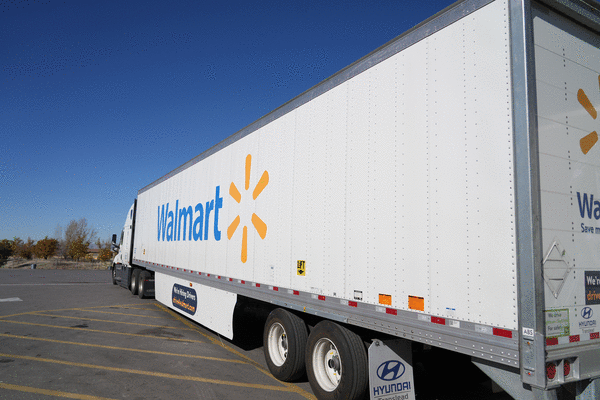
Walmart Inc. warned rising fuel costs are squeezing the company’s bottom line and could lead to higher prices for shoppers.
The world’s largest retailer said comparable sales in U.S. stores, excluding fuel, rose 4.1% in the latest quarter, slightly better than what Wall Street analysts were expecting. It also forecast adjusted profit for the second quarter that missed expectations.
The mixed results show that the company continues to gain market share across income levels with its focus on low prices, fast delivery and wide assortment. But that emphasis on affordability is facing pressure as inflation accelerates and the conflict in Iran drives up fuel prices.
Walmart shares fell as much as 8% on Thursday, the steepest intraday drop since November 2023. The stock had risen 17% so far this year as of Wednesday’s close. Shares of some of Walmart’s peers, including Target and Kroger, also fell in regular trading on Thursday.
“The high-income consumer is spending with confidence in many categories, whereas the low-income consumer, we can tell, is more budget-conscious, trying to navigate certain financial distress,” Chief Financial Officer John David Rainey said in an interview with Bloomberg News.
Walmart is viewed as an economic barometer due to its large size and footprint across the U.S. and other markets. Spending has largely held up in recent years, although consumers have become increasingly selective with their purchases. Good deals and unique products can still attract buyers. Additionally, higher tax refunds this year have given families some extra cash, but this benefit is expected to fade.
As fuel prices pressure consumers’ budgets, they’re putting less gas in their tanks, with the number of gallons per pump falling below 10 for the first time since 2022. If fuel costs stay at current levels, prices across the board could rise in the second quarter and the second half of the year, Rainey said. Walmart’s prices rose about 1.2% during the last quarter.
Fuel weighed on Walmart’s profit margin, with the company absorbing “virtually the entirety” of the increases during the period, Rainey said. This suggests that the retailer is sacrificing some earnings in the near term to keep prices low and competitive — an effort that it said it would continue to prioritize. The number of discounts rose 20% from a year ago.
“It’s tough on very short notice to be able to navigate a cost headwind like that,” he said. While Walmart will be able to manage through it, he expects to see an equal or larger challenge related to fuel in the current quarter.
Jacob Aiken-Phillips, an analyst at Melius Research, said Walmart’s shares are falling in part because of a “super high” bar from investors and a lofty valuation. There’s also concern that pressure on profitability is going to increase in the second half of the year as the retailer works to keep prices low.
Heightened competition from the likes of Kroger Co. and Albertsons Cos. could add to challenges, he added.
Sales slowdown
During the quarter, sales slowed somewhat in April after the Easter holiday. An increase in tax refunds likely muted the impact of rising gas prices, though that’s abating. A higher numbers of units sold and transactions drove sales increase. U.S. e-commerce sales rose 26% during the quarter, fueling growth in the company’s biggest market. The company can now deliver to 60% of the U.S. population within 30 minutes.
Fashion, which has been a standout category, is helping lift sales of related areas like home and beauty. The company is seeking to sharpen its focus on general merchandise offerings, which include apparel, electronics and other discretionary categories and generated the highest share gains in five years.
Walmart’s narrative echoes commentary from big-box peers Target Corp. and Home Depot Inc., which both signaled this week that consumers are staying resilient.
Kraft Heinz Co., McDonald’s Corp. and other companies have struck a more cautious tone. The past year has been a roller coaster for consumer-facing companies, first with President Trump’s expansive, on-off tariffs, that in some cases roiled operations, and now with the ongoing geopolitical conflicts threatening to dampen demand.
The Bentonville, Arkansas-based retailer has said it seeks to gain market share during challenging economic times by focusing on value and essentials like groceries. Delivery and other online services have expanded Walmart’s base of clients to include wealthier shoppers. Advertising and other businesses are also contributing to profit growth and giving Walmart more room to further invest in lowering prices and improving store operations.
In particular, fast deliveries have been a growth engine, and the company’s efforts to make inroads into the fashion market are gaining traction. The retailer has also expanded the selection of merchandise on its marketplace of third-party vendors.
©2026 Bloomberg L.P. Visit bloomberg.com. Distributed by Tribune Content Agency, LLC.






Comments