EPA says California chemical tank likely to leak, not explode
Published in News & Features
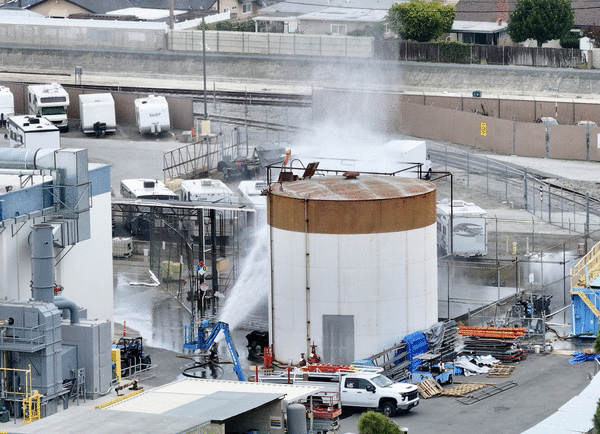
A compromised chemical tank in California that has prompted the evacuation of more than 40,000 people is more likely to leak into its surroundings than explode, Environmental Protection Agency Administrator Lee Zeldin said.
Orange County Fire Authority has worked since Friday to contain a chemical tank at a GKN Aerospace plant in Garden Grove, about 35 miles southeast of Los Angeles, after it overheated and leaked. Officials at the site have warned throughout the weekend that the tank could explode or leak, and Governor Gavin Newsom declared a state of emergency for the county.
“I’m being told this morning that the most likely scenario is one of a low volume release, where the local authorities are going to be able to monitor, neutralize and contain the threat,” Zeldin said Sunday on CNN’s "State of The Union."
The compromised tank holds some 7,000 gallons of a toxic chemical used to make plastics, and fire officials are seeking to keep its temperature lower than 85F (29C). The county fire authority said late Saturday it had “good productive conversations” with environmental experts to prevent further spillage or damage from the tank.
“Hopefully, we can get that done before any failure in the tanks,” incident commander Craig Covey said. “I am not promising that we’re going to fix that, but I’m promising you we’re doing everything we can to give us a third option that does not involve damaging this community or damaging our environment.”
GKN is a unit of UK-based Melrose Industries Plc, which makes aerospace components such as landing gear, engine structures and electrical systems, according to its website.
The situation at Garden Grove “remains ongoing” and GKN is working to “resolve the situation as safely as possible,” the company said in a statement.
Harry Allen, the LA team lead for the EPA, said in a video message posted Saturday night that the agency hasn’t detected contaminants at the 24 monitoring sites it has set up around the tank.
County Health Officer Regina Chinsio-Kwong said the main concern is if the polymer reaches a high enough temperature and becomes a vapor. Inhaling that vapor, she said, “causes significant damage.”
“It can cause a lot of irritation to your eyes, your nose, your respiratory tract or your lungs,” she said in a video Friday.
_____
©2026 Bloomberg L.P. Visit bloomberg.com. Distributed by Tribune Content Agency, LLC.






Comments