First mosquitoes of the season test positive for West Nile virus in Illinois
Published in News & Features
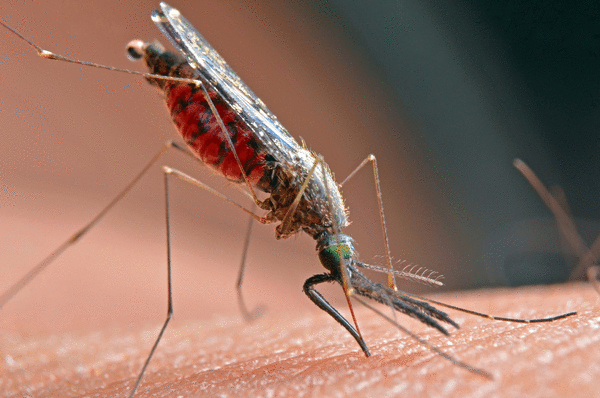
CHICAGO — The first detected presence of West Nile virus has been reported in Wilmette this year, after a mosquito sample pool tested positive on June 16, officials say.
West Nile positive mosquitos were also discovered in two sample pools collected from nearby Evanston and Northbrook.
The samples are the first to test positive of the 217 total pools tested from several North Shore municipalities this season, according to Mark Clifton, executive director of the North Shore Mosquito Abatement District.
Roughly 50 mosquitoes are tested within a pool, Clifton clarified.
According to health officials, symptoms for West Nile virus may include fever and chills, headache and body aches, fatigue, joint pain, nausea and vomiting and a skin rash.
The majority of infected people, however, will show no symptoms at all, according to the Centers for Disease Control and Prevention.
If an infected person does end up exhibiting symptoms, they typically begin two to six days after being bitten by a mosquito carrying the virus. Symptoms may still appear up to two weeks after first contracting the virus, health officials say.
“The detections will increase as we move forward in the season,” Clifton told Pioneer Press.
“It’s hard to know exactly how many mosquitos [within the test pool] are infected,” but this is “about the time where you start seeing it.”
Because it’s an endemic virus, Clifton said cases crop up routinely year-over-year.
It’s not until the later summer months, when the weather continues to heat up and the virus becomes more abundant, that people begin to fall ill, he added.
“When we find higher levels of the virus, we begin warning the public more urgently,” Clifton said, but so far the North Shore’s current human risk level remains low.
Last year, officials reported the highest recorded infection rate of the virus on record, according to Clifton. About 56 out of every 1,000 mosquitoes were testing positive at the time.
Seasonal increases in the virus are mainly driven by heat and warmer temperatures across the Midwest, which allow for a faster mosquito life cycle, and in return, viral life cycle.
Migrating birds may also be a culprit for spreading the virus, Clifton said.
The North Shore Mosquito Abatement District recommends using EPA-registered insect repellent to help ward off the unwanted bugs when spending time outdoors.
Officials also recommend wearing loose fitting clothing and avoiding peak mosquito feeding times around dawn and dusk.
Mosquitos lay their eggs in standing pools of water, so residents are encouraged to examine their property for any items that may be carrying still water, particularly smaller items.
According to the CDC, West Nile virus is the leading cause of mosquito-borne disease in the United States. Every year, more than 1,300 people develop a serious reaction to the virus, which in some cases may be fatal.
____
©2026 Chicago Tribune. Visit at chicagotribune.com. Distributed by Tribune Content Agency, LLC.






Comments