It's been 5 years since the deadly Surfside condo collapse. What's changed?
Published in News & Features
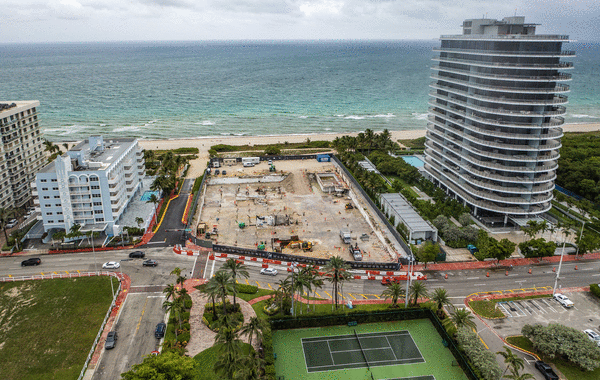
It happened before the break of dawn.
On June 24, 2021 — while many residents were asleep — the Champlain Towers South condominium in Surfside, Florida, began to crumble.
It’s taken half a decade for federal officials to come forward with an explanation for what caused the disaster. They pointed to a shoddy building design and corroding concrete columns.
But the fallout that morning was swift. In seconds, 12 stories were reduced to a pile of rubble.
After 10 days, the hollow shell of the building was demolished. After a month, officials capped the final death toll at 98, marking the condo collapse as one of the worst engineering disasters in U.S. history. Almost a year to the date, state legislators unanimously passed a sweeping set of condo reforms aimed at preventing such a disaster from happening again.
The story didn’t end there. In the five years since the Surfside tragedy, the condo market has faced significant turbulence as owners, lenders, insurance providers and property managers all adjust to the new reality.
Experts agree, condos will be better off in the long-term thanks to the lessons learned from Surfside. But the road to a safer, more sustainable future will be paved with sacrifices for some condo owners.
Here’s a breakdown of how the rules have changed and how the market has responded.
What do the new laws say?
Most of the reforms focus on three areas how condos are inspected, how condo associations manage their savings and what oversight decision-makers on condo boards are subject to.
Inspections:
—Buildings three stories and higher must submit a structural “milestone inspection” to the local building department after 30 years. Some local governments require an inspection after 25 years if a building is closer to the coastline.
—Additional inspections must be completed every 10 years thereafter.
—Condos that appear to be in bad shape are subject to a “phase 2” inspection. If an inspector discovers major issues, the association has one year to start making repairs. They may use assessments, loans or a line of credit to cover those costs.
—The first wave of inspections were due by the end of last year, though it’s unclear how many associations actually met that deadline
Savings:
—For buildings three stories and higher, associations must submit a “structural integrity reserves study” to the state every 10 years. This will determine how much they need to save over time to cover routine maintenance and replacement of roofs, plumbing windows and more.
—Associations are no longer allowed to waive or underfund reserves. They must follow the funding schedule prescribed by the study. They may use assessments, a loan or a line of credit to cover those costs.
—The first wave of reserve studies were also due at the end of last year.
—If the milestone inspection reveals any major structural issues, the association can pause reserve savings for up to two years to pay for those more urgent repairs.
Condo Boards:
—Boards must make all documents related to the milestone inspections and the reserve studies available to unit owners and prospective buyers.
—For condos that have 25 or more units, boards must make all records available online through a password-protected website.
—Board members are required to take a certification course after being elected and must complete an annual continuing education course.
—Board members can face felony charges for receiving kickbacks.
What effect have these laws had on condo associations?
The good news: As milestone inspections have started to roll in, it seems like most buildings across the state are not in danger of becoming the next Champlain Towers South, said Dawn Bauman, CEO of the Community Association Institute. Her organization represents over 500,000 condo and homeowner’s association board members and community managers across the globe.
Still, the new rules have led to higher maintenance and insurance costs for many associations. Some are levying hefty special assessments to cover these expenses. Residents who can’t afford to fork over thousands of dollars on top of what they’re already paying may be forced to move.
The state Legislature has repeatedly pushed back deadlines to give associations more time to comply.
That’s a good thing, said Bauman. “A slow rollout of these requirements is critically important to not create a financial disruption or spiral in some of these condo buildings,” she said.
It’s not just state law that’s impacting condo associations. Bauman said new lending policies from federal mortgage giants Fannie Mae and Freddie Mac are also causing complications.
Buyers interested in purchasing a condo at a building undergoing a major maintenance project may not be able to get a Fannie Mae or Freddie Mac-backed loan.
“That makes no sense,” said Bauman. “We all want to make sure people are safe in their buildings. But some of these requirements go well beyond condo safety and actually are making it more challenging for some of these buildings to fund maintenance.”
How has the housing market responded?
Statewide, condo and townhome sales have dropped about 48% since May 2021, the month preceding the Surfside collapse. That’s according to data from Florida Realtors.
Much of that is the result of an overall cool down in the housing market driven by rising prices and mortgage rates, said Hannah Jones, senior economist at Realtor.com.
But traditional single family homes seem to be faring better than condos, with sales for those properties dropping just 20% in the same time period.
When reforms were passed, there was speculation about a potential “fire sale” from condo owners desperate to get out and avoid future expenses. That hasn’t come to pass, at least so far.
Last year, there were 648 distressed condo sales. That’s nothing compared to the years immediately following the 2008 housing market crash, when hundreds of thousands of Florida homeowners were filing for foreclosure.
It’s true, a lot more people are trying to sell their condos. The number of active listings has shot up more than 250% since the Surfside condo collapse, according to data from Florida Realtors. However, that number is trending downward year over year.
The people who do successfully sell their condos aren’t seeing their values drop off a cliff. The median sales price has increased 23% since Surfside, hovering around $307,000.
“By and large a lot of these homeowners, especially ones who have owned for a long time, are still sitting on significant equity,” Jones said.
Dimitri Karides, a broker associate with Sand Key Realty who specializes in waterfront condos, said some condos are better off than others.
“Those buildings that don’t have a good balance sheet or have not addressed the structural integrity of the building are losing valuation,” he said.
Sellers who can afford to weather increased maintenance and insurance costs in the short term should consider holding out, Karides said.
Those who can’t should be prepared to make concessions. Some sellers are even being asked to cover the costs of upcoming special assessments in order to close a deal.
Another option is emerging in some areas: selling to a developer.
“They’re looking to buy several units, dissolve the association and then put something new up,” said Karides.
These sorts of deals are nothing new, but they’ve mainly been concentrated in South Florida.
Karides said he suspects the trend will spread as more and more condo owners start to weigh whether their buildings are worth salvaging.
_____
©2026 Tampa Bay Times. Visit tampabay.com. Distributed by Tribune Content Agency, LLC.






Comments