Blue crab population increased this year -- but still faces concerning decline
Published in News & Features
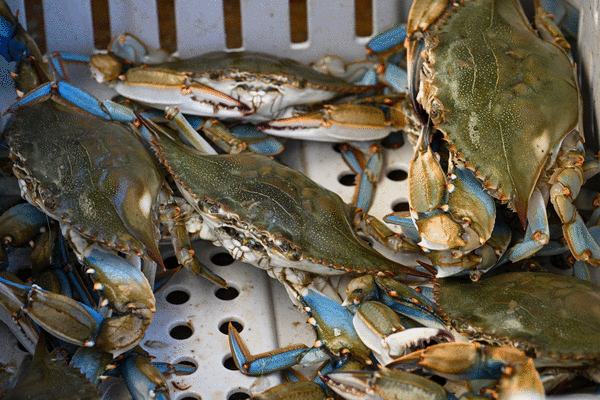
BALTIMORE — The Chesapeake Bay’s blue crab population saw an increase this year, despite still facing a concerning decline over the past decade, according to a news release Thursday from the Chesapeake Bay Foundation.
May’s winter dredge survey, conducted by Maryland and Virginia fisheries, predicted a jump in crabs to 349 million, compared with last year’s record low population of 238 million. For reference, there were about 50% fewer crabs in the bay in 2023 compared with the crustacean’s population in 2011 of 452 million.
The Chesapeake Bay Foundation emphasized the need for pollution prevention, habitat restoration and methods to suppress the growth of invasive blue catfish — which eat the crustaceans — despite the “encouraging” population increase.
“Blue crabs are sending us warning signs,” Chris Moore, the foundation’s Virginia executive director, said in the release. “The bigger picture trends are bleak, and there’s still great uncertainty as to why blue crabs continue to struggle.”
The Chesapeake Bay Stock Assessment Committee, which released a report in June reviewing the dredge survey results and more than 20 years of population data, recommends precautionary fishery management measures, even though numbers do not point toward overfishing.
While this year’s total abundance and male populations were close to historical averages, adult female populations hit their lowest population since 2014, according to the dredge survey. Current populations are among the lowest in recent years, according to the stock committee’s report.
Predation from blue catfish, low-oxygen dead zones and habitat loss all contribute to the blue crab’s population decline, the news release said.
Fishermen can expect harvest limits to remain the same for now as Maryland and Virginia take time to incorporate population data into fisheries management plans.
“We’ll be working with fisheries managers and leaders across the Bay to chart a brighter course for blue crabs,” Moore said in the release. “It’s not too late to reverse course.”
----------
©2026 The Baltimore Sun. Visit at baltimoresun.com. Distributed by Tribune Content Agency, LLC.






Comments