Drone interference during wildfires could end in a 'catastrophic result,' but people keep flying them
Published in News & Features
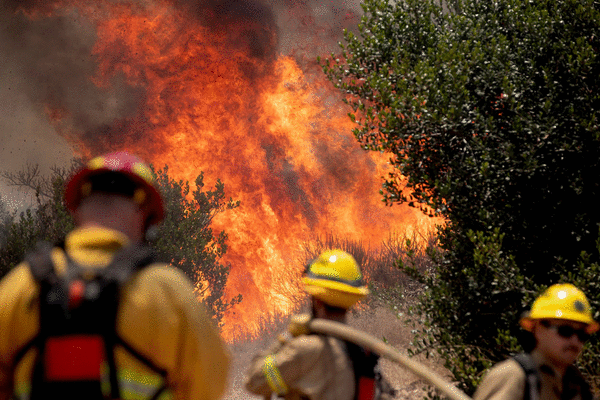
SAN DIEGO — As a fast-moving fire chewed dry brush dangerously close to homes in Sorrento Valley last month, the sighting of a small drone flying in the airspace forced all firefighting aircraft to immediately leave the area.
San Diego police were able to find the person they believed to be flying the drone and get it to land, Sgt. Nicholas Link said, but the roughly 30-minute pause in fighting the fire from the air delayed efforts to stop the rapidly growing blaze.
“Anything in the airspace, like drones, it’s such a high risk of collision and a catastrophic result if one were to be hit,” Link said about the Sorrento fire drone incident. “It’s scary … it’s not the time to be taking pretty pictures.”
Fire agencies across the state have for years warned the public to keep their drones grounded over active wildfires, yet drone incursions remain a constant problem, fire officials said.
It is policy for firefighting aircraft to land when a drone is reported to be in the area, which gives the fire opportunity to grow, further threatening people and property on the ground, according to the Federal Aviation Administration.
Despite drones being significantly smaller in size than firefighting aircraft, they pose a great risk of colliding with larger aircraft. Moving at about 150 mph, a collision could cost lives.
“The retardant is not going to get dropped, and the helicopters are not going to be making water drops, and the fire will probably get larger and more difficult to corral,” said sheriff’s Sgt. Gary Kneeshaw, a pilot with the agency’s Air Support Division.
Data on the frequency of drone incursions over active wildfires is hard to come by, with agencies in San Diego County saying there isn’t a reporting system in place to specifically track such incidents locally.
But Cal Fire San Diego Capt. Oscar Sotelo said the issue is becoming more common. Many drone-captured videos of the fire are posted to social media feeds, he said.
Sotelo said he thinks most people don’t know about the rules, penalties and the harm it can cause.
“The threat really is a safety thing,” Sotelo said. “(Drones) only fly a few hundred feet off the ground … they’re very difficult to see.”
San Diego Fire-Rescue Air Operations Chief John Brubaker said he expects interference on each job.
“We can’t make water drops; it’s created significant hazard and danger for life, property, and it’s very impactful to operations,” he said.
First responders said it’s often hard to even spot a drone without detection technology, which San Diego doesn’t have yet. However, that technology, which can not only locate drones but also disable them electronically, is continuing to evolve, said Brubaker, who is monitoring developments closely.
First responders said they instead rely on reports by either people on the ground or aircraft to spot drones.
“It’s probably happening a lot under our noses,” Link said. “I would assume it’s probably happening at every fire that we’re just not catching yet, which is kind of scary.”
A public safety campaign, “If you fly, we can’t,” is being posted on social media and other online areas to spread awareness of the dangers, especially as fire season ramps up.
On July 7, a police helicopter was hit by a drone while battling a brush fire near the Encino Reservoir in Los Angeles. The pilot had to make an emergency landing.
And during last year’s devastating Eaton and Palisades fires in Los Angeles, there were 184 drone incursions reported within restricted areas, according to the U.S. Forest Service — more than the total number of incursions reported by the agency over seven years.
Several laws address drone interference with firefighting. It’s a federal crime and punishable by up to two years in prison and a fine of up to $75,000, according to the Federal Aviation Administration. Offenders can also pay a federal civil penalty of up to $20,000. Flying an unmanned aircraft system carelessly or recklessly, interfering with a first responder operation, is also a misdemeanor under state law and San Diego municipal code.
The county District Attorney’s Office said it has not charged anyone locally under state law. A search of court records appears to show only one prosecution under federal law of operating an unauthorized unmanned aircraft over a wildfire: in Maryland in 2023. Another person was charged and pleaded guilty last year to a different charge, unsafe operation of an unmanned aircraft, admitting he flew it in the vicinity of the Palisades fire in Los Angeles and interfered with firefighting aircraft, according to the plea agreement.
In the event authorities spot a drone, Link said officers make efforts to locate the flyers and warn them to land. He said they report incidents to federal investigators for possible prosecution.
———
(Staff writer Alex Riggins contributed to this report.)
———
©2026 The San Diego Union-Tribune. Visit sandiegouniontribune.com. Distributed by Tribune Content Agency, LLC.




Comments