High-Speed Rail adds delay and is criticized for obscuring the new timeline, review says
Published in News & Features
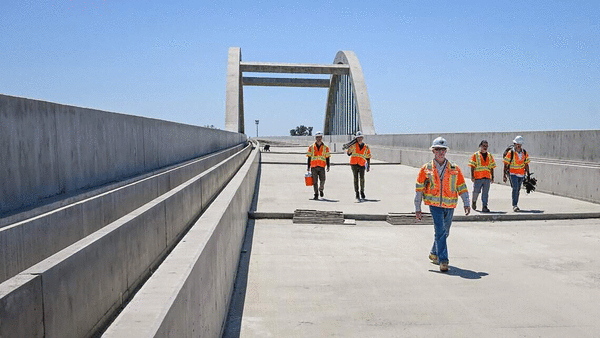
FRESNO, Calif. — The California High-Speed Rail Authority added another year to its overall Central Valley timeline but obscured the schedule change in its latest planning document, according to a recent report by the agency’s own independent review office.
Inspector General Benjamin Belnap, whose position is state-funded, found the rail authority’s 2026 business plan continued to reference a completion window of 2032-2033 for the Merced-to-Bakersfield segment. But the rail authority’s analysis accounting for potential delays has already extended that window to 2034, Belnap’s review says.
“Because the information about schedule contingency is inconsistent, the business plan could mislead stakeholders about schedule risk,” the review says.
The lack of clarity around the timeline is one of several “transparency concerns” regarding the business plan that Belnap listed in a letter to Gov. Gavin Newsom and legislative leaders. The rail authority produces a business plan every other year to show state officials its progress and strategies for addressing challenges.
The agency has promoted the 2026 plan as a viable roadmap for completing its long-delayed Central Valley segment for $35.7 billion while finally expanding beyond the region. But it has caused controversy for proposing major cost-cutting changes to the project, including a reduced system in the Central Valley that the rail authority says can grow later if needed.
The plan was approved behind schedule by the rail authority because its initial draft required various revisions. Belnap’s report says the plan still obscures too much information about the project’s potential costs and fails to clearly state the rail authority is in danger of running out of cash by the end of next year.
In a statement to The Bee, the agency said it “values constructive oversight” and is committed to making the rail system a reality.
“The Authority has fundamentally reoriented the high-speed rail project by moving into its tracklaying phase, while making real, measurable progress through strong collaboration with the private sector and our partners across the state,” the agency said.
A 9-month ‘slip’ in Central Valley rail schedule?
In the rail authority’s project update last year, a scheduling chart indicated the Central Valley segment would be ready for passenger service by the end of 2031. A similar chart in this year’s business plan shows the segment will actually be ready for service nine months later at the end of September 2032.
Under that chart, the rail authority says in a footnote that it adopted a 24-month contingency recommended by its schedule risk assessment. That contingency period extends the Central Valley timeframe to September 2034 — but Belnap’s report says the rail authority does not explicitly mention the widened window in the plan.
The inspector general also says the nine-month delay was caused by the rail authority’s proposed changes to the Central Valley segment, which require changes to previously completed designs that could “threaten the overall schedule.”
In its response to Belnap, the rail authority said its latest plans have presented the project’s schedules better than past documents. The agency added that, despite the addition of nine-months to its schedule, it still expects Central Valley operations to begin within the 2033 timeline “as previously established.”
2034 also unlikely for Central Valley rail, inspector general says
Belnap’s report says even a 2034 end point is “likely insufficient” for high-speed rail in the Central Valley.
“The Authority continues to base its schedule on optimistic assumptions, including assumptions about legislative actions proposed by the Authority that have yet to be adopted,” the report says.
Rail authority CEO Ian Choudri over the past year has proposed a list of changes to state law that he says will help the agency avoid the land-use problems and costs that have historically plagued the project. He wants a faster way to get through eminent domain cases, conflicts with utility companies and local permitting, among other requests.
Choudri has previously said the project will face more delays if state lawmakers are not quick to approve his list of legislative requests.
_____
©2026 The Fresno Bee. Visit fresnobee.com. Distributed by Tribune Content Agency, LLC.






Comments