Invasive carp are getting closer to the Great Lakes, prompting warnings
Published in News & Features
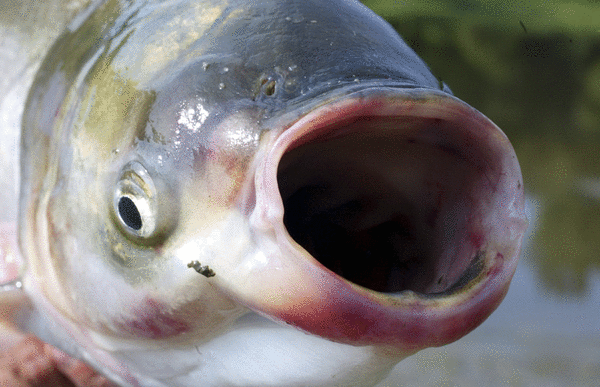
Invasive carp reached just 80 miles from Lake Michigan on the Illinois River last week, marking the closest the fish have gotten to the Great Lake as work was halted on a state-federal project meant to stop the voracious fish from moving farther upstream.
Illinois Department of Natural Resources workers removed several hundred small silver carp from the Illinois River's Marseilles Pool on Thursday and Friday, the department announced Friday. They found the fish through routine intensive monitoring.
The fish were between 4 and 6 inches long. Biologists fear the fish may have spawned upriver from the Marseilles Pool, which would put them even closer to Lake Michigan.
"Flood pulses and water temperatures this summer created conditions that have been conducive to carp spawning," the Illinois DNR said in a press release last week. "Crews are now ramping up additional monitoring in the upper river and tributaries to gather more information that will allow them to assess the scope and significance of the discovery."
Brandon Road project halted
The finding highlights concerns about the invasive fish's ability to reach the Great Lakes, where they could devour the food needed by native fish. Last month, the Army Corps of Engineers stopped work on a state-federal project to block the carp from reaching Lake Michigan as President Donald Trump's administration reviews the work.
The Brandon Road Lock and Dam Complex under construction in Joliet, Illinois, is designed to prevent invasive carp and other aquatic invasive or nuisance species from moving upstream to the Great Lakes while still allowing people to use the Des Plaines River. The project will have layers of deterrents, like an electric barrier and a bubble curtain.
Finding carp so close to the Brandon Road site "underscores the vital importance" of the lock and dam complex, said Alliance for the Great Lakes, a Chicago nonprofit and Great Lakes advocacy group.
"Every day we don't have shovels in the ground at the Brandon Road project puts us a day closer to seeing invasive carp cause irreversible harm to the Great Lakes ecosystem and economy that our region depends on," said Joel Brammeier, Alliance for the Great Lakes president and CEO. "With carp spawning in the upper river, we don't have any more time for administrative delay. The Army Corps must allow the construction teams to get back to work now — otherwise, years of bipartisan collaboration and investment to stop the carp will have been for nothing."
How Illinois is fighting off invasive carp
Illinois DNR workers are implementing "intensive electrofishing" in habitats where juvenile invasive carp like to spend time to try to understand what brought the fish to the Marseilles Pool, the department said.
They also will increase monitoring in the Dresden Island Pool, which is about 50 miles from Lake Michigan and upstream of where they recently found small silver carp. That's because silver carp lay eggs upstream and then those eggs drift downstream as they turn into juvenile fish.
In the Great Lakes region, the term "invasive carp" includes four species — bighead, silver, black and grass carp. They were imported to the southern U.S. in the 1970s to manage algae, weeds and parasites in fish farms and wastewater treatment plants. They escaped into the Mississippi River in the 1990s and have since moved upstream toward the Great Lakes.
Those four species of carp would present fierce competition for food against native Great Lakes fish species. Great Lakes fish scientists say they could devastate the lakes' ecosystems and might be impossible to get rid of if they were to be established in the lakes.
Silver carp, which Illinois biologists found 80 miles from Lake Michigan last week, can grow to more than 3 feet long. They typically reach 20 pounds, but can get as heavy as 80 pounds, according to the U.S. Fish and Wildlife Service. They are the species of invasive carp known to jump high out of the water when they hear the sound of boat motors, which makes them potentially hazardous to boaters.
Invasive carp are established on the lower 240 miles of the Illinois River, from Peoria, Ill., to where it meets the Mississippi River. Adult invasive carp are sometimes found upstream of Peoria, but they aren't considered full-blown residents of the upper river because the fish aren't found there in multiple life stages.
Illinois will resume contract commercial fishing for adult invasive carp from the river when temperatures drop enough for the fishing to be effective, the state said in a release. Illinois and federal biologists and experts as well as commercial fishing crews "play an indispensable role in the broader efforts to keep invasive carp out of the Great Lakes and manage infestations in other parts of the Mississippi River basin where invasive carp originally established."
_____
©2026 The Detroit News. Visit detroitnews.com. Distributed by Tribune Content Agency, LLC.






Comments