The CDC has a new director – now comes the hard part
Published in News & Features
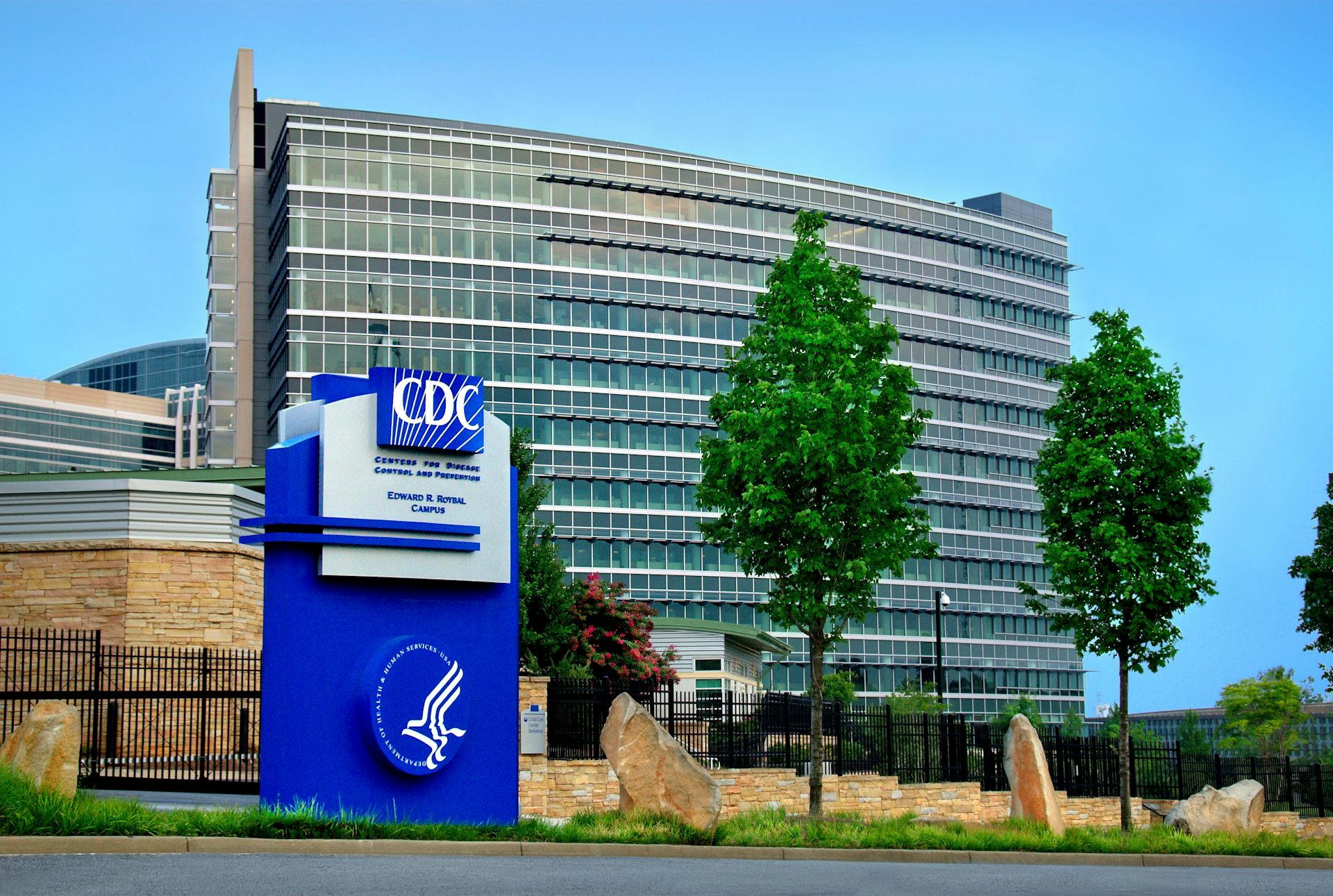
The new director of the Centers for Disease Control and Prevention, Erica Schwartz, confirmed by the U.S. Senate on Aug. 5, 2026, is only the second CDC director to face Senate confirmation. Congress adopted the process for the agency after the COVID-19 pandemic to bring more scrutiny to one of the country’s most consequential public health jobs, as part of the Consolidated Appropriations Act of 2023.
That change is especially important now. The CDC is tracking multiple measles outbreaks, investigating a multistate cyclospora outbreak linked to iceberg lettuce and other produce, and supporting the response to the second-largest Ebola outbreak in history unfolding in Central Africa. At the same time, the Trump administration is reshaping federal childhood vaccine recommendations in ways that could weaken protection against preventable disease for years to come.
As public health policy becomes increasingly politicized and polarizing, the CDC director needs more than technical expertise and political skill. She must give the public clear, accurate guidance, including when the evidence conflicts with the preferences of the president or the health secretary.
Schwartz is a retired U.S. Public Health Services Commissioned Corps rear admiral, who was previously the chief medical officer with the Coast Guard and then the deputy surgeon general from 2019 to 2021.
As experts in infectious-disease preparedness, outbreak response and public health policy, we see Schwartz’s confirmation process as critical for a reason that goes beyond the vote itself.
Senate review can make a nominee answer publicly for her judgment, priorities and willingness to defend evidence. But it can’t ensure scientific independence or restore the people, systems and public trust that disease control requires. Confirmation opens a line of accountability – it doesn’t guarantee how the director will use it.
What matters now is how Schwartz uses the authority she has – and whether Congress and the administration give the agency the capacity to do its work.
For most of the CDC’s history, the secretary of health and human services selected the agency’s director without a Senate vote. Congress changed that arrangement in the Consolidated Appropriations Act of 2023. Beginning in January 2025, the president nominates the director, and the Senate provides its “advice and consent.”
The process adds several layers of review. The White House selects and vets a nominee, including reviewing financial interests and possible conflicts. The Senate Committee on Health, Education, Labor and Pensions examines the nominee’s record, seeks written answers and may hold a public hearing. If the committee advances the nomination, the full Senate decides whether to confirm the nominee by a simple majority.
The final 51-44 vote confirmed Schwartz, but the more consequential part of the process was the public record it created. At her July 15 hearing, senators pressed her on vaccines, scientific integrity and how she would handle political pressure. Her answers gave Congress, CDC staff and the public a standard against which to judge her decisions.
That is the clearest benefit of confirmation. A hearing cannot certify that a nominee will be a good scientist or an effective manager. Senators may also evaluate her responses through different political lenses. But the process forces key questions into public view before a director takes office, rather than after a crisis has already exposed disagreements inside the government, and gives Congress a stronger basis for oversight.
The CDC director’s job can sound abstract when it is discussed as job duties and reporting lines. The fact that the U.S. is currently facing multiple simultaneous outbreaks from foodborne, vaccine-preventable and zoonotic pathogens shows that the job is far from abstract – it’s very hands-on.
The CDC is responding to continuing measles outbreaks. As of Aug. 13, the agency recorded 2,566 confirmed measles cases and 38 outbreaks in 2026 – the highest number of cases since 1991. Containing measles requires fast case detection, vaccination, contact tracing to stop its spread, as well as clear communication with families and clinicians.
The agency is also investigating multiple cyclospora outbreaks linked to iceberg lettuce that had caused more than 9,481 confirmed illnesses – including two deaths – in 17 states as of Aug. 5. That investigation is a reminder that outbreak control depends on coordination among epidemiologists, laboratories, health departments, regulators and the food industry.
Overseas, the Democratic Republic of Congo is experiencing the largest Ebola outbreak recorded in the country’s history. The outbreak involves a strain of the virus called Bundibugyo, for which there is no licensed vaccine or specific treatment. As of July 30, the World Health Organization had reported more than 3,600 confirmed cases across the DRC and Uganda, and several travel-associated cases treated elsewhere. An outbreak at that scale calls for international surveillance and laboratory cooperation even when the immediate risk to most Americans is low.
Meanwhile, the Trump administration – guided by the stance of HHS Secretary Robert F. Kennedy Jr. – has directed changes to the federal childhood immunization schedule that depart from the long-standing evidence-review process used to develop vaccine recommendations and have alarmed public health experts.
These outbreaks are caused by different pathogens, but each relies on the same underlying assets: timely data, specialized staff, functioning laboratories, cooperation with state and international partners, and communication that people find trustworthy. Yet despite these ongoing pressing public health needs, between January 2025 and June 2026 the Trump administration cut the CDC workforce by nearly one-third, according to data from the Office of Personnel Management.
No director, however capable, can make up for missing epidemiologists, laboratory experts, data systems, and state and local capacity. Maintaining those essentials requires the federal government to provide steady funding and long-term support, rather than expecting a CDC director to do more with fewer people and resources.
Senate confirmation gives Schwartz a measure of democratic legitimacy. The president nominated her, senators examined her record, and a majority consented to her appointment.
It does not place her outside presidential control. Her responses at the confirmation hearing have already raised concerns about whether she would stand up against political pressure from the Health and Human Services secretary to maintain evidence-based policy.
The CDC sits within HHS, and the CDC director has neither a fixed statutory term nor explicit congressional protection from being fired. Schwartz will have to advise political leaders, carry out lawful administration policy and, at times, explain evidence that may be politically inconvenient to those in power.
If Congress wants a CDC director who can follow the evidence, it would need to write that authority into law by giving the CDC the authority to release certain data and recommendations without prior approval from political offices and require that any override of those judgments be documented and disclosed. With such a change, political leaders who overrule the science would have to do so on the public record.
There is precedent for this approach. In 2019, Congress enacted the Foundations for Evidence-Based Policymaking Act, which codified standards of timeliness, accuracy and objectivity for federal statistical agencies. Under that framework, the CDC’s National Center for Health Statistics operates with authority to release statistical information without prior political clearance and according to predetermined release schedules.
Congress could extend similar protections to other CDC products, including outbreak reports, case counts, vaccine recommendations and its primary scientific publication, the Morbidity and Mortality Weekly Report. Doing so would help protect the agency’s core public health functions from political interference.
In addition, bills such as the Scientific Integrity Act, which has been introduced repeatedly but has not passed, could require federal science agencies, including the CDC, to adopt and enforce scientific integrity policies that protect career scientists and maintain scientific independence.
Confirmation makes the CDC director more publicly accountable. Its value will ultimately depend on whether Schwartz and the institutions around her are able to protect rigorous surveillance, candid communication and evidence-based recommendations.
This article is republished from The Conversation, a nonprofit, independent news organization bringing you facts and trustworthy analysis to help you make sense of our complex world. It was written by: Syra S. Madad, Harvard Kennedy School and Nahid Bhadelia, Boston University
Read more:
We study pandemics, and the resurgence of measles is a grim sign of what’s coming
How cuts to CDC are dismantling its capacity to protect Americans’ health
Ebola strain spreading in Congo and Uganda has no approved vaccine
The authors do not work for, consult, own shares in or receive funding from any company or organization that would benefit from this article, and have disclosed no relevant affiliations beyond their academic appointment.






Comments