Federal judge weighs Maryland sheriffs' lawsuit over law limiting ICE cooperation
Published in News & Features
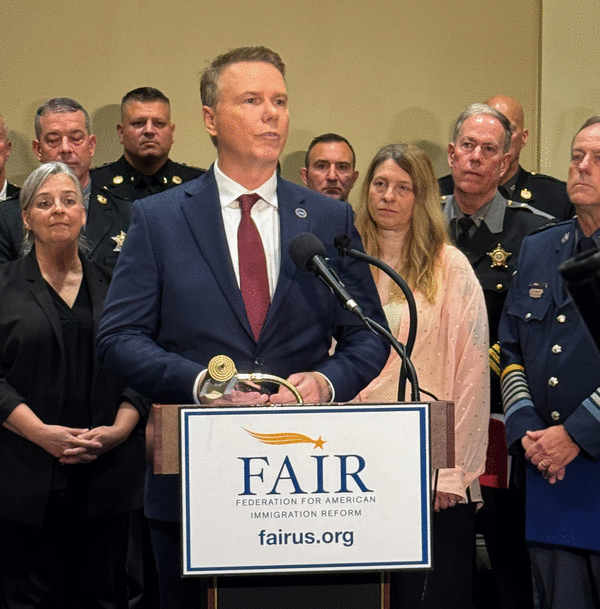
BALTIMORE — A federal judge is preparing to rule on the May lawsuit filed by 17 Maryland sheriffs after the state banned law enforcement from formally cooperating with U.S. Immigration and Customs Enforcement in most cases, thus eliminating local 287(g) agreements.
U.S. District Court Judge Matthew Maddox heard arguments Wednesday from the Maryland Attorney General’s Office and from attorneys representing the sheriffs, in a suit led by Harford County Sheriff Jeff Gahler.
Christopher Hajec, an attorney with Federation for American Immigration Reform (FAIR), which is representing the sheriffs pro bono, told the judge that Maryland’s new Community Trust Act forces law enforcement into a dilemma between risking federal liability and violating their oath of office, or risking punishment from the state.
The Attorney General’s Office, which filed a motion to dismiss the sheriffs’ case, argued that the sheriffs’ claims of harm from the state law are all speculative — including the chance for being sued by the state, as the law is a civil provision.
Attorney Virginia Williamson said law enforcement would, at most, get a court order telling them to follow the law. The state isn’t currently suing, and hasn’t threatened to sue, anyone over this, she said.
An attorney general’s spokesperson confirmed later Wednesday that the office “has not investigated any alleged Community Trust Act violations.”
The counties that had 287(g) agreements, meaning they would accept administrative detainers from ICE, did cancel them earlier this year. They include Harford County, where Gahler had implemented it nearly a decade ago as a key campaign plank when he was first elected. A Republican, Gahler is running for reelection.
Williamson also said the sheriffs wrongly claim that complying with the Community Trust Act could be construed as hiding or harboring someone who’s in the U.S. illegally. Williamson cited guidance from the attorney general reassuring law enforcement that they are still allowed to release a detainee if, for example, ICE officers just happen to be outside.
But Hajec argued that if an officer releases someone in the presence of ICE, “that is what ‘transfer of custody’ is.”
The state’s arguments suggested that the Community Trust Act has few teeth. The Attorney General’s Office also argued that the new law is not an unconstitutional obstacle to federal immigration enforcement.
Moore allowed the Community Trust Act to become law without his signature. It bans law enforcement in Maryland from releasing detainees to ICE without a judicial warrant. It also forbids asking about a detainee’s citizenship status or telling ICE when local officers believe a detainee broke immigration laws.
Hajec, meanwhile, said “the sheer contentiousness of this issue” indicates that the state has incentive to sue or win “the battle” over cooperation with ICE.
“Winning is defined as whether there is cooperation,” he said. “The attorney general has to sue or face defeat in this contentious issue.”
Hajec said the act was “clearly designed” to be an obstacle to immigration enforcement, and passive noncooperation is actually “one of the best obstacles you can raise. … It’s one of the most potent obstacles of all.”
“I guess it’s just a question of how imminent the threat is on both sides,” said Maddox, who was nominated to his position by then-President Joe Biden in 2023.
Maddox said Wednesday that he would issue a written order in due course.
_____
©2026 The Baltimore Sun. Visit at baltimoresun.com. Distributed by Tribune Content Agency, LLC.






Comments