Chicago Mayor Brandon Johnson's CFO resigns, citing refusal to 'compromise my integrity'
Published in News & Features
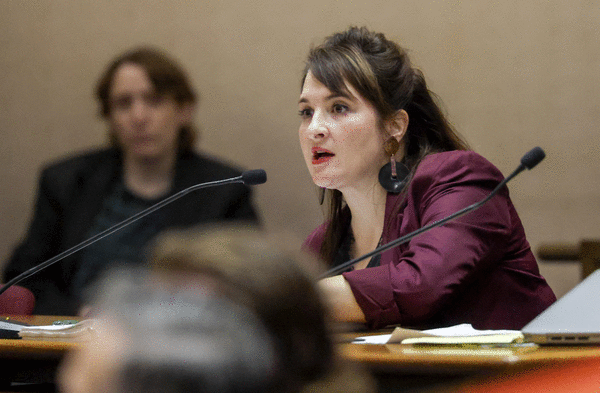
CHICAGO — Mayor Brandon Johnson’s chief financial officer resigned Friday after just three months on the job, saying she is unable to fulfill her obligation to provide “complete and accurate” statements about the city’s finances.
Ashlee Gabrysch exits her post as Johnson’s election-year budget is stalled thanks to an ongoing stalemate with aldermen. In her resignation letter obtained by the Tribune, Gabrysch signaled she was leaving due to concerns over how the city was representing financial information.
“The Chief Financial Officer’s statements about the City’s finances are relied upon by investors, rating agencies, City Council, and taxpayers, and they must be complete and accurate,” Gabrysch, who was most recently a senior director at Fitch Ratings, wrote to Johnson. “I am not able to fulfill those obligations under the conditions in which I have been asked to serve.”
Johnson spokesperson Allison Novelo did not immediately have comment.
In a Friday statement to the Tribune, Gabrysch added, “The Chief Financial Officer’s statements about city finances are not idle chatter. … The CFO must act scrupulously to ensure they are always accurate and complete.”
“Throughout my career, I have remained committed to upholding the highest standards of financial integrity and transparency, and in my short time as Chief Financial Officer, I have faithfully discharged this duty,” Gabrysch said. “It has become apparent, however, that to continue in this role would be to compromise my integrity and professional obligations. I therefore have concluded that I must step down from my role, and hereby tender my resignation.”
The mayor now heads into month two of his fourth budget cycle without a permanent CFO. His first one, Jill Jaworski, resigned at the start of this year. Acting CFO Steven Mahr then exited in July. The city does not yet have a permanent budget director, either. Jonathan Ernst has been serving as acting director since Annette Guzman resigned in August to care for a sick family member.
The CFO is typically tasked with managing the city’s debt, long term financial planning and reporting, and relationships with ratings agencies. Gabrysch would have taken a lead role in Johnson’s proposed $480 million debt issuance to cover various settlements through 2028, including $260 million to victims of former Chicago Detective Reynaldo Guevara.
Key to Gabrysch’s role was working to ensure the city was not further dinged by ratings agencies, three of which delivered downgrades after last year’s budget. The agencies, which grade the city’s credit-worthiness and sway the cost of borrowing, have highlighted the city’s stubborn budget gaps driven by rising pension, debt and payroll costs; fights between the mayor and council; and continued use of one-time measures to patch up deficits as major concerns.
It was not immediately clear what aspects of the city’s finances were in dispute, or with whom in the Johnson administration Gabrysch was clashing, but she notably broke with his team last month during the first day of budget hearings. The public disagreement concerned the share of structural solutions in the mayor’s 2027 proposal.
Johnson’s budget team pegged next year’s budget gap at $882 million during the forecast deficit rollout in September. When Johnson formally introduced his budget last month, that number shrank to $662 million – a figure that the administration attributed to plans to borrow for the cost of police settlements.
With that number removed from the city’s deficit, Johnson claimed 76% of his gap-filling proposals were structural. Gabrysch disputed that figure during the first day of public budget hearings, saying those settlement costs were part of the deficit and that borrowing to cover it should be counted as a one-time gap-filling measure. With both in mind, she said structural solutions made up 56% of the mayor’s proposal.
“The 76% number comes from removing settlements and judgments from the denominator,” she said at the time. “I stick with the $882 (million) forecasted budget… that is my denominator.”
Ald. Marty Quinn, 13th, said he was “not surprised that the mayor may be a little disingenuous here, that seems to be his normal course.”
Gabrysch did not respond to Quinn’s quip but moments later took a large swig of her drink.
Johnson at the time denied any attempts by his administration to hide the ball. “Look, we were obviously incredibly transparent,” Johnson said when asked about the discrepancy.
It wasn’t the first time the mayor and his CFO publicly disagreed. Last year, Jaworski told a Bloomberg audience ahead of Johnson’s budget introduction that a property tax increase was “likely.”
While property tax dollars are among the most stable and predictable revenues the city can raise on its own, they have become a political third rail. Johnson rejected the idea days later.
____
©2026 Chicago Tribune. Visit at chicagotribune.com. Distributed by Tribune Content Agency, LLC.






Comments