As streaming subscription fees rise, more consumers opt to pay less and watch ads
Published in Entertainment News
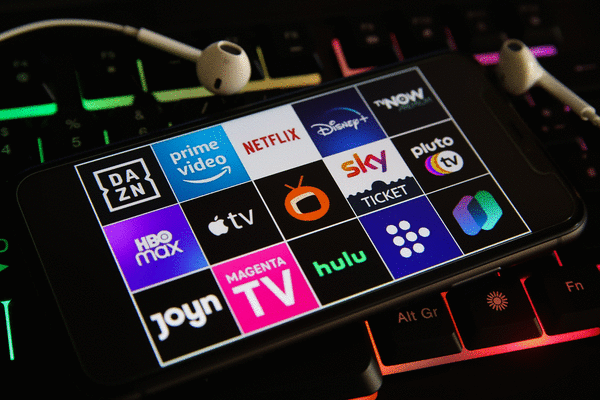
LOS ANGELES — When video streaming platforms were first launched, they were marketed as an affordable way to watch your favorite movies without the interruption of an ad break.
But, over the years, as subscription fees hit highs of nearly $25 a month and cheaper ad-supported tiers were introduced, more consumers are willing to pay less in exchange for more ads, according to Deloitte's 2026 digital media trends report.
The global consulting firm surveyed more than 3,500 U.S. consumers and found that the average subscribing household has remained consistent year-over-year, spending an average of $69 a month on streaming video services. But around 60% of consumers said they would cancel their preferred streamer if the prices increased by $5.
Even though spending on subscriptions has remained steady, the report shows that two-thirds of streaming subscribers are now opting for ads, marking a 20% increase from 2024.
Last year, Disney, Netflix, HBO Max and Apple TV raised prices. Premium subscriptions to these services range from $12.99 for Apple TV to $24.99 for Netflix.
Michael Smith, a professor of information technology and public policy at Carnegie Mellon University, said these price hikes are all guided by data, as "streaming platforms can observe in real time how consumers respond to price changes."
"One thing that deserves to be said is in a world of limited data, a lot of pricing decisions were made by gut feel. That's not the world we live in today," said Smith in a statement.
He added that "the ad-supported tier is sufficiently profitable on its own" and can "cover any lost paid subscribers, while also bringing in new subscribers who weren't willing to start with the paid [premium] tier."
As more watchers opt for cheaper ad tiers, there's an increasing sense of price sensitivity — while companies continue to maintain a dual revenue stream from both subscription fees and advertising revenue.
Streaming platforms have reached a point of growth where enticing new subscribers isn't a top priority. They need to hold their audience's attention. Jennifer Hessler, a professor of cinematic arts, said streamers are focused on how "to make their stuff discoverable and win the word of mouth war."
"Ad-tier subscribers tend to be people who are less loyal, who might subscribe to Peacock, because they want to watch 'The Traitors,' then when that's over, they'll cancel their subscription. Then they'll go subscribe to Netflix because they want to watch the new 'America's Next Top Model'" docuseries," Hessler said. "It's a matter of winning the discovery battle, so that people jump on your streaming site."
Competition among streaming platforms has become about turning these casual viewers into loyal fans. So, many industry players are looking toward emerging AI technologies to help flip that switch.
"As some consumers plan to spend less on streaming services, passionate fans have the potential to become even more valuable, investing time, money and energy across platforms," Doug Van Dyke, Deloitte's vice chair, said in a statement. "AI can be harnessed to understand what fans care about, anticipate what they want next, and bring together content, community, and commerce in ways that feel personal."
Almost 40% of consumers say they would accept AI-created content if labeled, while nearly 30% of fans say they enjoy AI-generated, personalized videos. Some 22% of watchers even say better AI recommendations would increase their streaming use, according to Deloitte's data. Companies such as Amazon Prime Video are already using generative AI for advertising and content purposes.
©2026 Los Angeles Times. Visit latimes.com. Distributed by Tribune Content Agency, LLC.











Comments