Charles Spencer reveals he feels Princess Diana is on his side in 'tricky' times
Published in Entertainment News
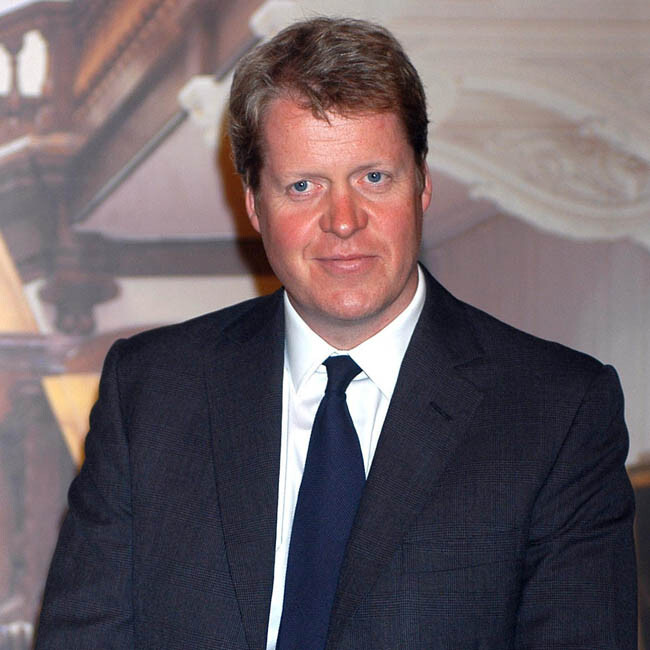
Charles Spencer feels Princess Diana is on his side "in tricky moments" nearly three decades after her death - and wears a pair of cufflinks she gave him whenever he faces important moments in his life.
The 62-year-old opened up about feeling a continuing connection with his tragic older sister following the publication of his controversial memoir, Swan Song: Diana, My Sister.
Diana was 36 when she died after a car crash in Paris in August 1997, leaving Prince William, now 44, and Prince Harry, 42, without their mother.
Charles's book, published this month ahead of the 30th anniversary of her death next year, has also triggered a public dispute with King Charles III, 77, over his recollections of the days immediately following the tragedy.
Asked by People whether he continues to feel Diana's presence, Charles said: "I do feel Diana on my side in tricky moments."
Charles said: "If I have to really go into something, a meeting where something really important is being sorted out or whatever, I always wear cuff links she gave me in the late 1980s as a sort of memorial."
He added: "I had a cousin who died tragically by their own hand last year and I told the parents that I was wearing Diana's cuff links. Diana's memory gives comfort to people even now."
Diana became one of the most famous women in the world after marrying the then Prince Charles in 1981.
William was born the following year and Harry in 1984, but Diana's marriage to the then-Prince Charles deteriorated under extraordinary public and media scrutiny.
The couple separated in 1992 and divorced in 1996.
Diana remained a global figure after leaving the royal family's working ranks, with her campaigning on causes including HIV and Aids and the campaign against landmines becoming an important part of her public legacy.
Her death the following year prompted an extraordinary public reaction in Britain and around the world, with mounds of flowers left outside Kensington Palace in her memory.
Her funeral at Westminster Abbey produced one of the defining images of the period - William, then 15, and Harry, then 12, walking behind their mother's coffin alongside their father, grandfather Prince Philip and uncle Charles.
That procession is now at the centre of one of the most contentious sections of Swan Song.
Charles says he opposed the boys walking behind their mother's coffin and has disputed accounts of his conversations with the royal family over the funeral arrangements.
He also alleges during a heated telephone conversation over the arrangements, the then-Prince Charles told him: "Rest assured, we'll forget her soon enough."
Buckingham Palace issued a rare statement challenging Charles's account.
A spokesperson said: "While we do not comment on books as a matter of principle, His Majesty is mindful that the pain of fraternal grief can cloud reason, affect judgment and colour memory in ways others do not recognise, even many years after such a loss."
Charles subsequently stood by his version of the conversation during an interview with the BBC.
He said about King Charles: "I can tell you here and now, those are exactly the words he said."
Charles later escalated his criticism during an interview with ABC News.
He said: "Well, it's not every day you're gaslit by a king."
The memoir has generated further controversy after Charles apologised to broadcaster Piers Morgan, 61, for incorrectly claiming the broadcaster was responsible for the publication of intrusive photographs of Diana exercising at a gym in the 1990s during his time as a tabloid journalist.
Charles acknowledged he had wrongly assumed Piers was editing the Daily Mirror when the photographs appeared.
Piers has said he is pursuing legal action over claims in the book.
Charles has said he wrote Swan Song because the approaching 30th anniversary of Diana's death prompted numerous interview requests and he wanted to put down his own memories rather than continue reading other people's accounts of his sister.
He said: "The aim of this book is to tell the truth about Diana from her brother's perspective, just as I attempted to do when speaking at her funeral."









Comments