How Judd Apatow's insatiable curiosity led to documentaries on Norm Macdonald and Maria Bamford
Published in Entertainment News
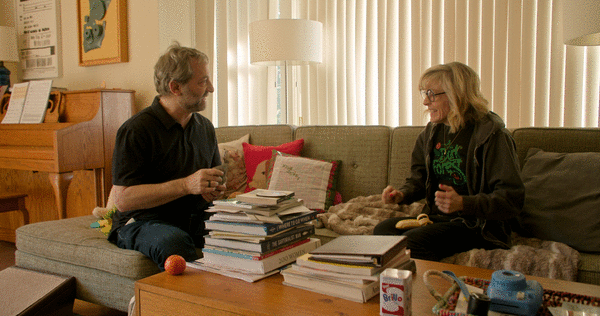
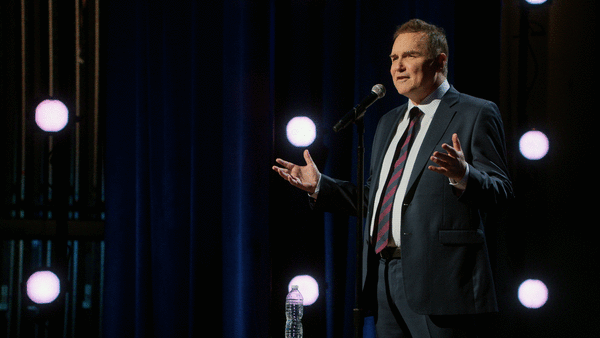

LOS ANGELES — Judd Apatow, man of comedy, has a pair of new documentaries arriving in close proximity on Netflix, their common subject two of the most original, brilliant and idiosyncratically funny comedians of our time. “Norm: The Tale of Norm Macdonald,” on the deep, deadpan comic, who died in 2021 after a long secret battle with cancer, is now streaming; “ Paralyzed by Hope: The Maria Bamford Story,” which charts Bamford’s creation of a singular career while dealing with bipolar II disorder debuts Friday. Both are lovely, funny, soulful and valuable.
His previous such films include “The Zen Diaries of Garry Shandling” (2018), “George Carlin’s American Dream” (2022), “Bob and Don: A Love Story” (2023), about the friendship of Bob Newhart and Don Rickles, and “Mel Brooks: The 99 Year Old Man” (2026). Coming up is a documentary on the musician Billy Strings and farther down the road “something on the first Comedy Relief,” where, in 1986, Apatow had his first job in show business. “I was a PA on the show and in the office, and worked there for free for a few years when I went to college. We’re going to tell the story of them figuring out how to make that show.”
I spoke with Apatow over the phone about his documentary work. The following has been edited for length and clarity.
You’ve been interviewing comedians since high school.
I’ve always had an insatiable curiosity about comedy and the people who make it. When I was in sixth grade, I wrote a report about the Marx Brothers, just for myself, this 32-page biography. I’m not sure why other than I just love these people and wanted to understand how they thought and how their lives affected their artistic expression. Making these films was sparked by doing the documentary about Garry Shandling, because he was my close friend and in a lot of ways I didn’t fully understand him. It was a form of grieving to make this really deep documentary about his life and everything he was going through and trying to express. And it just went on from there.
How did you choose your current subjects?
I’ve always admired Maria. She was just knocking around in my mind, and one day, I thought, maybe it’s a documentary. So I called Neil Berkeley, who did the Gilbert Gottfried documentary [“Gilbert” in 2017], and said, “Do you want to make a documentary about Maria? Tomorrow, we’ll call her, maybe she’ll let us come over.”
I don’t think she took it that seriously. She said, “OK, just bring $500.” I said, “Why?” And she said, “Because nothing ever happens with these things and my time is valuable. It’s a way of showing myself self-respect.” And so the next day I came to her house with some cash and some fruit, and we just started shooting. Neil and I followed her around for two or three years. We saw her face the most difficult challenges, and she did it with so much grace and strength that it became, on top of everything else, a very inspiring story.
She’s so changeable, both in her act and in the film. Sometimes she’s all put together, other times it looks like you got her out of bed.
Well, she’s always been as honest as a person can be, which is what you want in a documentary subject. But it’s rare that someone is willing to expose themselves in that way. She’s done that in her act, in her specials and books, and this was just a way to see it in real time. It has some classical “history of a comedian” parts to it, but also we were there when she had to deal with things like the Altadena fire burning down her neighborhood. It felt it would be helpful for people to see this because she’s a real example of how you can get better and stronger.
Whatever her challenges, everything in her act seems to me completely precise, almost musical, as if you could write it out as a score.
Exactly. She’s a real craftsperson who knows what she’s doing and does it at the highest possible level. And she was pretty amazing almost from Day One. We had a hard time finding video of her struggling. Sometimes she talks about how hard it can be, to have an act like hers and be a woman in the world of comedy. I’m sure she’s had some rough nights and maybe plenty of them, but when we were looking for proof of failure, it was hard to come by.
In many ways, the Norm film feels very much the opposite of Maria’s.
Absolutely. They’re completely different approaches to how you tell their stories and express their, you know, vibe. Maria’s going to show you everything and Norm was a mystery. I don’t think he had a lot of interest in people knowing him. There are a few interviews where it felt like he was being honest and centered, but he was all over the place. Sometimes he would go on a radio show or talk show and just be funny. I felt the best way to get across who he was was to show all the ways he was publicly, in stand-up, sketches, movies and interviews, and maybe it would add up to to something. The specific details didn’t necessarily matter as much as the overall idea of him.
Did you know him at all?
I did. I met him right when he moved to Los Angeles in the late ’80s. We instantly knew he was one of the greats. He seemed to be working at the highest level. The jokes were incredible. He was so fun to watch. Then we got hired, the two of us, along with our friend John Riggi, to write jokes for Roseanne [Barr]. Norm and I would go to her house, and she would bring out a stack of yellow legal pads with concepts for jokes, and we would try to flesh them out and turn them into routines with her. We were very young men trying to write jokes for this 40-year-old woman. But very quickly Roseanne realized how good Norm was and hired him to write for her TV show. And maybe six months or a year after that, he was hired to go to “Saturday Night Live.” It all happened very fast.
Why do you think he was so adamantly secretive about his illness?
Norm was generally very private, and the idea of the whole world knowing he was sick was probably not something he wanted. Possibly he thought it would be an elephant in the room when he was doing his act. He talked a lot about how he didn’t like it when comedians talked about personal matters — I don’t know how seriously to take that because I’m sure he loved Richard Pryor. When I went through all of his material I realized,”Oh, he’s making jokes about cancer, but he’s just saying something happened to his uncle.”
He’s an unreliable narrator.
He definitely is. Even when you were friends with him, you didn’t always know exactly where he was coming from. I went and visited him on “Saturday Night Live” once, when he was doing “Weekend Update.” And I said, “Hey, you want to write some ‘Update’ jokes?” Because I assumed that’s what he did all day. And he said OK, and we went in his office and there was a big stack of newspapers and we both took one and started reading. After a few minutes, he turns to me and goes, “Uh, can I leave?” And I said, “Norm, I just thought you needed jokes. I’m not trying to force you to work. I don’t even work here.”
In many ways, these movies seem like an art of assemblage.
It’s similar to making any other kind of film. What is this ultimately about? What are we saying with all these moments we’ve captured? Any moment can change the whole way you look at somebody, so it’s very delicate how you choose, because you can emphasize the wrong thing. Things come up that completely change the story. With the Garry Shandling documentary, very late in the process, we found a letter he wrote to his brother that really unlocked Garry’s feelings, about his brother and his life.
I had videotapes of a show I did with Norm a few years before he died. At the end, he said something along the lines of life is a little easier up here [on stage]. And then he got emotional and said, “I’ll try to say [this] as unironically as possible. I love you.” We knew we’d seen something very meaningful, but none of us knew he was sick then. I remembered I had this, because I’m a pack rat, and that became the final moment of the film.
Of all the comedians we love, how many are going viral constantly? He wasn’t playing huge theaters on his own at the end of his career. He was still working really hard, playing clubs. He would go on the road with Adam Sandler and other “Saturday Night Live” friends. But when we put out the trailer to this documentary, in a few days it had 250,000 views. It’s gotten so much bigger than at the end of his life.
There’s a bittersweet quality to these films. They’re hilarious, but there are lives intertwined with the art. People age and pass away.
My own issues with mortality and time must be a big reason why I like to work on these documentaries. That’s why I’m fascinated by the choices people make along the way. How much did they value their personal life versus their careers, how seriously did they take it? Were they able to express what they wanted to? With Norm and Maria, they were people who did not adjust their work for the marketplace, they had unique visions and stuck to them — Maria still does. Shandling was like that. George Carlin was like that. Mel was like that. Since I was a kid, I loved Loudon Wainwright III — he was dramatic and funny; the songs could be hilarious, and also beautiful. You knew he wasn’t adjusting a word for anybody else, and so he became a real North Star for me about what your attitude should be about your work. Those are the people who interest me the most.
------------
©2026 Los Angeles Times. Visit at latimes.com. Distributed by Tribune Content Agency, LLC.







Comments