
The Greener View: Unusual Potatoes
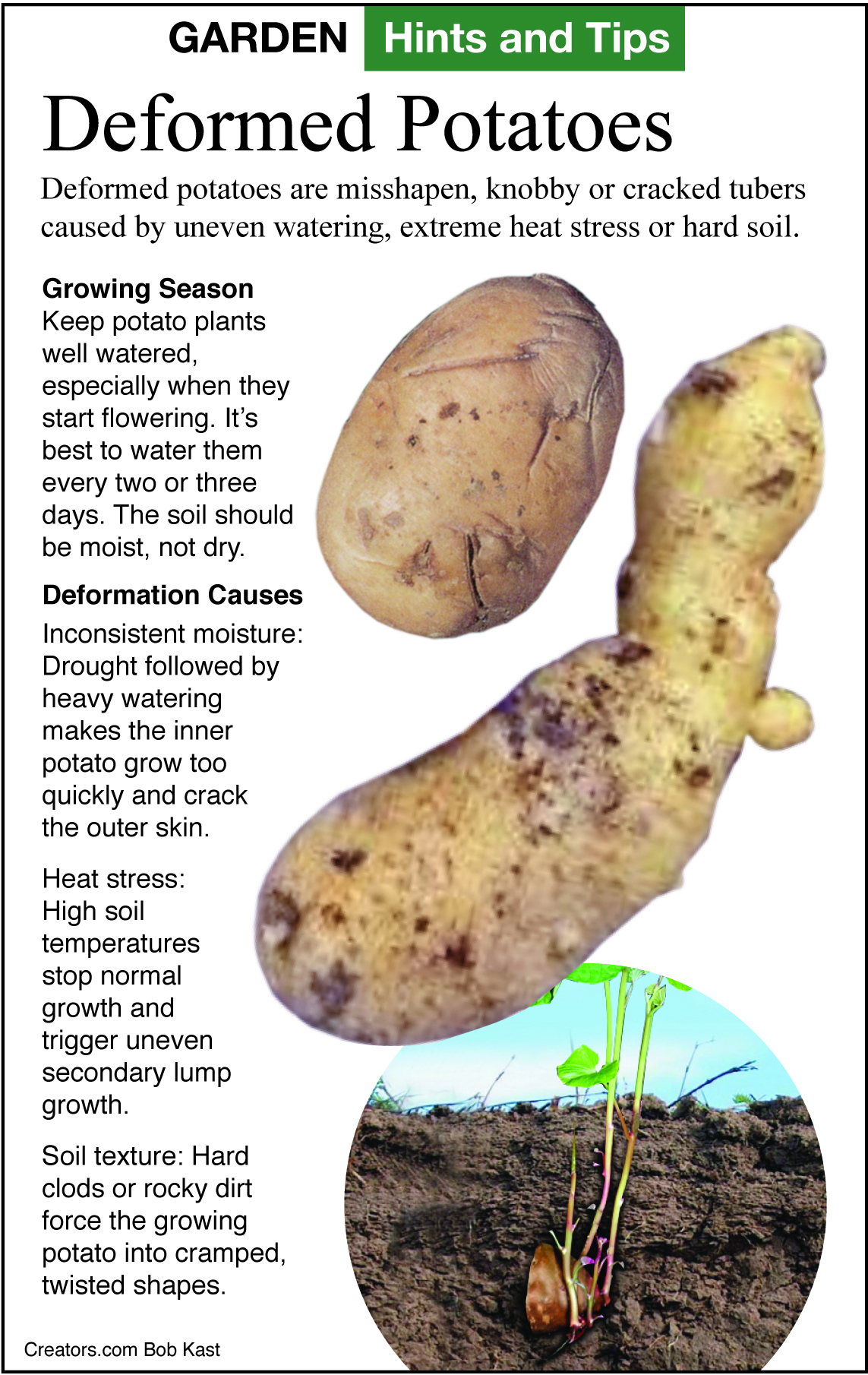
Q: I have a huge southwestern garden and have recently dug about 400 hills of potatoes. I doubt that I have more than 10 to 20 potatoes that are a normal shape. Some have three or four potatoes stuck together; some are long and thin; they are all shapes and sizes. I have never had this before. During the drought and heat, I kept them watered from my well. No chemicals were used on them. Can you think of any reason for this?
A: Even though the potatoes are unusually shaped, I think they will still be edible. Potato plants are subject to many insect and disease problems, but I think yours were affected more by the drought than a pest. Potatoes can get bacterial, fungal and viral diseases, plus nematode infestations, and there are dozens of insect pests. None cause the severe deformity you found, and none would be so uniform across the entire field.
Potato growth, like all plants, can be described in phases. First, the roots and stems begin to grow from the seed. Next, photosynthesis starts in the aboveground plant parts. In the third phase, potatoes grow horizontal stems in the ground, and as they grow, they develop swellings that become the tubers we call potatoes. Tuber formation stops when the soil temperature goes up into the 80s.
In the fourth phase, tubers receive most of the carbohydrates produced by the plant, and they swell in size. At this point, the plant needs to have a continuous supply of soil moisture. The soil cannot be too warm, soil nutrients must be available in the proper amounts, and the plant needs to have lots of leaves producing carbohydrates that are not being damaged by pests. In the last stage, the top of the plant dies, the skin on the tuber hardens and sugars are converted to starch.
Let's go back to the fourth stage. What happens if soil moisture is uneven or the soil temperature goes up and down? Growth of the tubers will start and stop or may not happen at all. If the tuber doesn't swell, you have long, skinny tubers. If the growth starts and stops, the tuber will have several swellings that could look like several tubers growing together. This is called secondary growth.
If a tuber gets to full size and then gets more water, it can swell and crack, just like tomato fruit does when the fruit is at full size and the plant gets more water. The cracks on a potato will heal over with a skin and shouldn't have any problems. Cracks not healed over with a skin have probably been damaged during harvest and handling.
Since you had never seen this problem before and this summer was very dry in your area, it is probable that your potato plants needed more moisture than you could supply. Adding more organic matter, so the soil holds more moisture, will help. Next summer, a drip irrigation watering system could help keep the soil moisture level steadier. Water-holding crystals added to each planting hole could also help hold moisture for the plants. More mulch can also help hold the moisture in the soil.
========
Email questions to Jeff Rugg at info@greenerview.com. To find out more about Jeff Rugg and read features by other Creators Syndicate writers and cartoonists, visit the Creators Syndicate website at www.creators.com.
Copyright 2026 Jeff Rugg. Distributed By Creators.






Comments