1776’s Declaration of Independence inspired Washington’s troops to fight against the odds – and also helped bring in powerful allies
Published in Political News
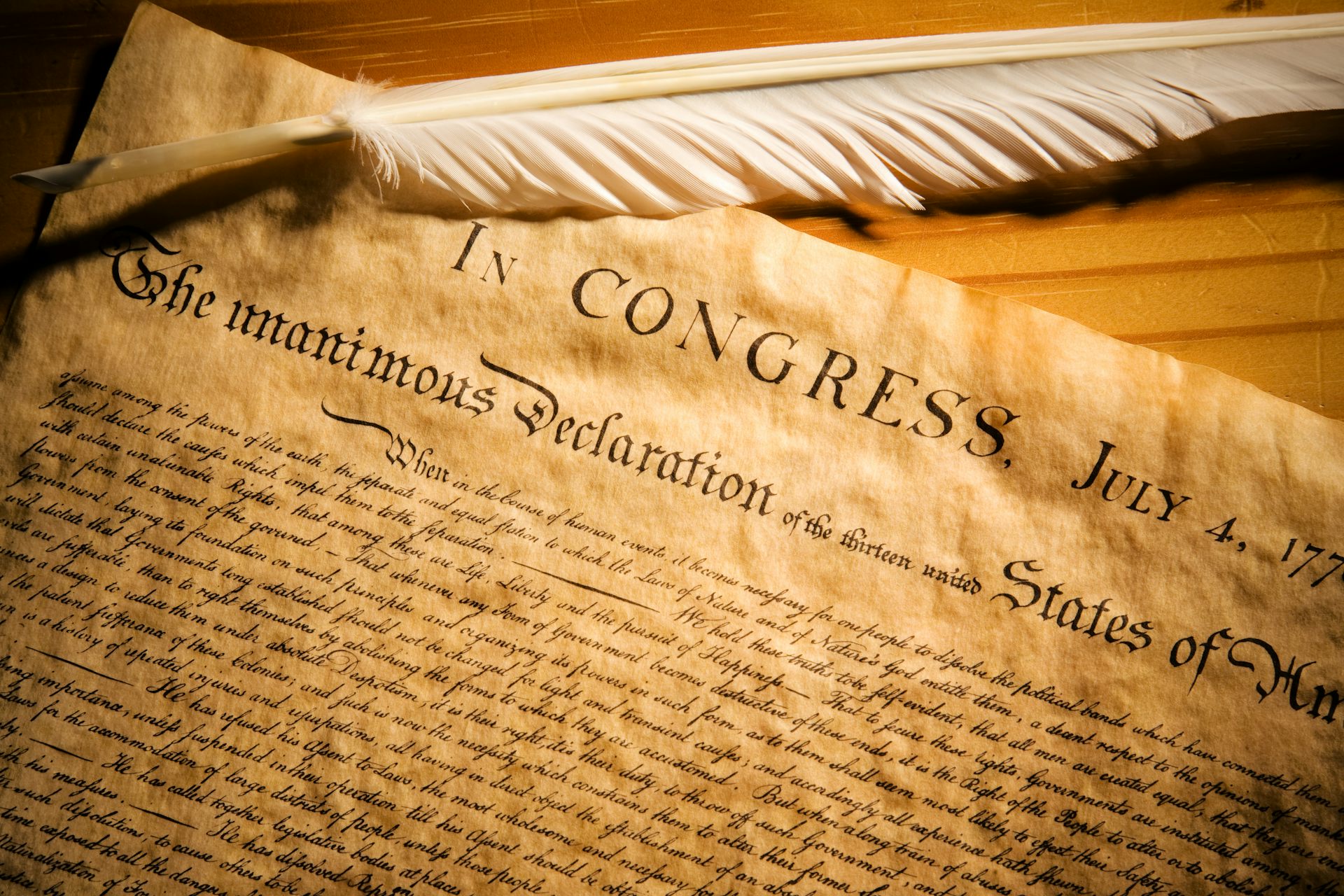
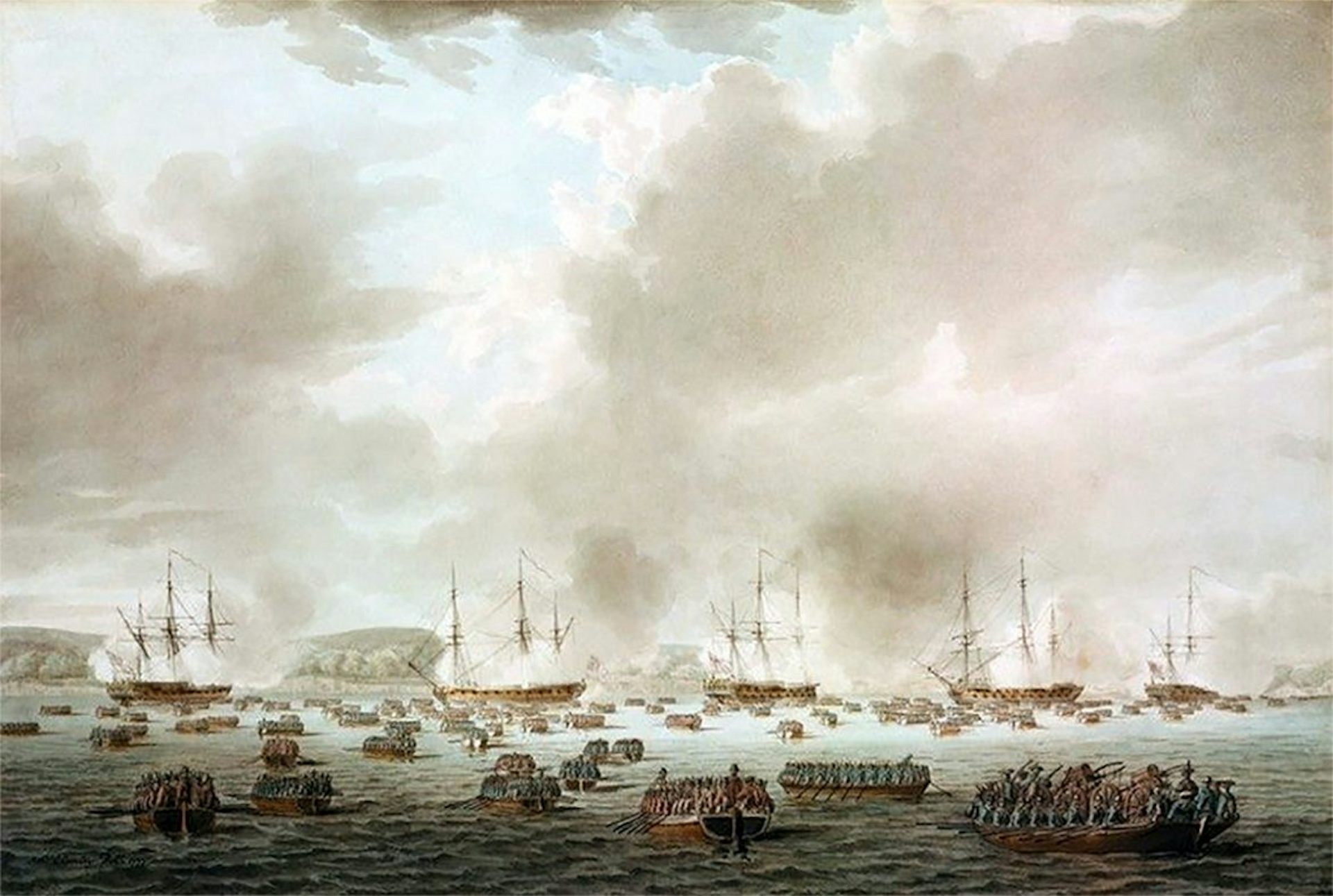
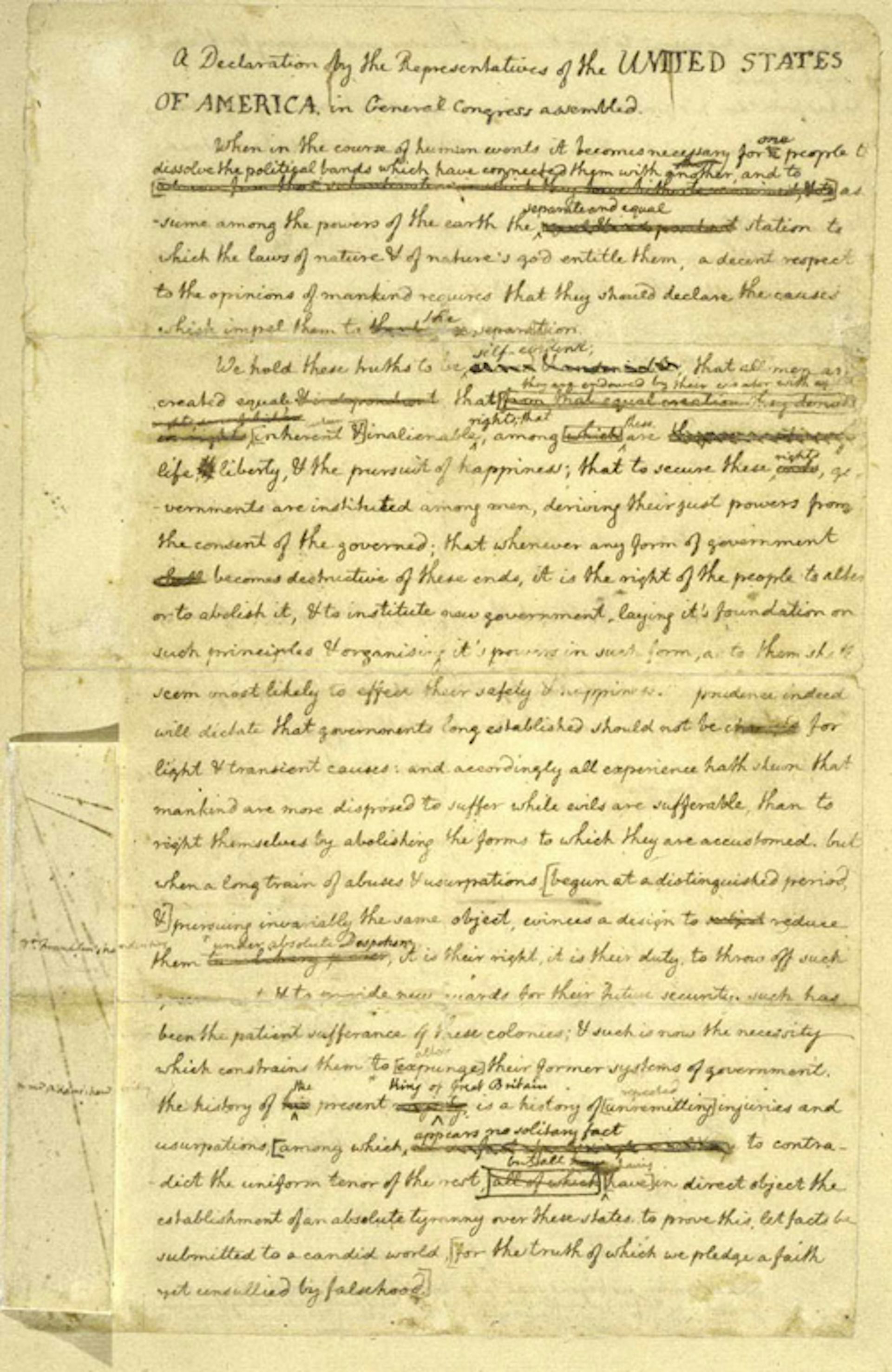
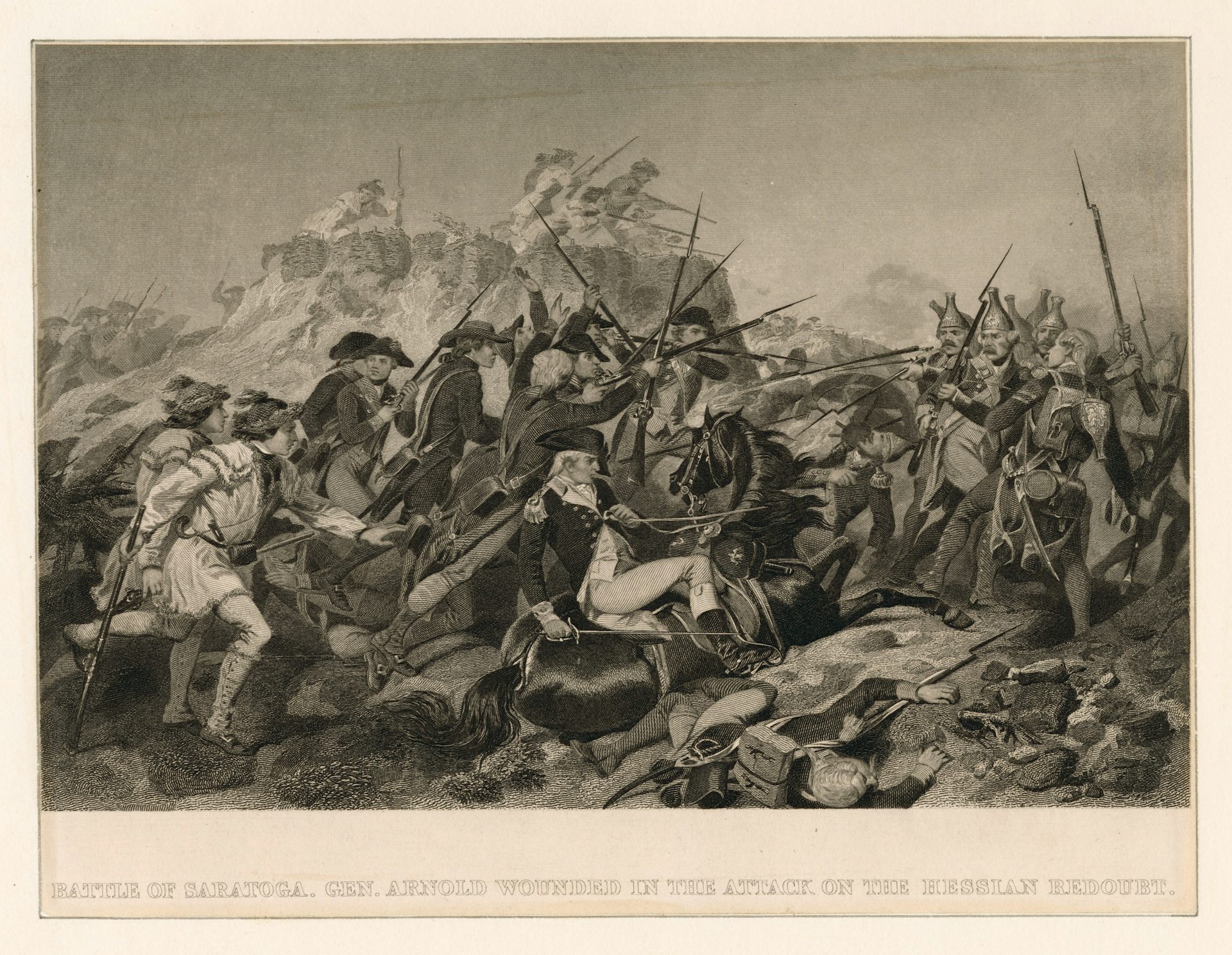
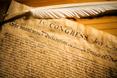
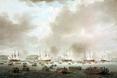
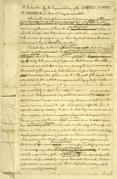
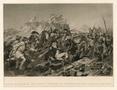
A crowd gathered along the waterfront in New York City in the summer of 1776. The scene they witnessed was terrifying.
The largest expeditionary force in British history sailed into the American harbor. Over 300 ships brought 32,000 professional soldiers and Hessian mercenaries to crush a rebellion.
Nearby, Gen. George Washington’s army gathered to hear their commander read a document that would forever change the nature of their fight: the Declaration of Independence.
And contrary to how Americans now think of that document – as an inspiring declaration that detailed the grievances of Colonists against the British king and announced their independence from Great Britain – what Washington read to his army was also something else.
The Declaration of Independence was America’s first formal declaration of war. It planted a symbolic flag for Patriots to rally around. It transformed illegitimate rebels without hope of foreign aid into state-sponsored freedom fighters eligible for military alliances.
This foundational American text wasn’t just a philosophical breakup letter but a strategic move to secure vital support for the American war effort. America’s first declaration of war was a high-stakes geopolitical gamble essential to achieving independence.
As I and other military historians show in our forthcoming collection of essays, “America’s First War: The Military History of the Declaration of Independence,” the declaration was written within the confines of 18th-century legal standards that strictly governed diplomacy and warfare.
Thomas Jefferson, the foremost writer of the declaration, relied heavily on the Swiss jurist Emer de Vattel’s 1758 treatise “The Law of Nations.” Vattel stressed the fact that in the eyes of European courts, providing aid to rebels was a violation of sovereignty and a dangerous precedent.
Vattel argued that for foreign powers to intervene legally in conflicts, the oppressed party had to formally declare its independence and assume the status of a state. Jefferson kept Vattel’s treatise open while he was working on the Declaration of Independence to ensure he used the specific terminology required to transform the American rebellion into a just war.
By framing independence as “necessary,” Jefferson was not just waxing philosophical. He was satisfying the legal requirement set out by Vattel that all peaceful avenues for reconciliation had been exhausted, which justified war to the “Powers of the Earth.”
A formal declaration of war, approved by Congress, increased support for the American military here at home. It rallied a divided and wary population. Even as late as 1776, there were Americans who remained fence-sitters, uncertain about the risks of a total break with the British Empire.
The declaration functioned as a public rallying flag that allowed Americans to identify themselves as a legitimate, unified group. Like Thomas Paine’s widely read pamphlet “Common Sense,” the declaration educated the uncommitted on the inescapable necessity of breaking away from the British Empire:
“We hold these truths to be self-evident,” the declaration reads, “that all men are created equal, that they are endowed by their Creator with certain unalienable Rights, that among these are Life, Liberty and the pursuit of Happiness.–That to secure these rights, Governments are instituted among Men, deriving their just powers from the consent of the governed, –That whenever any Form of Government becomes destructive of these ends, it is the Right of the People to alter or to abolish it, and to institute new Government, laying its foundation on such principles and organizing its powers in such form, as to them shall seem most likely to effect their Safety and Happiness.”
By framing the fight in the universal language of the preamble, Jefferson sought to inspire and unite disparate Americans through a shared vision of a better life.
In doing so, he helped transform localized resistance movements into a collective national mission. In the words of the declaration, “But when a long train of abuses and usurpations, pursuing invariably the same Object evinces a design to reduce them under absolute Despotism, it is their right, it is their duty, to throw off such Government, and to provide new Guards for their future security.”
This psychological shift was especially critical for the rank-and-file soldiers in the Continental Army.
That’s why, on July 9, 1776, Washington ordered the declaration to be read to his troops in New York. His aim: to provide a fresh incentive for the coming struggle.
This public address was intended to transform the nature of their service. They were no longer disloyal subjects in rebellion against a legitimate sovereign, but soldiers of a new nation defending their own homeland. Through Jefferson’s words and Washington’s address, the declaration fueled enthusiasm for a new political system and rededicated America’s soldiers to a cause that was not yet won.
Washington told the troops he hoped “this important Event will serve as a fresh incentive to every officer, and soldier, to act with Fidelity and Courage, as knowing that now the peace and safety of his Country depends (under God) solely on the success of our arms.”
America’s first declaration of war bolstered troop morale at a pivotal point in the conflict. The Continental Army was going to square off against the largest expeditionary force in British history in the summer of 1776. And Washington’s troops consisted of approximately 19,000 militiamen.
The British army had the British navy. Washington had only minimal naval support. The arrival of the first waves of Hessian mercenaries, auxiliaries for Britain, in July 1776 only deepened American resolve to seek out their own foreign military allies.
The declaration helped bring about much-needed support for the American war effort among foreign governments.
The primary strategic target of the declaration was the Bourbon monarchies of France and Spain, Britain’s chief rivals. The Continental Congress understood that the fledgling United States could not withstand British military might without receiving overseas shipments of gold and gunpowder, in addition to warships, sailors and soldiers.
Silas Deane, the Americans’ first secret envoy, arrived in Paris in July 1776 with instructions to procure equipment for an army of 30,000 men and to inquire about a formal alliance once independence was declared.
Working with the French playwright Pierre-Augustin Caron de Beaumarchais, Deane established the shell company Roderigue Hortalez and Co. to funnel secret aid from the French government to America. This clandestine supply chain eventually provided thousands of muskets, field artillery and millions of pounds of gunpowder that made possible the 1777 victory at Saratoga and France’s subsequent formal alliance.
While France provided the bulk of the naval support, Spain’s role was equally critical to the American war effort.
Following the declaration, the Continental Congress intensified its appeals to Spain. Bernardo de Gálvez, the governor of Spanish Louisiana, became a central figure in this secret war. Even before Spain formally entered the war in 1779, Gálvez channeled over $70,000 worth of medicine, weapons and uniforms up the Mississippi River to Pittsburgh and Philadelphia. This southern lifeline kept the American war effort viable in the Western theater and forced the British to maintain a defensive posture on multiple fronts.
Reframing the declaration as a strategic war measure highlights the Founding Fathers’ sophisticated understanding of power.
They recognized that each individual’s “unalienable rights” were a fantasy without the “full Power to levy War, conclude Peace, [and] contract Alliances.” Jefferson and the members of Congress understood that American freedom required support for the war effort at home and abroad.
By transforming a localized insurrection into a state-sponsored homeland defense and an international conflict, the declaration ensured that the American Revolution would not be a mere sound of one hand clapping, but a successful geopolitical struggle that brought about independence.
This article is republished from The Conversation, a nonprofit, independent news organization bringing you facts and trustworthy analysis to help you make sense of our complex world. It was written by: Christopher Magra, University of Tennessee
Read more:
Along with the ideals it expresses, the Declaration of Independence mourns for something people lost in 1776 − and now, too
Lafayette helped Americans turn the tide in their fight for independence – and 50 years later, he helped forge the growing nation’s sense of identity
Fires, wars and bureaucracy: The tumultuous journey to establish the US National Archives
Christopher Magra does not work for, consult, own shares in or receive funding from any company or organization that would benefit from this article, and has disclosed no relevant affiliations beyond their academic appointment.





















































Comments