Can the nearly $1 trillion-a-year US military really be depleting key weapons in Iran?
Published in Political News

The fragile U.S.-Iran ceasefire announced on April 7, 2026, after 40 days of war came at an opportune time for the United States. Several reports indicate it is running out of weapons amid the conflict.
As a scholar focused on U.S. military deployments, these reports are concerning and somewhat surprising.
After all, the United States spends more money on its military – nearly US$1 trillion annually – than the next nine highest-spending countries combined.
How can the U.S. military be depleting its weapons against a largely isolated country that spends less than 1% of what the United States does?
I believe that gauging U.S. weapons stockpiles provides insight into how the U.S. military may be constrained in the future, and what countries such as Russia and China may learn from the Iran conflict.
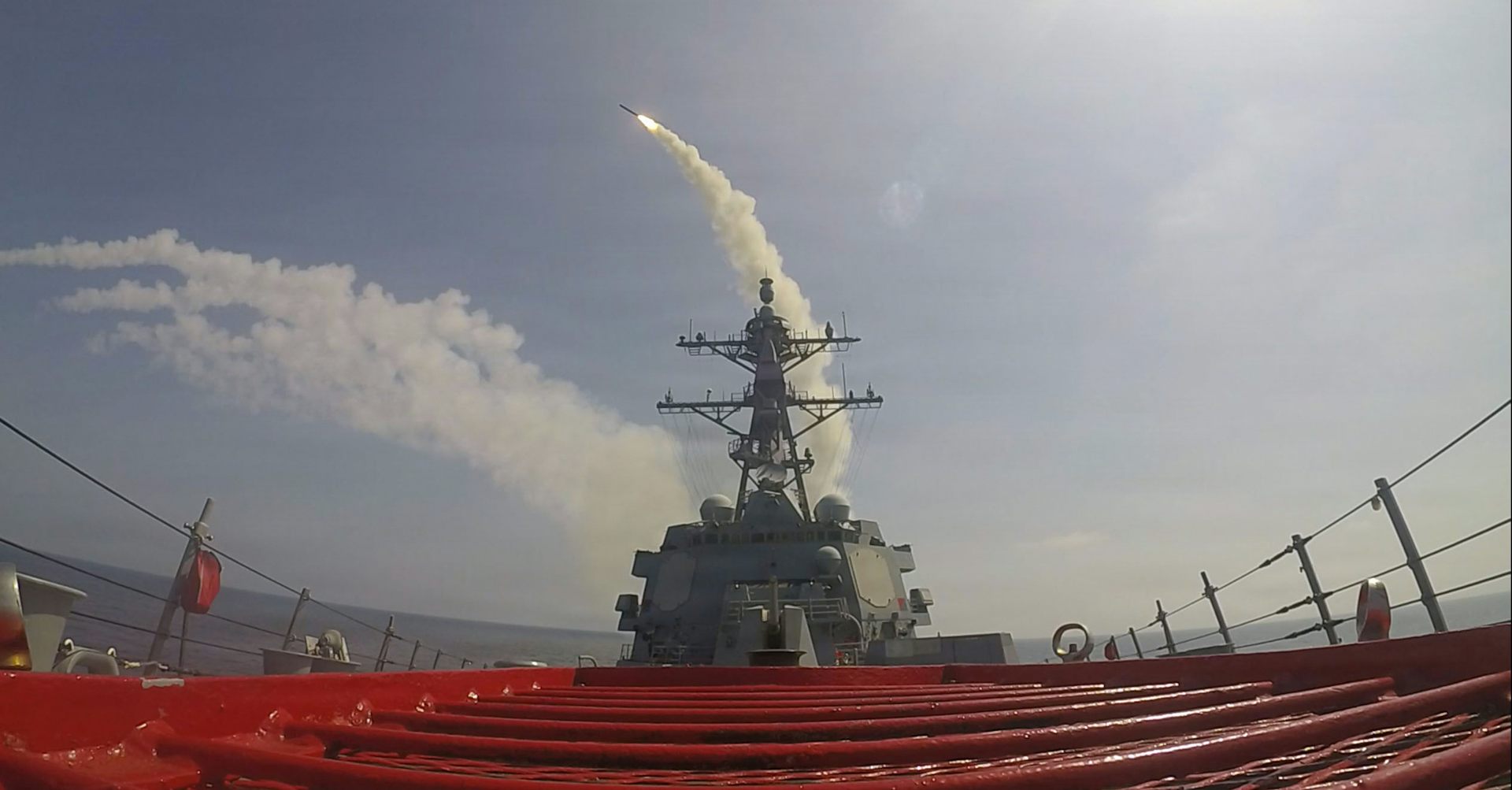
Operation Epic Fury, as the U.S. calls the military operation in Iran, has employed a large amount of military assets in a short time. Military analysts suggest the U.S. is running low on Tomahawk missiles, surface-to-surface missiles and air-defense interceptor missiles.
After a month of war, the U.S. had used over 850 Tomahawk missiles, the sea- or ground-launched cruise missile that has a 1,500-mile range.
That represents years of stockpile accumulation. The U.S., for instance, budgeted for 57 Tomahawk missiles in 2025 and procured 22 of them. The U.S. has built roughly 9,000 since the 1980s and may have deployed over 30% of its current stockpile since the start of the Iran war.
The U.S. military has used two types of surface-to-surface missiles at rates that are not sustainable if the Iran conflict were to continue at its previous intensity. These missiles have a range of 200 to 250 miles (320 to 400 km) and are used for precision strikes against military targets, such as air defenses or enemy troops.
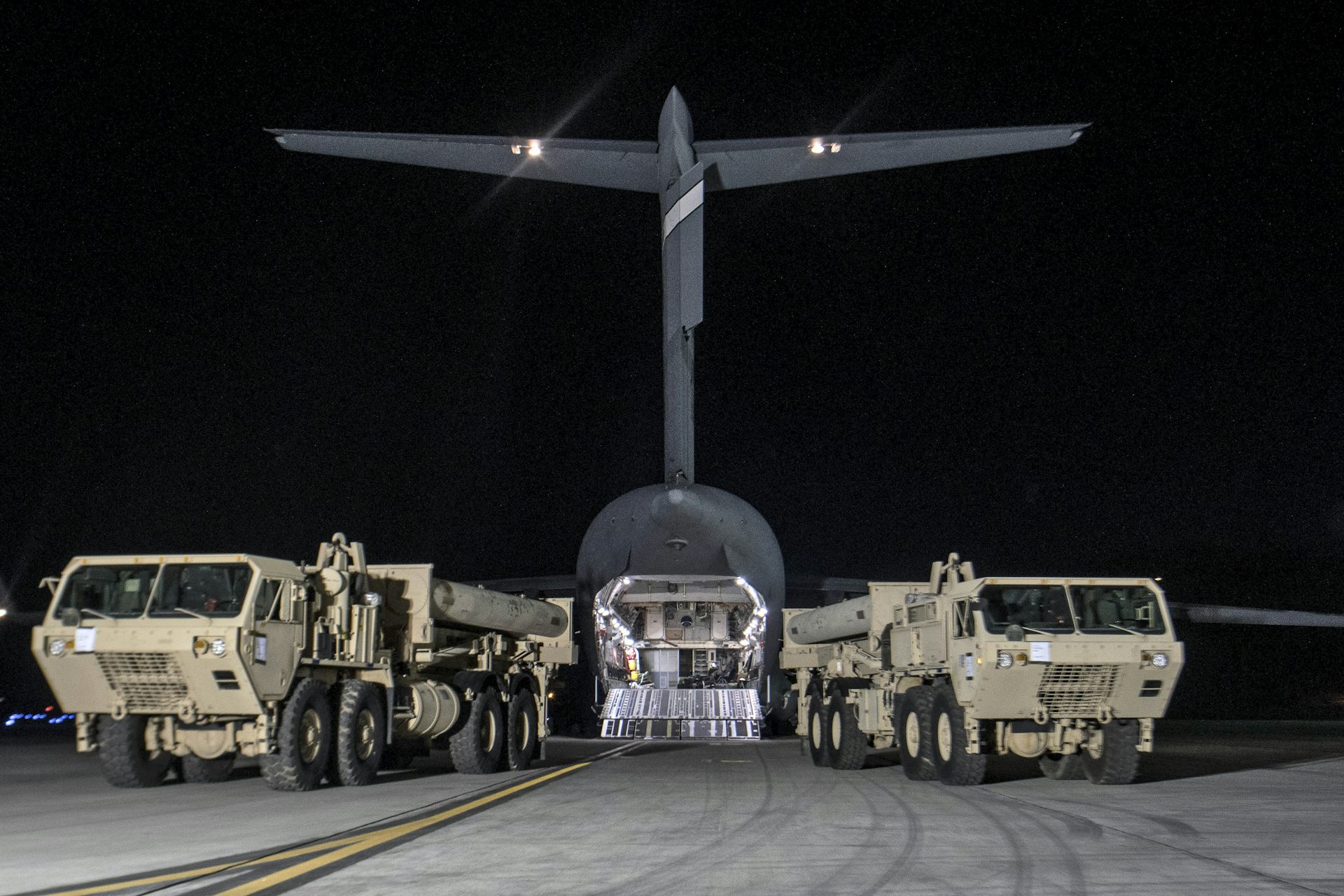
The air-defense interceptor missiles used for the Patriot system, a ground-based air defense system, and terminal high-altitude area defense system, or THAAD, are used to protect bases, infrastructure and troops.
The U.S. has eight THAAD systems and has sent munitions from a Korean THAAD system to the Middle East for the Iran conflict.
THAAD systems operate by shooting a missile without an explosive payload. Instead, THAAD interceptors rely on kinetic energy, which is derived from its motion, to destroy incoming missiles. The U.S. has used between 50% to 80% of its THAAD stockpile in its war with Iran, according to the Center for Strategic and International Studies.
The rapid consumption of these resources has forced the U.S. to divert missiles from other regions while seeking new funding and contractors to build missiles. But producing and deploying missiles can take 18 to 24 months because certain components need to be manufactured before being assembled into a final product.
The U.S. has alternatives to these systems, such as the shorter-range, low-cost unmanned combat attack system that uses drones. They are known as LUCAS drones and are based on Iran’s Shahed drone design.
These lower-cost alternatives, however, are less effective and increase the danger to ships, service members and civilians.
The Iran conflict is not the first time the U.S. has been reported to be depleting its weapons stockpiles. In part, that’s due to its role as the world’s largest supplier of arms, accounting for 43% of global arms exports.
The U.S. has supplied Ukraine with substantial military hardware – missile defense systems, missiles, tanks – for its war with Russia. That has led to delays in weapons shipments, including stinger missiles and Paladin howitzers, to Taiwan, where the U.S. has sent arms since the 1950s to deter China from invading it.
After pausing aid, the Trump administration resumed sending weapons to Ukraine in July 2025. And European support for Ukraine comes through the purchase of U.S. military equipment.
Israel’s war in Gaza and Lebanon has put additional pressure on the U.S. weapons stockpile. The U.S. provides $3.8 billion annually in military aid to Israel, in addition to $16.3 billion since the Oct. 7, 2023, Hamas attacks in Israel.
Whether the U.S. is depleting its weapons because it’s consuming its own stockpile or because of its global commitments, or both, it has ripple effects across the globe. A conflict in the Middle East and new demands on the supply chain for increased production mean there will be shortfalls in Europe and Asia, where U.S.-aligned countries rely upon arms exports for their security.
The U.S., nonetheless, has evolved its approach to preparing for global threats since the end of the Cold War.
In the 1990s, Washington’s strategy was to be prepared to fight wars in two regions simultaneously. The U.S. has scaled back this 1990s strategy to focus on conflict against a single adversary in a single theater.
The Iran war has nonetheless exposed the limits of U.S. military dominance. And rivals such as China and Russia are learning lessons from the Iran conflict at the United States’ expense.
This article is republished from The Conversation, a nonprofit, independent news organization bringing you facts and trustworthy analysis to help you make sense of our complex world. It was written by: Michael A. Allen, Boise State University
Read more:
US military action in Iran risks igniting a regional and global nuclear cascade
‘Just war’ has guided Catholic thinking on conflict for centuries – including criticism of Iran war
Why Iran targeted Amazon data centers and what that does – and doesn’t – change about warfare
Michael A. Allen received grant research funding from the Department of Defense's Minerva Initiative, the US Army Research Laboratory, and the US Army Research Office from 2017 to 2021.






















































Comments