When a president settles his own lawsuit to create a fund for allies, fundamental questions about justice arise
Published in Political News


Thomas Hobbes took a very dim view of rebels and insurrectionists. He believed that insurrectionists relinquish their status as citizens the moment they seek to overthrow the government and should never be rewarded for doing so.
Hobbes, one of the finest political theorists of his time, said this in his great political treatise, “Leviathan,” published in 1651 during a civil war in England and Scotland.
Hobbes would likely also take a dim view of a major development announced by the Trump administration on May 20, 2026.
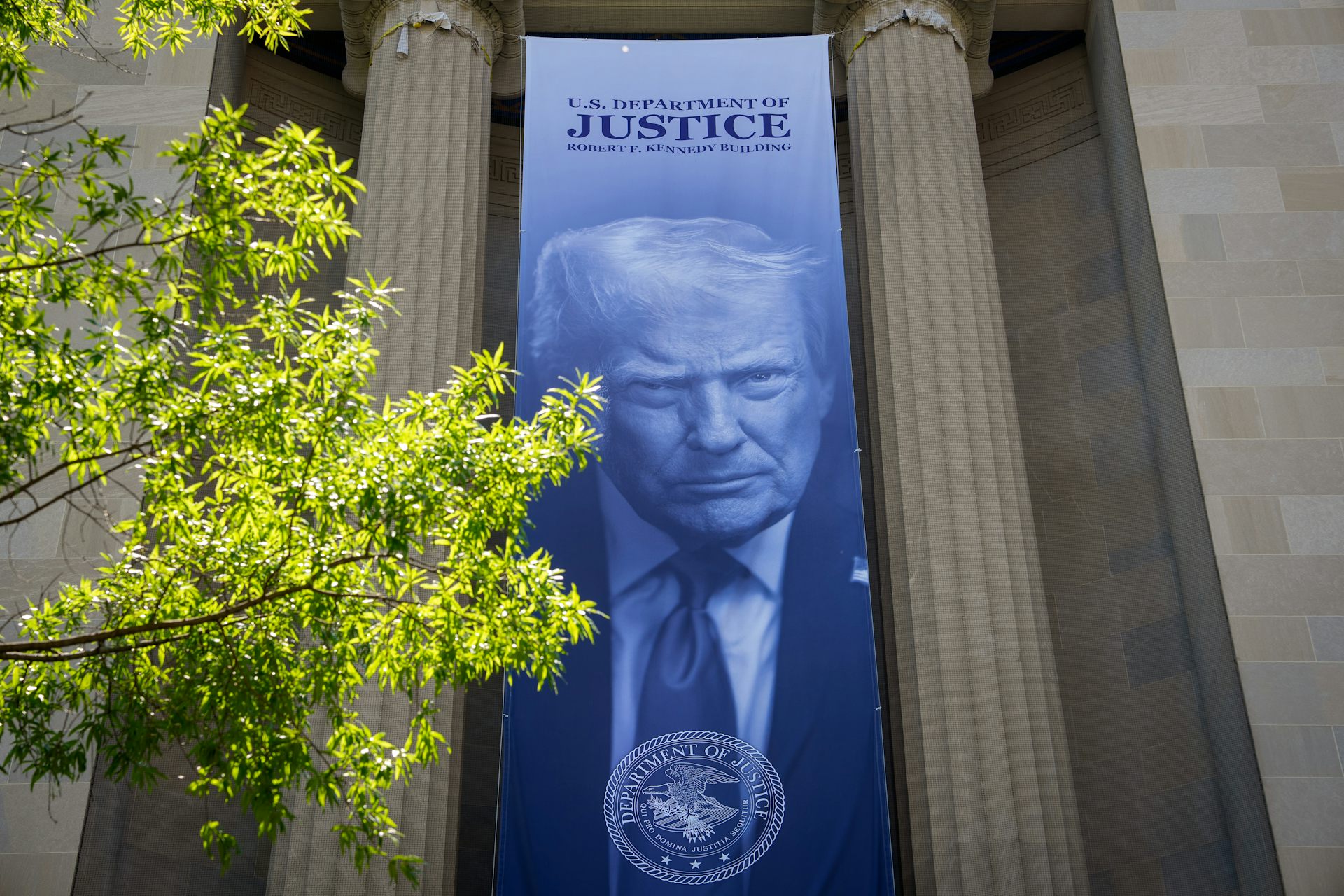
The U.S. Department of Justice has established a US$1.776 billion “Anti-Weaponization Fund,” to be used, the AP reports, to “allow people who believe they were targeted for prosecution for political purposes, including by the Biden administration Justice Department, to apply for payouts.”
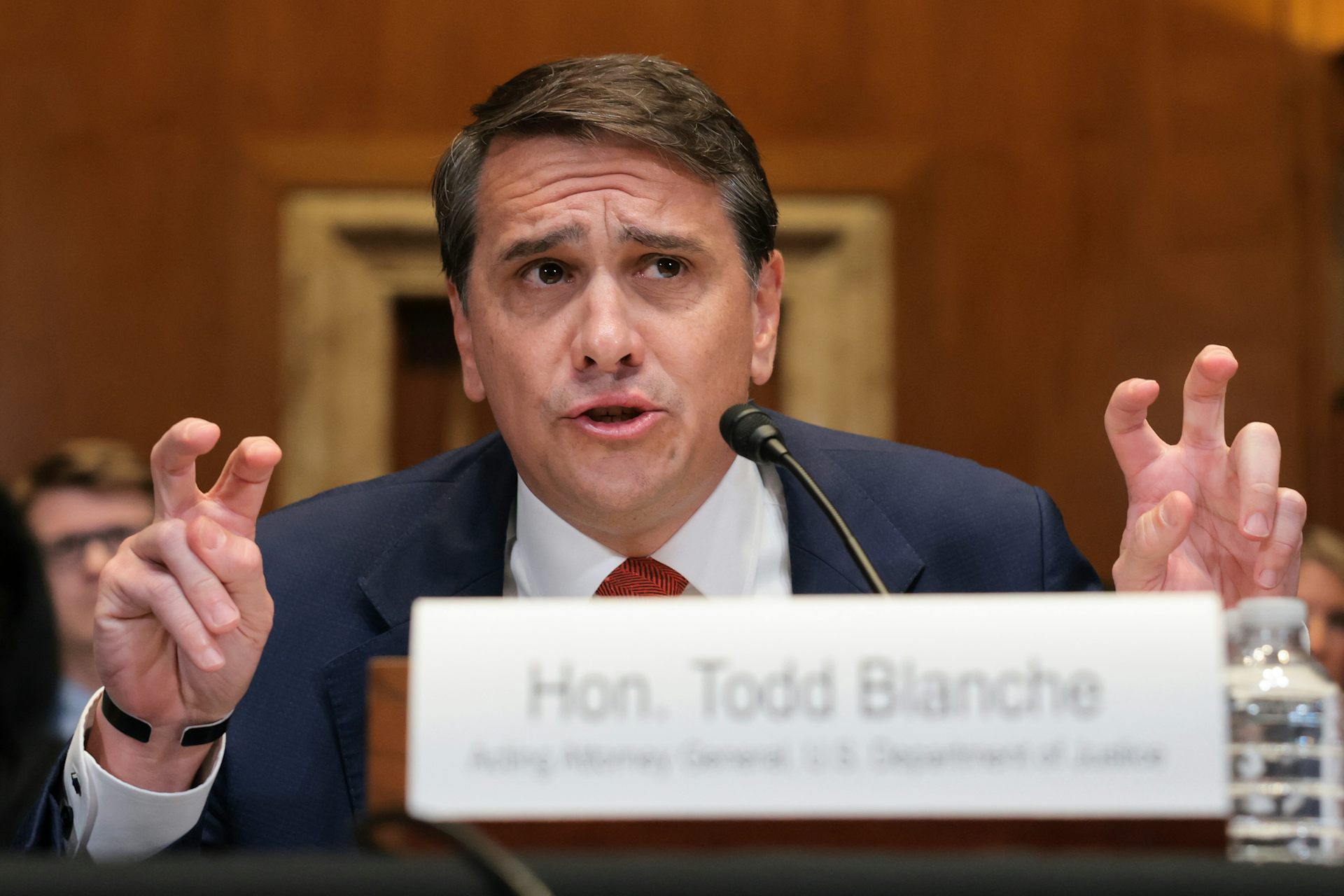
The fund, Acting Attorney General Todd Blanche said, offers “a lawful process for victims of lawfare and weaponization to be heard and seek redress.”
Critics immediately charged that it might be used to compensate people involved in – some even convicted for – the Jan. 6, 2021, attack on the Capitol. Blanche has not ruled out that possibility.
The establishment of the fund is part of a settlement agreement, in response to which President Donald Trump dropped his $10 billion lawsuit against the Internal Revenue Service for damages stemming from the leak of his tax returns. Those leaks, the lawsuit alleged, “caused Plaintiffs reputational and financial harm, public embarrassment, unfairly tarnished their business reputations, portrayed them in a false light, and negatively affected President Trump.”
A DOJ press release indicates the fund will provide “formal apologies and monetary relief” to those who file claims and will cease processing claims “no later than” Dec. 1, 2028. It will be run by a five-person board appointed by the attorney general, and the president will also have the power to remove board members.
Whether or not Jan. 6 participants benefit, some believe that this situation creates an unavoidable appearance of self-dealing and favoritism. As a student of American law and political morality, I think there are important moral and constitutional issues implicated by the president’s suit against the IRS and the creation of the Anti-Weaponization Fund.
Some of them are straightforward; others are less so.
An obvious question is: Should taxpayer funds be given to Trump allies, in a settlement reached by the Trump-controlled DOJ as compensation for a Trump family lawsuit?
As far back as ancient Greece, philosophers like Aristotle have worried about what happens when people are called on to make judgments in cases where they are involved. Aristotle thought that the natural instinct for self-preservation meant that they would always favor themselves.
From that concern emerged what was then, and remains, an uncontroversial, bedrock moral principle.
In the Roman world, the Latin phrase “Nemo iudex in causa sua” meant “no one should be a judge in their own cause.” It recognized that anyone having a personal interest should not get to decide matters in which they are involved.
In the Englsh-speaking world, Hobbes himself reiterated that phrase as he explained some of the advantages of living in an organized society, which could supply impartial judges to resolve disputes. And in 1787, James Madison wrote, “No man is allowed to be a judge in his own cause, because his interest would certainly bias his judgment, and, not improbably, corrupt his integrity.”
Commentators reacting to the Justice Department’s decision to establish an Anti-Weaponization Fund to settle the president’s claims against the IRS have drawn on these longstanding principles to criticize it, including how the DOJ, which is part of the executive branch controlled by Trump, negotiated with him to reach this settlement.
The conservative lawyer and activist Ed Whelan said, “There is a glaring conflict of interest with Trump being on both sides of the claim.” Whelan added, “It is outrageous that he and those answering to him would be deciding how the government responds to these extravagant claims.”
In testimony on May 19, 2026, before the Senate Appropriations Committee, Blanche offered a different view. He said the settlement fund was not unprecedented and likened it to a different fund, established by the Obama administration, to settle discrimination claims brought by Native American and Black farmers.
“It’s not limited to Republicans. It’s not limited to Democrats,” Blanche added. “It’s not limited to January 6th defendants. It’s limited only by the term weaponization.” Blanche promised that payments from the fund will be publicly disclosed.
In April, Kathleen Williams, the Florida federal judge who was presiding over Trump’s lawsuit, reframed the moral issue of self-dealing as a legal one. She questioned whether the case could go on, noting “President Trump’s own remarks about this matter acknowledge the unique dynamic of this litigation.”
The remarks she referenced occurred when the president talked about the lawsuit and the prospect of negotiating with himself. “And they do say that, you know, it’s never been a case like this. Donald Trump sues the United States of America. Donald Trump becomes president, and now Donald Trump has to settle the suit.”
Williams, the judge, wrote that “it is unclear to this Court whether the Parties are sufficiently adverse to each other so as to satisfy Article III’s case or controversy requirement.” That requirement means that a court can only rule when there is a real dispute before it.
That rule is designed to prevent so-called collusive lawsuits, in which “the parties are not actually in disagreement but are cooperating” to achieve a result. Judge Williams was scheduled to hear arguments on that question on May 20, 2026. But the settlement announcement was made two days before, and, in light of it, she dismissed the case.
Beyond the case and controversy question, the Justice Department’s actions may implicate constitutional issues.
One is whether, under the constitutional separation of powers, the executive branch has the authority to create a victim compensation fund, or whether that authority rests with Congress.
Another is whether the fund violates the Constitution’s Emoluments Clause, which prohibits the president from receiving any “Emolument from the United States” other than his salary.
While the new fund may not make direct payments to Trump, he may benefit from payments to family members, business associates and others who will claim to have been victimized by the Biden administration, including people prosecuted and convicted of crimes committed on Jan. 6.
Democratic Congressman Jamie Raskin, a former professor of constitutional law, also contends that what the Justice Department has done violates Section 4 of the 14th Amendment, part of which states: “neither the United States nor any State shall assume or pay any debt or obligation incurred in aid of insurrection or rebellion against the United States.”
Referring to the president, Raskin argues hypothetically, “So, to the extent that he wants to give a million dollars to each of 1,600 pardoned rioters and insurrectionists, we think that that’s an unconstitutional use of money.”
That section of the 14th Amendment was designed to ensure that Confederate rebels would not receive compensation for the value of their emancipated slaves. However, in Perry v. United States, a 1935 case, the Supreme Court stated that Section 4’s “language indicates a broader connotation” beyond its Civil War context.
It seems clear that courts will soon be asked to decide whether Raskin and other legal critics are right in their assertions of a host of legal problems with the Anti-Weaponization Fund. How they will do so remains to be seen.
But, in a democracy, deciding whether the creation of the fund violates the moral maxim that no one can be a judge in his or her own cause ultimately will be up to the people.
This article is republished from The Conversation, a nonprofit, independent news organization bringing you facts and trustworthy analysis to help you make sense of our complex world. It was written by: Austin Sarat, Amherst College
Read more:
Justice Department lawyers work for justice and the Constitution – not the White House
Donald Trump is right − he is getting special treatment, far better than most other criminal defendants
Trump facing multiple criminal charges, civil lawsuits: 110 articles explain what you need to know
Austin Sarat does not work for, consult, own shares in or receive funding from any company or organization that would benefit from this article, and has disclosed no relevant affiliations beyond their academic appointment.



















































Comments