How Congress is losing its path(s)
Published in Political News

WASHINGTON — Hoping for a few final wins before the midterms, Republicans are going for reconciliation — again. That’s partly because other legislative paths to President Donald Trump’s desk are disappearing.
They’ll spend a good chunk of this week on plans for a third round of the filibuster-proof budget process, this time for a $95 billion package that would fund the Iran war, farm aid and voter ID measures.
No one said it would be easy. As House Republicans pushed ahead with their blueprint, Senate Majority Leader John Thune, R-S.D. — who would have to lead his chamber through another grueling round of Byrd rule fights and intense overnight voting sessions — wouldn’t make any guarantees and called it a “very uneven path.”
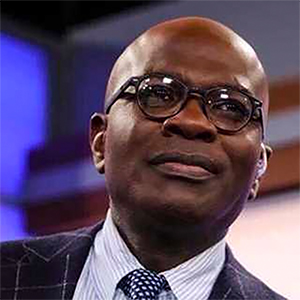
Even so, Thune and Speaker Mike Johnson, R-La., don’t have many other options if they want to grant Trump’s legislative wishes. The lonely road to reconciliation has been decades in the making, said Molly Reynolds, vice president and director of governance studies at Brookings.
In years past, lawmakers may have looked at a president’s request for extra money and passed a supplemental spending bill or folded it into a stopgap. Now, “for lots of very good reasons, people don’t see that as a tenable path,” Reynolds said on a recent episode of Roll Call’s Political Theater podcast.
Recent decades have hardly been all rosy. Instead of advancing stand-alone appropriations bills, Congress has relied on omnibus measures or stopgaps to fund the government. But appropriating was still “the most functional part of Congress’ work every year,” she said.
Now that’s “buckling even further under the weight of various political conflicts, and particularly political conflict between Congress and the president,” she said. The Trump administration has ignored congressional directives on spending, undercutting the power of the purse.
“That’s all created the situation where we’re just kind of stuck,” Reynolds said.
Republicans used budget reconciliation earlier this year amid a bitter clash over funding the Department of Homeland Security, sidestepping the appropriations process as Democrats warned it could come back to haunt them when they return to the minority.
Senate Appropriations Chair Susan Collins, R-Maine, and ranking member Patty Murray, D-Wash., have not been able to reach an agreement on top-line spending limits for fiscal 2027. In anticipation of missing the Sept. 30 deadline, Johnson is already teeing up a short-term funding extension into December that the House could consider this week.
Collins told reporters last week it is her “view that we should not be using reconciliation — we should work through the normal appropriations process.”
Republicans, however, aren’t the only ones to lean on what Reynolds likes to call the “one neat trick.” During the Biden administration, when Democrats had a similarly slim majority in Congress, they used reconciliation to land priorities that included, among other things, COVID-19 relief money.
It’s hard to deny the appeal of a filibuster-proof journey through the Senate. Under a 1974 law, the reconciliation process allows for fast-track consideration of certain proposals to align spending, revenue and debt with budget targets.
The budget blueprint the House will attempt to adopt this week includes an eclectic mix of “instructions,” including $60 billion for the House Armed Services Committee, $12 billion for the Agriculture Committee and $10 billion for the Administration Committee — and even $13 billion for the Intelligence Committee, which Reynolds said is a first.
“In some ways, this is the logical next step in what they have done to the reconciliation process,” Reynolds said. “It is sort of turning into this way to solve a particular political problem that a majority party has at a given moment in time.”
Some are already talking about a “reconciliation 4.0” effort, however far-fetched, this time with extra funding for the Pentagon.
Last week, in a sobering sign of the times, senators couldn’t muster 60 votes to proceed to the usually bipartisan National Defense Authorization Act — one of the last reliable vehicles left for lawmakers to hang their legislative priorities on.
“If we take one of these trains and say it’s not leaving the station, that has broader implications for the rest of the legislative process and other things that members really want to get done,” Reynolds said.
Another option that may be narrowing? The path of personality. Reynolds pointed to the deal-making mentality of senators like the late Lindsey Graham, who died unexpectedly on July 11.
“When you just watch the institution from the outside, sometimes you can miss the degree to which things that happen really do depend on whether people like each other and whether people want to work together and whether people think that someone else is a fun person to have in the room,” Reynolds said.
“We’ve lost some of those kinds of people.”
©2026 CQ-Roll Call, Inc., All Rights Reserved. Visit cqrollcall.com. Distributed by Tribune Content Agency, LLC.




















































Comments