Darline Graham’s inherited Senate seat revives the ‘widow’s mandate’ with a sibling twist
Published in Political News
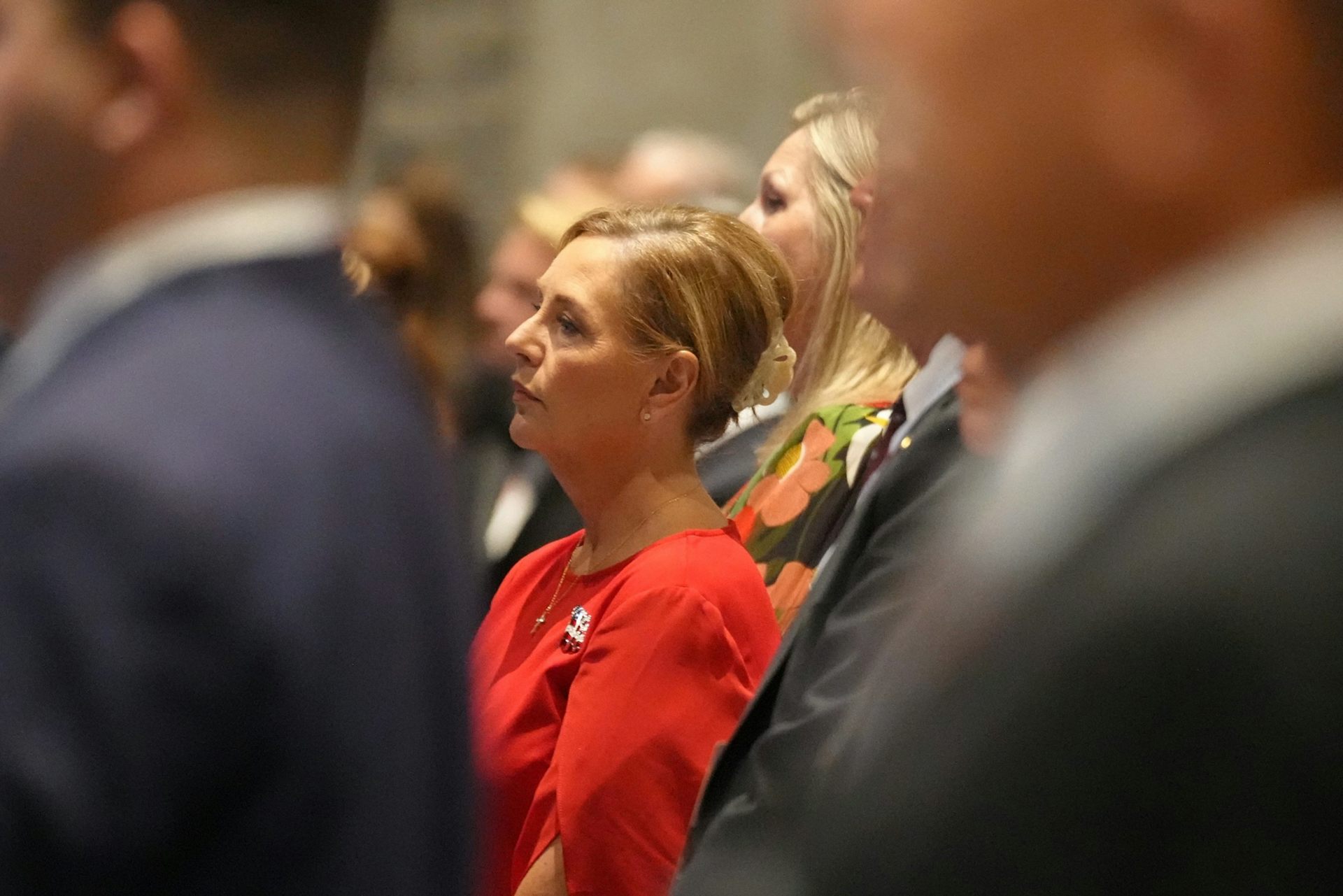
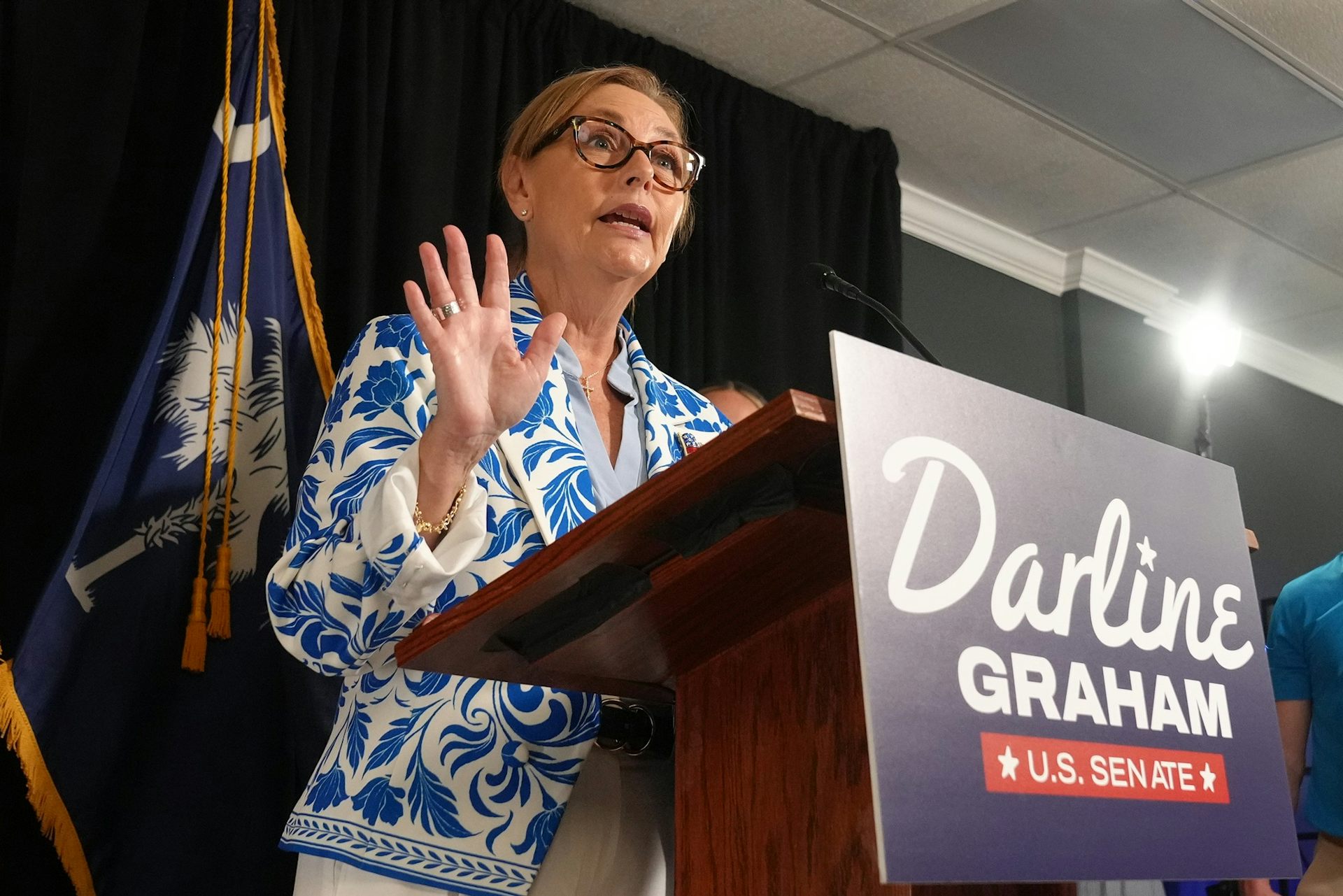


South Carolina Gov. Henry McMaster’s July 2026 appointment of Darline Graham to fill the remainder of her late brother Lindsey Graham’s Senate term – and her subsequent decision to run for the seat – may seem unusual. After all, Darline Graham has no experience in elected office and was virtually unknown outside of the small circle of people who knew her from her time heading the South Carolina Commission for the Blind, or the slightly larger group of people who knew her as Lindsey Graham’s sister.
Nevertheless, she’s made history as the first woman to represent South Carolina in the U.S. Senate.
Graham has since demonstrated how quickly a family connection can translate into electoral support. On Aug. 11, 2026, she finished first in a 10-candidate Republican primary with nearly 33% of the vote. She now faces U.S. Rep. Ralph Norman in an Aug. 25 runoff.
Her appointment belongs to a long American tradition of family succession in politics.
For much of the 20th century, political parties, particularly in the American South, routinely turned to relatives – particularly widows – to fill congressional vacancies. The practice persisted because it provided continuity during moments of uncertainty, preserved party control of valuable seats, avoided divisive nomination fights and capitalized on the electoral value of a familiar name. Although family succession might seem at odds with democratic ideals of open competition, it also created one of the first pathways for women to enter Congress.
As scholars of elections and Southern politics, we see the Graham appointment as a reminder that political inheritance has never been fully absent from American democracy. What has changed is the form it takes and the role it plays in the recruitment of political leaders.
Beginning in the 1920s, congressional widows frequently became the preferred choice to fill legislative vacancies. According to the Center for American Women and Politics at Rutgers University, 48 women have been elected or appointed to fill congressional vacancies created by the deaths of their husbands – 40 in the House and eight in the Senate.
The route into office differed by chamber.
In the case of Senate vacancies, states may allow governors to temporarily fill those spots, whereas House vacancies can be filled only by election. Congressional widows, therefore, reached Washington through both gubernatorial appointments and special elections. But in the one-party South, where Democrats held virtually every elected office from roughly 1900 to 1960, receiving the dominant party’s nomination was effectively a guarantee of a general election victory.
Supporters often argued that these women could provide continuity because many had served as trusted advisers, campaign surrogates and informal political partners to their husbands. They knew the district, understood constituent concerns and were familiar with ongoing legislative priorities. Much like Darline Graham, they also carried a last name that voters already associated with a familiar brand.
Political considerations also mattered. Party leaders often viewed a widow as a politically safe choice who could preserve a seat while avoiding a potentially damaging intraparty battle.
Voters, for their part, were presented with a familiar and trusted name at a time when replacement elections were often held quickly.
This was essentially the logic behind the appointment of Hattie Caraway, who was appointed to the U.S. Senate in 1931 by Arkansas Gov. Harvey Parnell after her husband, Thaddeus Caraway, died. Caraway was subsequently elected with only token opposition to complete the remainder of her husband’s term, becoming the first woman elected to the U.S. Senate.
This “widow’s mandate” was particularly prevalent in the South, although scholars have found that Southern widows served shorter terms than their counterparts elsewhere in the country, perhaps owing to the South’s embrace of more traditional gender norms.
Some women who entered Congress under these circumstances went on to build significant political careers of their own, though. Perhaps the best-known example is Margaret Chase Smith of Maine. After her husband’s death in 1940, she won a special election to succeed him in the House. She later won election to the Senate and became one of the most influential women in 20th-century American politics. Her famous “Declaration of Conscience” speech challenged the tactics of Sen. Joseph McCarthy at the height of the Red Scare.
The appointment of Darline Graham highlights an aspect of family succession that was often less visible in traditional cases of widow succession.
Historically, widows were frequently defended as logical successors because they had participated in campaigns, advised their spouses and possessed extensive knowledge of district politics. Whether those claims were always accurate is debatable, but they provided a justification rooted in continuity and experience.
Darline Graham was not entirely absent from her brother’s political career. She supported his campaigns and appeared in his ads. Their personal relationship was also unusually close because Lindsey Graham helped raise his sister after their parents died.
Unlike some congressional widows, however, Darline Graham was not her predecessor’s longtime governing partner. Her appointment rests less on the notion of a political partnership and more directly on the value of a well-known political name and identity. Lindsey Graham served in Congress for more than three decades, first in the House and then in the Senate. His name recognition, political network and long-standing visibility in South Carolina politics created advantages that extended beyond the officeholder himself.
The Graham appointment therefore makes visible one of the central forces that has sustained family succession throughout American history: the enduring electoral value of political brands.
Widow succession still happens, but it is less common than it once was. This decline largely reflects the rise of women’s independent political careers. As women increasingly won local, state and federal offices on their own in the late 20th century, family connections became less necessary as a pathway into Congress.
Yet family succession has never completely disappeared. Darline Graham’s appointment and strong showing in the Republican primary demonstrate that the political benefits of continuity, name recognition and established networks remain powerful.
The old “widow’s mandate” may have faded, but the broader dynamics that sustained it continue to shape American politics.
This article is republished from The Conversation, a nonprofit, independent news organization bringing you facts and trustworthy analysis to help you make sense of our complex world. It was written by: Gibbs Knotts, Coastal Carolina University and Christopher A. Cooper, Western Carolina University
Read more:
Feinstein’s death raises the question: How are vacant Senate seats filled?
How Lindsey Graham’s keen ability to read the moment propelled him to political relevance for 3 decades
Just over 1 in 4 members of Congress in 2023 will be women – at this rate, it will take 118 years until there is gender parity
The authors do not work for, consult, own shares in or receive funding from any company or organization that would benefit from this article, and have disclosed no relevant affiliations beyond their academic appointment.


















































Comments