Central Park carriage horse drivers want better regulations, not a ban
Published in News & Features
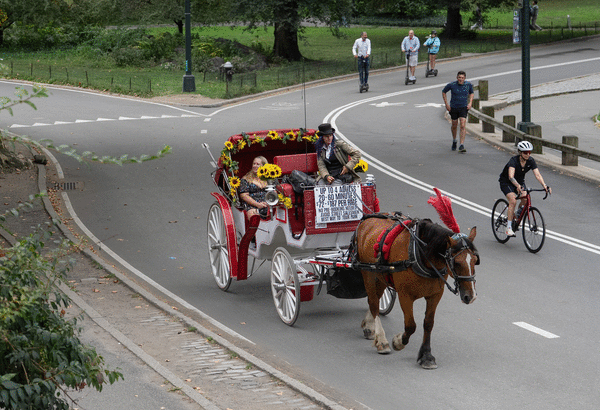
From his perch in the driver’s seat of a horse-drawn carriage eight feet above Manhattan’s Fifth Avenue, Ahmet Bilici insists he sees all manner of bicycle offenses in Central Park and wonders what all the fuss surrounding his industry is about.
He says he’s seen reckless e-bike riders, dangerous delivery people, and lost count long ago of how many collisions he has witnessed between tourists and two-wheelers.
“They do racing in the park every single day,” Bilici said of the bicycles. “The pedestrians couldn’t even walk across the street. The park is crazy because of the bicycles.”
Yet, Bilici says, it’s him and Chocolate, and drivers and horses like them, with targets on their backs as critics push hard to put their industry and livelihoods out to pasture.
Long before an 18-year-old tourist was killed earlier this month in a runaway carriage horse incident, the carriage ride industry had been the subject of fierce debate.
On one side were animal rights activists who said carriage horses are overworked, get easily spooked on city streets, live in inadequate stables and are controlled by abusive owners and drivers.
On the other side are industry advocates, who say the animals are well cared for, the stables are fine and the owners and drivers love their horses like most pet owners love their dogs.
Missing from the debate, says Bilici, is the economic impact a total ban on horse-drawn carriages — like the one under consideration by Mayor Mamdani and the city council — would have on drivers like him and his family.
Bilici, who said he grew up with horses on a farm, said he immigrated 25 years ago to New York City from Turkey, where he went to school to become a veterinarian. But he said a language barrier kept him from finding work in his field.
So he did odd jobs — grocery store clerk, security guard — for a few years until he found something that really clicked.
The years since have been good to him, he said. He owns one of the 68 medallions sold by the city granting the right to operate a carriage. He even has two horses for his carriage, a second so his son can work an extra shift, where rides through Central Park cost about $72 for the first 20 minutes.
But the June 17 death of a tourist threatens to change all that. Romanch Mahajan, 18, was in a Central Park carriage when the driver stepped out of his seat to take a photo of him and his family, who had traveled from India to visit New York City for the first time.
While they were posing, the horse suddenly started running, and Mahajan was thrown off the carriage. He hit his head on the pavement, and later died. It was the first recorded human fatality in Gotham’s carriage-horse industry.
Mahajan family said they support a city council carriage ban bill, which has been renamed in the teen’s honor. They also participated in a nine-hour City Council Health Committee hearing over the ban bill, which would end all horse-drawn carriage rides by June 2028.
A vote on the bill is expected next month.
Following Mahajan’s death, the union representing the drivers and the city agreed to press pause on the rides, standing down for several days while safety rules and protocols were reevaluated.
“We are back in the park after spending the weekend doing refresher training and all the safety protocols in order to operate safely here in the park,” Christina Hansen, the shop steward for TWU Local 100, said last week.
Meanwhile, the owner of the carriage involved in the fatal crash suspended the driver indefinitely and plans to retire the horse, according to union officials, who said the driver improperly dismounted to take a photograph of his passengers.
Bilici said disciplining the driver was the proper move. He said he sympathizes with the victim’s family, but for those who want to abolish the industry over the incident, Bilici has an urgent plea: Hold your horses.
“One of the top tourist attractions are the horse carriages in Central Park,” Bilici said. “Why doesn’t the city try to make it more safe instead of trying to ban them?”
Bilici said hitching posts installed throughout the park would solve part of the problem.
“You have to have a place to tie up your horse,” Bilici said. “You need to tie this animal to some hitching post. They can do that. It’s very simple. There’s a lot of space in Central Park.”
_____
©2026 New York Daily News. Visit nydailynews.com. Distributed by Tribune Content Agency, LLC.





Comments