Staff at Kentucky juvenile jail forced autistic teen to stay in flooded cell, mocked him
Published in News & Features
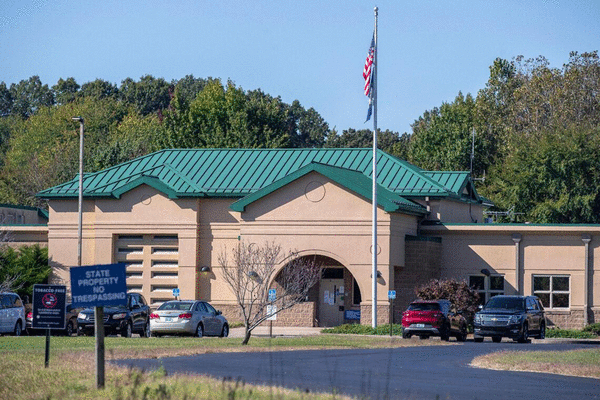
LEXINGTON, Ky. — Earlier this year, the staff at one of Kentucky’s juvenile detention centers left an autistic boy inside a flooded cell for a day to punish him and laughed at him, according to documents the Lexington Herald-Leader obtained under the state’s Open Records Act.
The incident happened April 27 at the 43-bed McCracken Regional Juvenile Detention Center in Paducah.
The teen boy in question has the mental capacity of a kindergartner, is “highly triggered” by stress and needs instructions “explained to him step by step, or else he will not understand,” his mental health counselor later told internal investigators for the Justice and Public Safety Cabinet, according to an investigative report for the incident.
The guards have a hard time dealing with the boy, the counselor said. He gets upset when he is locked in his cell for long stretches for a behavioral violation and sees other youths walking around the juvenile detention center, she added.
“He does not understand why,” the counselor said.
On April 27, the boy was locked in his cell for making inappropriate comments, according to the investigators’ report. Distressed, the boy plugged his cell’s toilet with toilet paper and flushed it, flooding his cell.
Investigators wrote that the proper response in this situation — which isn’t uncommon at juvenile detention centers — is for staff to provide the youth with cleaning materials and instruct him to mop, disinfect and dry his cell. If the youth refuses, he should be moved elsewhere and staff should clean the cell, investigators wrote.
Instead, staff at the Paducah facility left the boy in the flooded cell for the next 20 hours and 30 minutes, investigators wrote.
The boy tried to exit the flooded cell when staff briefly opened the door. But a guard used both hands to shove him forcefully back through the doorway and said, “Aw, you cannot get out, can you?”
Another guard said, “You know you are still going to have to live in there, right?”
One of the guards took the boy’s sweatshirt off a hook on the wall and threw it in the toilet water on the floor. Then he grabbed some of the boy’s personal items off a shelf — a composition book, papers and hygiene supplies — and left with them, the report says.
Those personal items went into the trash, which the boy protested later when he learned of it. The boy told investigators he used the composition book as a diary and to record other information.
‘Can I come out?’
More than an hour later, the boy asked again if he could leave his flooded cell, investigators wrote. A guard refused and laughed at him.
Over the next day, employees came and went with shift changes, some of them later telling investigators they weren’t aware of the situation in the flooded cell.
Surveillance video that captured the scene showed people walking past the cell door as the hours passed. The boy could be heard repeatedly asking, “Can I come out?”
A milk carton and a snack were tossed into the boy’s cell at one point, but the snack landed in the toilet water on the floor. The boy kept climbing onto his bed, sink and desktop to stay out of the water.
After 20 hours and 30 minutes, the boy was given a broom and towels to clean up his cell, but no disinfectant, investigators wrote.
This was inappropriate treatment of a youth in state custody, investigators concluded.
A need for mental health care
In a prepared statement, the Department of Juvenile Justice said one of the guards involved — a correctional officer — resigned June 30 with prejudice while under investigation, so he can’t return to work at the Justice and Public Safety Cabinet.
A sergeant involved with the incident also resigned, on June 4. And a sergeant and a lieutenant involved with the incident received written reprimands for their conduct.
The Department of Juvenile Justice has been a deeply troubled state agency for years.
The abuse and neglect of the youths held in its facilities has been the focus of extensive news coverage; a U.S. Department of Justice civil rights investigation; a lawsuit filed by the Kentucky Protection and Advocacy Services Division; and a highly critical state audit that detailed excessive use of isolation cells and pepper spray, among other serious problems.
The Herald-Leader has reported that the agency’s juvenile detention centers — heavily punitive and under-staffed — are ill-prepared to hold youths with mental health problems.
Acknowledging this, Democratic Gov. Andy Beshear has asked the General Assembly for the last three years to fund the construction of a $35 million mental-health juvenile detention facility where psychiatric care could be provided in a secured setting.
Beshear’s request keeps falling short. It died in the House last winter. But the measure’s primary legislative sponsor, state Sen. Danny Carroll, R-Paducah, says he will continue trying.
The story of the autistic boy in the flooded cell is another example of why Kentucky needs a different kind of place to house certain youths in state custody, Carroll said. Private hospitals and residential treatment centers won’t accept them because of the potential for violence, he added.
“Obviously the need is still there and as great as it has ever been,” Carroll said.
The U.S. Department of Justice is continuing its review of Kentucky’s juvenile detention centers and might insist on a consent decree that would require expensive reforms, Carroll said. There also have been lawsuits against the state Department of Juvenile Justice filed by youths and former employees citing the poor conditions, he said.
“I get it, (a mental health facility) is a real expensive proposition,” Carroll said.
“But it’s our kids, and you know, you look at a couple really good lawsuits, what’s that going to cost?” he asked. “So that’s that’s always a consideration. First, we want to do what’s right by the kids and make sure they have proper care. And the investment part of it, I just — it has to be done. And at this point, I hope everyone in the legislature agrees that we’ve got to get this done, and we need to do it now.”
_____
©2026 Lexington Herald-Leader. Visit kentucky.com. Distributed by Tribune Content Agency, LLC.






Comments