Autistic children drown at alarming rates - swim lessons and water safety strategies can save their lives
Published in Health & Fitness
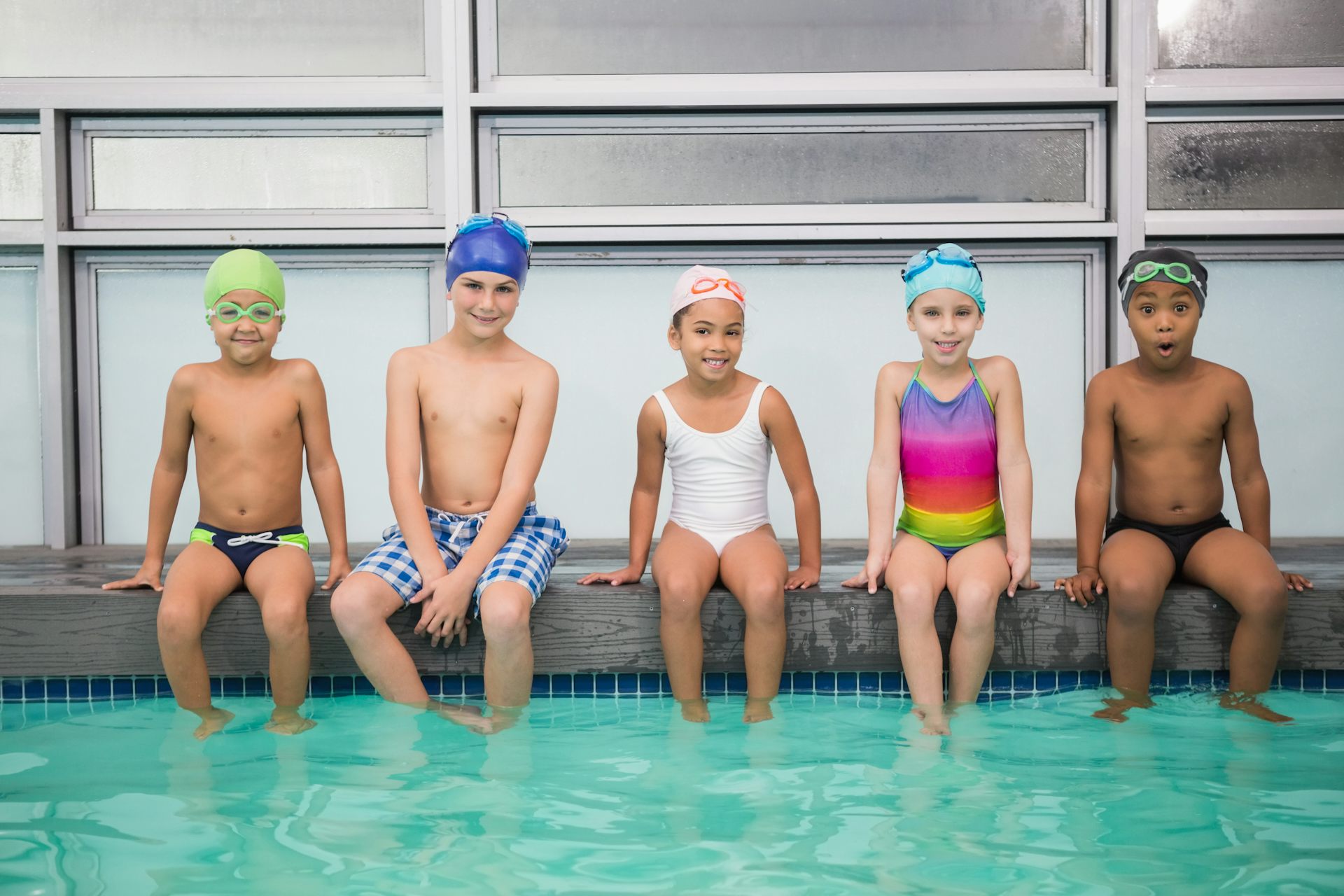
During roasting-hot summer days, more and more people make their way to swimming pools, lakes, rivers and other spots where they can access water to stay cool.
But while water activities provide a refreshing escape from the heat, they can also be a source of danger. In the U.S., drowning is a leading cause of accidental death for children. More than 900 children die from accidental drownings each year.
For autistic children, the danger is more acute: Their risk of drowning is up to 160 times higher than that of their peers without autism.
That may be because autistic children are often strongly drawn to water – whether for play or to seek out the sound, feel, sight of water shimmering in the sunlight or the sense of calm experienced in the water. And they can sometimes have greater difficulty finding swimming lessons than their peers.
We are an occupational and recreational therapist team that studies effective approaches for teaching swimming and water safety to autistic children. We also train future therapists on these methods.
Our goal is to equip families, caregivers and therapists with some practical steps to keep autistic children safe around water.
Many autistic children tend to wander, which can lead them away from safe, supervised areas into unprotected, unsupervised settings – and potentially toward hazards like open water. This puts these children at increased risk for drowning, particularly if they do not know how to swim.
Swimming lessons can help reduce drowning risk, but changes to traditional classes may be required in order to meet the unique needs of autistic learners.
Autistic children communicate in a wide variety of ways, ranging from nonspeaking to highly talkative. The environment of a busy pool may trigger sensory overload and distress, causing children to cry or want to leave. Overload can also lead to difficulty following instructors’ directions. They may need extra time and assistance for emotional regulation, or need encouragement and motivation to stay engaged. Some may not want to be touched and prefer visual examples for learning new skills in the water.
For the average swim instructor, who may be teaching up to 10 children at a time and may not have training in supporting autistic children, figuring out how to meet individual needs can be a challenge.
Adaptive swim lessons, which are provided by instructors experienced at meeting autistic children’s unique learning and behavior needs, may better set them up for success. These lessons tend to have fewer participants, or even offer one-on-one instruction, allowing for plenty of individual attention. The instructor may use tools and strategies such as play-based approaches, visual schedules, sensory strategies or a consistent routine to help the child feel comfortable and successful.
Perhaps the most important step you can take is to enroll your child in aquatic instruction that meets their specific learning and sensory needs. This can be anything from traditional group lessons at a community pool to individual lessons with a therapist – and many variations in between.
Research shows that swim lessons that are designed to meet the individual needs of autistic children and offer one-on-one support in a group setting successfully improve their swimming skills.
Many community-based aquatic programs – for example, the YMCA, the local parks and recreation department, private swim schools or therapy centers – offer adaptive swim instruction with options for one-on-one support.
If you don’t see options that work for your child, or if your child’s swim instructor needs further assistance, consider asking your child’s occupational, behavioral, physical, speech or recreational therapist to join the lesson to help support their needs so they can learn successfully. For example, if communication presents a challenge during swimming lessons, a speech therapist can share effective alternative communication strategies with the swim instructor.
To prepare for swimming lessons, make a list of your child’s strengths and areas of concern to share with the instructors. Consider how your child’s specific interests might help them overcome aspects of water safety that they might find challenging. For example, if the child loves learning about dinosaurs, think about how dinosaur toys can be included in swimming lessons.
Families and caregivers can take several additional steps to keep autistic kids safe around water.
A good starting point is learning about the 5 Layers of Protection, described by the National Drowning Prevention Alliance. These action items can help everyone improve safety in or near the water.
The five layers are:
No single precaution provides enough of a safeguard on its own, so it’s best to combine multiple strategies within each of the five layers – for example, using door alarms, plus pool alarms and fencing around pools, to prevent a child from entering a pool unattended.
It’s also important to think through your child’s specific strengths and areas of concern when it comes to water safety. For example, they might be comfortable in the water or be physically strong – but they might not know how to swim, or might struggle with following instructions or have trouble identifying dangerous situations like rip currents or water too deep for them to stand in.
Other behaviors that put autistic children at risk of drowning include drinking water while swimming, which puts them at risk for accidentally inhaling water; and holding their breath for prolonged periods, which can lead to fainting underwater.
About 1 in 31 children in the U.S. is diagnosed with autism. Given the prevalence of the condition, there are undoubtedly autistic children in your community and among your friends and family members.
Friends, family members and community members who want to learn more about how to keep autistic children in their community safe around the water can find a range of free courses and resources available online.
The American Red Cross offers an online course on water safety for parents and caregivers.
Resources specific to autism include the Safety on the Spectrum Water & Wandering Program, developed by the Autism Society, and Swim and Water Safety, part of the Autism Safety Guide developed by Autism Speaks.
This article is republished from The Conversation, a nonprofit, independent news organization bringing you facts and trustworthy analysis to help you make sense of our complex world. It was written by: Tana Carson, Florida International University and Tania Santiago Perez, Florida International University
Read more:
Safety in and near the water – a pediatric emergency medicine physician offers tips
Beyond car seats and childproof pill bottles: A child psychologist explains how to empower kids to make safer choices
Is the changing definition of autism narrowing what we think of as ‘normal’?
Tana Carson owns shares in Adaptive Associates, a clinical and research consulting company. She receives funding from the "Office of the Assistant Secretary of Defense for Health Affairs through the Autism Research Program under Award No. HT9425-25-1-0126 (or AR240070) and No. HT94252510205 (or AR240048). Opinions, interpretations, conclusions, and recommendations are those of the author and are not necessarily endorsed by the Department of Defense”. She is affiliated with Kids 4 Kids USA and Friends of Jacobs Aquatic Center and consults for Underwater Hypoxic Blackout Prevention.
Tania Santiago Perez owns Swim Flow LLC, which provides swim lessons to people of all abilities. She receives funding from the "Office of the Assistant Secretary of Defense for Health Affairs through the Autism Research Program under Award No. HT9425-25-1-0126 (or AR240070) and No. HT94252510205 (or AR240048). Opinions, interpretations, conclusions, and recommendations are those of the author and are not necessarily endorsed by the Department of Defense”. She is affiliated with Barrier Free Divers, ThumbsUp International, and the Southeast Recreational Therapy Symposium.










Comments