Is withholding federal counterterrorism funds from states – as FEMA has threatened – legal?
Published in Political News
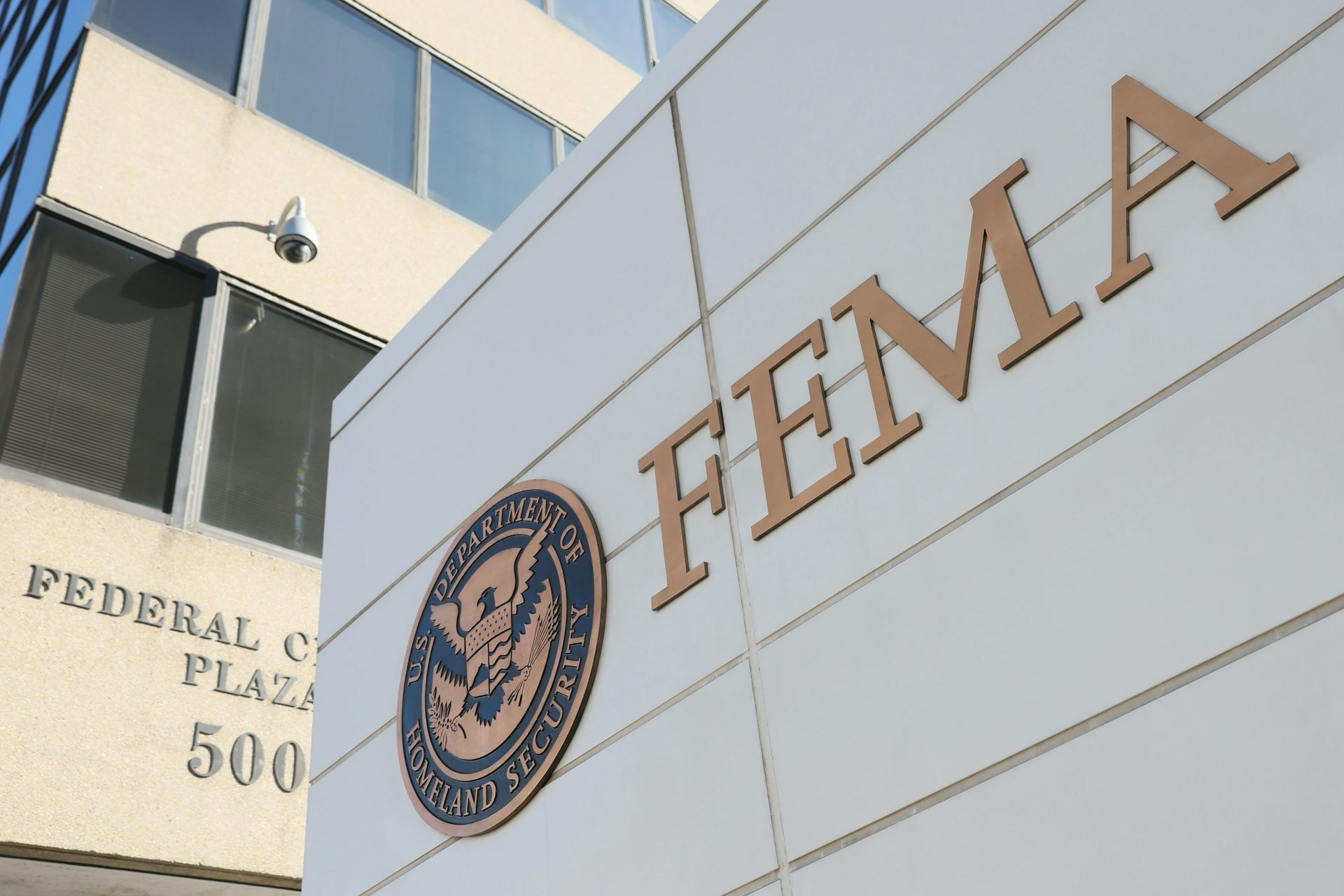
The Federal Emergency Management Agency has issued new grant guidelines that threaten to withhold counterterrorism funds from states that do not comply with President Donald Trump’s election security directives.
The agency told states they must “reconcile the number of voters who voted in federal elections with the number of ballots cast. They must use the federal SAVE database to verify the citizenship of everyone in the state’s voter registration database.” States also have to verify the citizenship status of poll workers or anyone operating election systems.
The SAVE database helps government agencies “determine citizenship and immigration status of individuals within their jurisdiction for the purpose of granting benefits, licenses, as well as for other lawful purposes.” For states that comply, the database allows the federal government to review the citizenship of everyone registered to vote. It also enables the government to determine which state residents are allowed to vote, a power the U.S. Constitution reserves for the states.
The funds FEMA threatened to withhold for noncompliance would otherwise be used by state and local governments to pay for cybersecurity, emergency planning, training and equipment.
As someone who has studied the interplay of law and politics, I recognize the important role federal grants play in state funding and the legal standards that govern the establishment of conditions like those announced by FEMA.
In the federal system, states and localities rely on the federal government for a wide range of grants and other funding. In any one year, they amount to more than US$1 trillion and provide between one-quarter and one-third of state and local revenues.
Louisiana, Arkansas, Arizona and Montana are most dependent on revenues from the federal government. They get about 30% of the money they need to run their governments from Washington, D.C.
California, Connecticut and New York are less dependent on federal funding. Nonetheless, they each get more than 20% of their revenue from the federal government.
That is why threats to withhold federal funding have real bite. However, such threats from previous administrations have been targeted and rare.
In 2014, law scholar Eloise Pasachoff identified arguments scholars use to explain federal agencies’ reluctance to cut off funds. Agencies worry that withholding funds will “undermine the agency’s ultimate goals.” In addition, she notes that “political dynamics among state governments, Congress, the White House, and the agencies themselves make funding cut-offs difficult to achieve.”
But that long-standing reluctance seems to have changed after Trump returned to the Oval Office. Since then, the cancellation of funds, or threats to do so, for disfavored places or programs have become commonplace.
A week into the president’s second term, the White House’s Office of Management and Budget issued a memo that temporarily froze federal assistance and grants to all states, including funding that supports nursing homes and hospitals. Some of that funding has been restored after courts intervened.
A January 2026 report from the Center on Budget and Policy Priorities called these threats to withhold funds “extraordinary and politically motivated.” The report said they are designed “to punish residents of states President Trump considers political enemies or who disagree with the President, particularly on immigration enforcement.”
The center argued that “the Administration’s actions poison the long-standing, productive, and necessary partnership with states, local governments, and nonprofits to provide critical services that people in every state depend on.”
In 1988, law scholar Jeffrey S. Koppelmaa pointed out that federal funding cutoffs undermine the autonomy of states even as they help Congress ensure that those funds are spent for “the general welfare.”
The previous year, the U.S. Supreme Court addressed that tension in South Dakota v. Dole. The case involved congressional legislation that “ordered the Secretary of Transportation to withhold five percent of federal highway funds from states that did not adopt a 21-year-old minimum drinking age.” In South Dakota, state law permitted persons 19 years of age to purchase alcohol.
The court found that the imposed condition was reasonable because it was related to highway safety. However, it noted that the authority to impose conditions was not unlimited.
Writing for the majority, Chief Justice William Rehnquist explained that “the exercise of the spending power must be in pursuit of ‘the general welfare.’” He wrote that “if Congress desires to condition the States’ receipt of federal funds, it ‘must do so unambiguously … enabling the States to exercise their choice knowingly, cognizant of the consequences of their participation.’”
Rehnquist wrote that the government cannot impose conditions on federal grants if they “‘might be so coercive as to pass the point at which ‘pressure turns into compulsion.’”
In 2012, the court used the Dole test to strike down a provision of the Affordable Care Act that required states to expand their Medicaid programs and threatened to revoke the entire federal Medicaid funding if any state did not comply. It labeled such a condition “coercive” because of the impact such cuts would have on the entire budget of such a state.
Chief Justice John Roberts put it this way: “The threatened loss of over 10 percent of a State’s overall budget … is economic dragooning that leaves the States with no real option but to acquiesce in the Medicaid expansion.”
The Dole decision is still the law. But even so, some commentators argue that when executive branch agencies rather than Congress impose conditions on federal funds, courts should give these cases special scrutiny.
In August 2025 a federal district court stopped the Trump administration from “withholding or freezing federal funding from, or putting conditions on, municipalities and counties it labels as so-called ‘sanctuary jurisdictions,’” or places that limit cooperation with federal immigration authorities.
The court stopped the administration’s efforts to punish those jurisdictions “by using unrelated federal funding as leverage to enforce unlawful immigration policy.”
In June 2026 a federal judge in New Jersey followed similar logic in a case involving the Trump administration’s effort to stop funding for a $16 billion rail tunnel under the Hudson River. The complaint in that case had described those attempts as illegal and argued that “the Federal Government suddenly suspend(ed) the Project … because President Trump is engaged in political retribution.”
The federal judge seemed to agree, citing Trump interviews where he pointed out, “It’s billions and billions of dollars that (Sen. Chuck) Schumer has worked 20 years to get. It’s terminated. Tell him it terminated.’”
She ordered the funds restored.
That brings us back to FEMA’s recent threat. Congressional Democrats quickly denounced it as “potentially unlawful.”
They wrote: “As we approach the 25th anniversary of September 11th, it is deeply alarming that DHS and FEMA, under Donald Trump, continue to manipulate the very funding born out of a national tragedy.” They accused the agencies of “playing political games.”
Whether courts will agree remains to be seen.
This article is republished from The Conversation, a nonprofit, independent news organization bringing you facts and trustworthy analysis to help you make sense of our complex world. It was written by: Austin Sarat, Amherst College
Read more:
New Trump administration rules on federal science funding could make American research slower, costlier and harder to share
The antifa terrorism threat the Trump administration describes does not exist
Most Americans support conservation – here’s how the Great Lakes Restoration Initiative got politicians from both parties on board too
Austin Sarat does not work for, consult, own shares in or receive funding from any company or organization that would benefit from this article, and has disclosed no relevant affiliations beyond their academic appointment.










































Comments