6 takeaways from Maryland's 2026 midterm election
Published in Political News
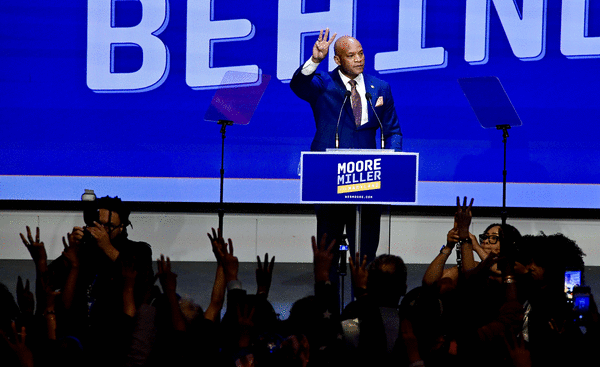
BALTIMORE — Maryland voters reelected Gov. Wes Moore, approved a constitutional amendment concerning congressional redistricting and elected new county executives in several of the state’s largest jurisdictions Tuesday.
The results also included a closer race in Maryland’s 1st Congressional District, changes in the state’s congressional delegation and several firsts in county government.
Here are six takeaways from the midterm election in Maryland, according to rough data from the Maryland Board of Elections as of Thursday afternoon. Final tallies are not yet official.
Moore won a second term, but margins narrowed in some counties
Moore defeated Republican Dan Cox for the second consecutive gubernatorial election, receiving 62.61% of the vote to Cox’s 33.10%, according to the state elections board.
Moore won their first matchup in 2022 with 64.53% of the vote, compared with 32.11% for Cox. In Baltimore County, Moore’s margin of victory declined from about 31 percentage points in 2022 to 22 points this year. Cox also carried Kent and Talbot counties, both of which voted for Moore four years earlier.
Question 3 passed, but several Maryland counties rejected it
Maryland voters approved Question 3, a constitutional amendment that makes it easier for Democratic lawmakers to redraw districts before the 2028 election, with 60.11% voting in favor. The measure received strong support in Baltimore City, Montgomery County and Prince George’s County. Voters in Carroll, Harford and several Eastern Shore counties — which typically favor Republicans — opposed it.
Harris won reelection by a smaller margin, and his political future could get tougher
Republican Rep. Andy Harris defeated Democratic challenger Dan Schwartz in Maryland’s 1st Congressional District, receiving 55.74% of the vote to Schwartz’s 44.08%. Harris won the district by about 22 percentage points in 2024, compared with fewer than 12 this year, as Democrats made significant gains in races across the country. Harris, who was first elected to Congress in 2010, will begin his ninth term in January representing a district that includes the Eastern Shore and portions of Baltimore and Harford counties.
Question 3 produced different results across the region
In Baltimore City, 78.30% of voters supported Question 3, compared with 56.88% in Baltimore County and 52.18% in Anne Arundel County. In Carroll and Harford counties, a majority voted against the amendment. The measure passed statewide despite losing in 16 of 24 jurisdictions, largely because the state’s two largest counties — Montgomery (73.02%) and Prince George’s (83.28%) — voted for it.
The results also differed from the gubernatorial election, in which Moore carried Baltimore City (83.42%), Baltimore County (58.51%) and Anne Arundel County (54.21%) by larger margins than Question 3.
Steny Hoyer’s retirement brought a new member to Maryland’s congressional delegation
Democrat Adrian Boafo won Maryland’s 5th Congressional District, succeeding longtime Rep. Steny Hoyer, who did not seek reelection.
Hoyer was first elected to Congress in a 1981 special election and served more than 45 years. Boafo, a state delegate from Prince George’s County, will represent a district that includes parts of Prince George’s, Charles, St. Mary’s and Calvert counties. His victory will bring the number of Black members of Maryland’s eight-person U.S. House delegation to four.
Maryland’s Black political leadership reached a new milestone
Vanessa Atterbeary became the first Black woman elected Howard County executive, while Julian Jones won the Baltimore County executive race. Black candidates also won county executive elections in Montgomery and Prince George’s counties. The four jurisdictions are among Maryland’s most populous counties. Moore, Maryland’s first Black governor, also won reelection.
-------------
©2026 The Baltimore Sun. Visit at baltimoresun.com. Distributed by Tribune Content Agency, LLC.










































Comments