Henry Payne: 'We are American.' Honda waves the flag at the Freedom 250
Published in Business News
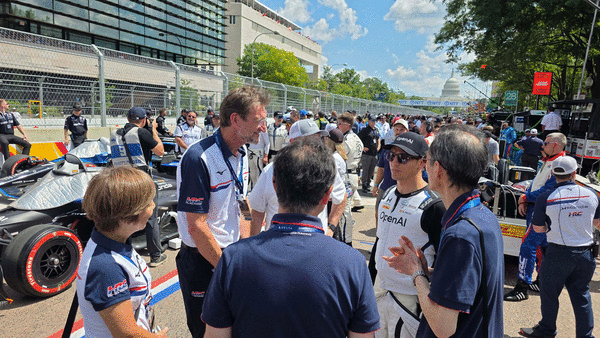
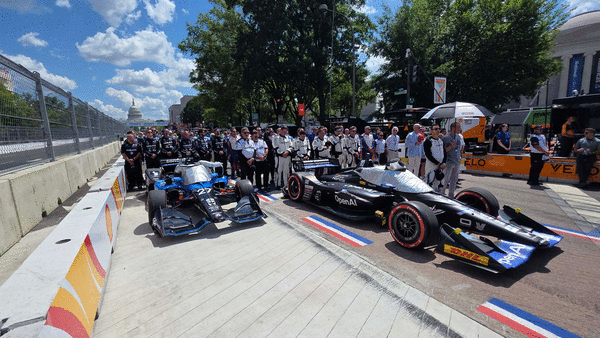
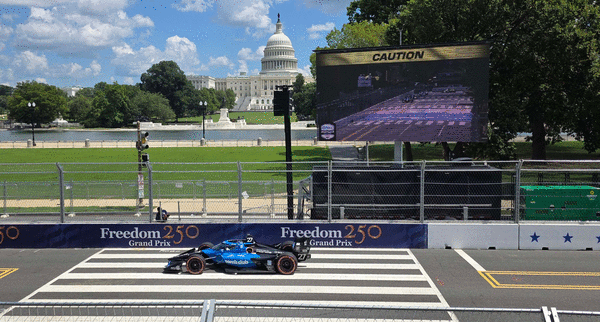
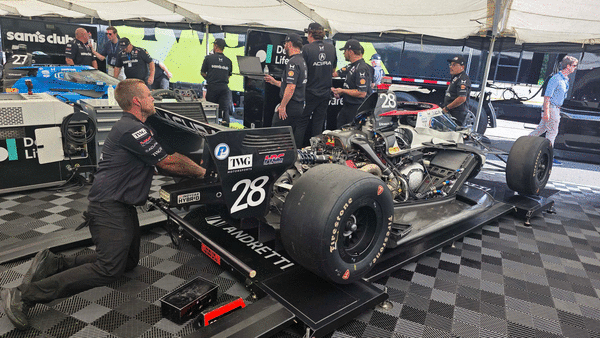

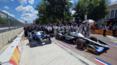
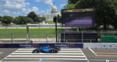
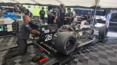
WASHINGTON, D.C. — In one of the most extraordinary events in America’s year-long celebration of its 250th birthday, the Freedom 250 Grand Prix brought IndyCars to the nation’s capital Sunday, August 23 to race around the National Mall. Organized by American racing legend Roger Penske, the event was wrapped in a red-white-and-blue who’s-who of Americana: U.S. Air Force aircraft flyovers, the president of the United States lapping the track in a Cadillac limo and Andretti Global racing team’s popular American driver Kyle Kirkwood holding the trophy.
The winning powertrain manufacturer? Honda Motor Co.
The prominence of the Japanese automaker in the historic U.S. event is a testament to the integration of the Tokyo-based brand in American life. If Coca-Cola, McDonald’s and Ford Motor Co. are U.S. brand ambassadors abroad, Honda is as American as, well, the Freedom 250.
With nearly 10% of the U.S. auto market, Honda shares the same challenges as domestic automakers from regulatory changes to tariffs to rising Chinese competition. At the Freedom 250, top Honda executives, drivers and engineers joined in celebrating an America that has brought Honda riches well beyond Japanese borders.
“You can't even put it into words. This is incredible, I'm almost in tears here,” exulted Kirkwood after emerging from his car and shaking hands with motorsports icon Mario Andretti. “This is a big moment for us, big moment for America here. Big moment for Andretti. Big moment for (car sponsor) Sam's Club and Honda.”
Together with Chevrolet, Honda engines are the backbone of IndyCar racing, which puts on the biggest single-day sporting event in North America on the eve of Memorial Day. With 12 production facilities in states including Ohio, Indiana, Alabama and (for its race engines) California, Honda makes 60% of the cars it sells in the United States here. Employing over 30,000 Americans, Honda registers about 40% of its global sales in the U.S.
“Honda is the only engine supplier to continue with IndyCar more than 30 years,” said Honda Director and Executive Vice President Noriya Kaihara in an interview here. “I (worked) in America more than 20 years ago (and) at that time, Honda was the only engine supplier for IndyCar because all others left. We continued because we are American.”
Honda has sold over 30 million vehicles in the U.S. in the last 40 years. A maker of affordable production cars and trucks that appeal to American tastes, the Japanese manufacturer’s reputation was built on motorsports — entering its first Formula One race in 1964, just a year after producing its first car.
That DNA was translated to the U.S.
“Racing is the heritage of Honda because Soichiro Honda, our founder, thought racing was a means to improve our products, quality, engineering, motivate our associates, and have a good relationship with our customers,” continued Kaihara. “Even in Japan this March, (at the Suzuka) Formula One event we were celebrating America 250. We invited the American ambassador and worked with the GM team because Cadillac is participating in Formula One.”
Economic historian Richard Vetter, a senior fellow at the Independence Institute, lives in Metro Columbus south of Honda’s sprawling manufacturing facilities. He said America’s embrace of foreign automakers began as the world emerged from the devastation of World War II with Volkswagen exporting millions of cheap Beetles to the United States.
Like Honda in racing today, the beloved Bug became a part of American culture with the popular "Herbie the Love Bug" movie franchise made from 1969-2005. Produced by Walt Disney Company, the original 1969 film (VW sold 377,332 Beetles in the States that year) was then the second-highest-grossing film from the studio after "Mary Poppins."
VW’s Pennsylvania facility was the first major transplant auto assembly plant in the U.S. when it opened in 1978. Honda opened its Maryville, Ohio, assembly plant in 1982 followed by a flood of transplants from other Asian and European automakers.
“Here in Ohio, we look at Honda as practically a local company,” said Vetter. “They are a mainstay of the Marysville economy. Same for people in Kentucky with Toyota because they have a big manufacturing operation there.”
Kaihara said that Honda started U.S. assembly in the 1980s to “build products close to our customers.” It also accelerated production here to avoid import quotas imposed by the Reagan Administration amid congressional concerns, led by Michigan Rep. John Dingell, that foreign automakers were taking American jobs.
“If you look at the percentage of vehicles sold here that are made in North America, we are the highest of any other automaker,” said Jennifer Thomas, Honda senior vice president of corporate affairs, noting that five of the top 10 U.S. content vehicles are Hondas. “What we've been doing here for more than 50 years is what the other international (manufacturers) are trying to do now.”
Forty years later, tariffs are once again a government priority. The Trump administration has promised relief from onerous government emissions regulations imposed over the last two decades in return for higher import duties to encourage more production domestically — such as another assembly plant Honda is weighing for North America.
Kaihara said the automaker might have to change its plans on that if the USMCA trade deal isn't renewed, Reuters reported, amid the collapse of U.S.-Canada trade talks late last week.
Before Congress last year stripped California of the ability to set greenhouse gas regulations, the state would have compelled automakers to sell 35% electric vehicles by the 2026 model year — even as Honda only had one EV in production, the low-volume Prologue.
“Our volume of the EVs is limited,” said Kaihara. “In order to cope with that kind of requirement, we might have had to purchase (EV) credits. We might consider offering other EVs, but the EV market is not so big.”
Forty years ago when Japanese manufacturers were making market inroads, the industry looked to Japan’s vertical keiretsu supply chain and just-in-time manufacturing as models. Today, Kaihara said the China is the manufacturing model.
“China is leading the technology at this moment,” he said of China’s advanced development systems speeding up car development. “We are learning from China. Before, we were teaching them how to make a car, but now we are learning so we take some of the know-how to our development and manufacturing side. Because there is a kind of a geopolitical issue that we can’t introduce Chinese (parts) into the U.S. — that means we need to develop our own technology to implement here.”
Honda and Chevrolet IndyCars at this year’s Freedom 250 were gas-electric hybrids — a development that has been pushed by Honda, which introduced the U.S.’s first hybrid (the Insight) in 1999. Today, hybrids are the fastest-growing powertrain (30% of sales) in the Honda lineup while Chevy’s only hybrid is in the six-figure Corvette Grand Sport.
“Our hybrid models, Civic Accord, and CRV, are setting sales records month-after-month after month,” said Lance Woelfer, American Honda vice president of sales. “As we go forward, a key part of our strategy is hybrids. We believe that we're well aligned with what customers need . . . and where the market is headed.”
Said economist Vetter on the U.S.’s openness to foreign brands compared to other, more nationalist countries: “We are a nation of nations, a nation of immigrants. Americans as a whole welcome. cheap, reliable transportation. We don't care where it comes from.”
The Honda CR-V was the best-selling non-pickup vehicle in the U.S. in July, and now a Honda Hybrid has won the NTT IndyCar Freedom 250. What is IndyCar’s NTT title sponsor? A Japanese telecommunications company.
____
©2026 www.detroitnews.com. Visit at detroitnews.com. Distributed by Tribune Content Agency, LLC.



Comments